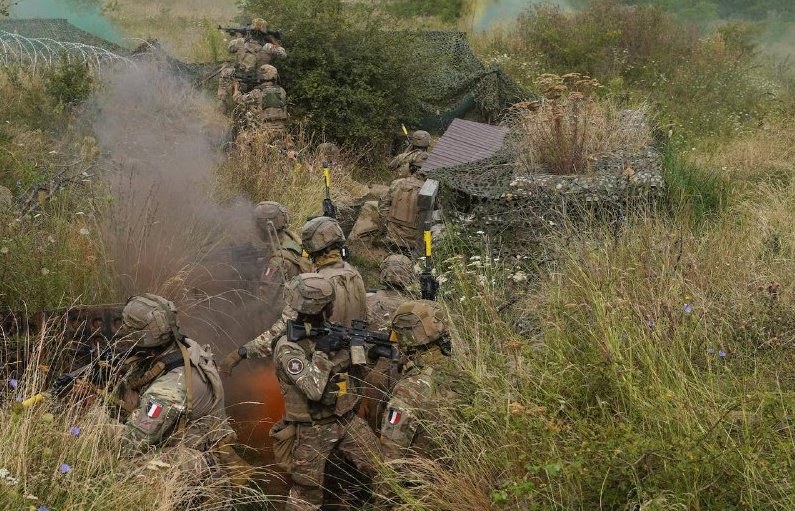
NATO has formulated a comprehensive ground combat strategy to address the potential threat of a large-scale Russian attack on its member states, according to reports from Bild. The primary objective of this plan is to neutralize missile assaults originating from Russia.
The strategy involves deploying fighter jets, missiles, and drones to incapacitate Russian missile systems, particularly targeting the Kaliningrad region, which houses a significant array of anti-aircraft and missile systems. Concurrently, NATO plans to establish what is described as an “autonomous zone” along the borders with Russia and Belarus, intended to serve as a defensive barrier between Russian troops and NATO forces. This zone will primarily operate with drones and unmanned military transport vehicles, with no stationed NATO personnel.
If Russian forces persist in their offensive actions, these unmanned systems are expected to be leveraged for their containment and halt. The next phase of the strategy may involve striking targets within Russian territory itself, focusing on military logistics that support the Russian armed forces. Key targets may include airfields, military factories, bridges, and railways that facilitate the movement of troops and supplies to the frontlines.
Furthermore, the alliance intends to collaborate with Russian nationals opposing President Putin’s regime. An additional component of the strategy includes the establishment of an “air bridge,” enabling aircraft to deliver drones and robotic systems into Russia, which could be utilized to dismantle military bases and airfields. Notably, the plan emphasizes that NATO does not aim to conquer Russia but rather to halt and push back advancing Russian troops to their own borders.