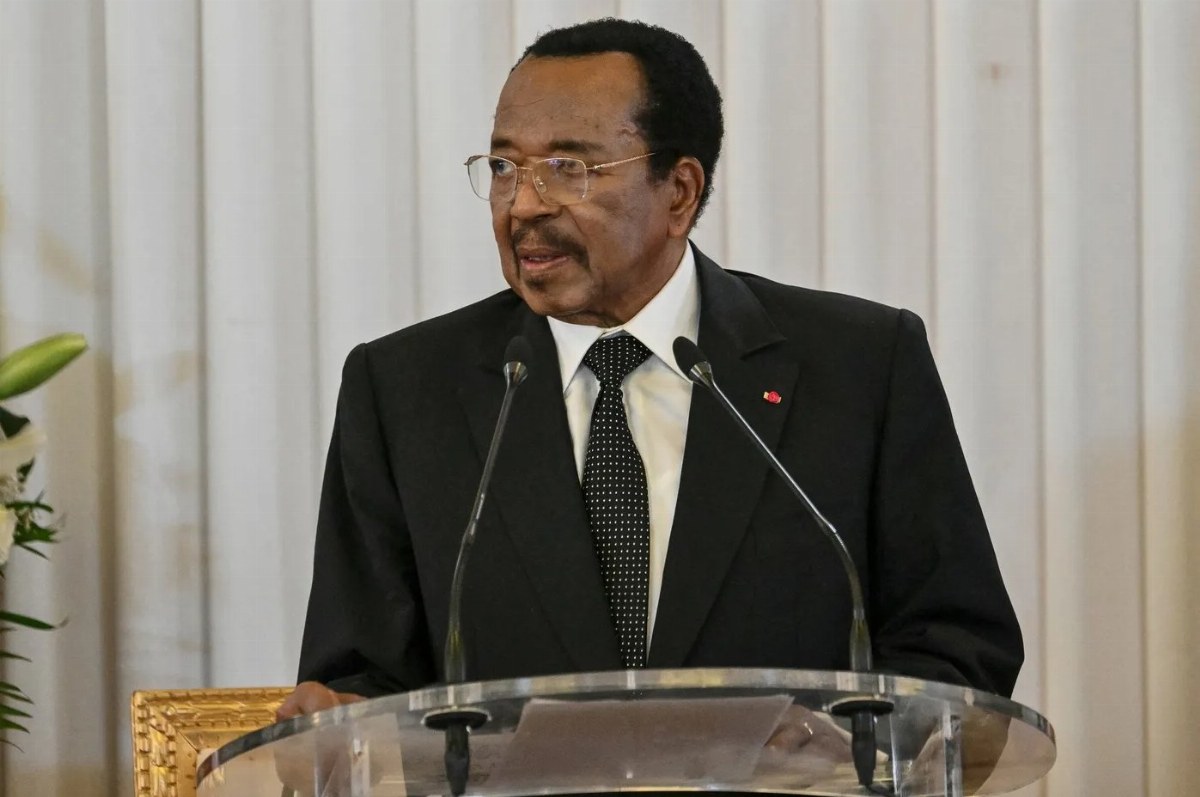
The prolonged absence of 93-year-old President Paul Biya has raised significant concerns regarding his health and the potential for a power vacuum in Cameroon. On June 7, Biya departed for what his office described as a “brief private stay in Europe,” and he has not returned since. With two months now passed, speculation about his condition has intensified.
Biya, who has been in power since 1982 and is currently serving his eighth term following elections last November, has frequently spent extended periods in France and Switzerland, often leaving governance in the hands of party officials and family members during his absence.
While the Cameroonian Constitution does not prohibit the president from being away for extended periods without a vice president, opposition leaders have expressed that the country is effectively being run on “autopilot.” Issa Tchiroma Bakary, the opposition leader, emphasized that it is widely believed that everything is not well with the head of state, highlighting concerns about legitimacy as Biya seems to cling to power.
The nearly five decades of Biya’s rule have been characterized by a stagnant economy and ongoing insurgencies from Boko Haram in the north and separatists in the west, leading many young people to lose faith in his leadership. Wilson Tamfuh, a public and international law professor at the University of Dschang, compared Cameroon to a severely ill body, noting that even if Biya remains strong at his age, his health issues are affecting his governance.
The president’s re-election in 2025 has already sparked protests that resulted in at least four deaths. On Monday, without any official explanation, Biya made remote changes to the heads of four military regions, promoting new officers after a commander’s death and another’s retirement.
Biya came to power after the resignation of Cameroon’s first president, Ahmadou Ahidjo, who ruled from 1960 to 1982. A constitutional amendment in 2008 removed term limits, allowing Biya to extend his rule indefinitely, thus leading him to govern longer than the lifespan of many of his citizens, with over 70% of the population of nearly 30 million being under the age of 35.