Despite President Donald Trump’s forecast last spring that the conflict in Iran would last only four weeks, nearly six months later, the situation remains unresolved and the vital shipping routes for global oil trade are still obstructed.
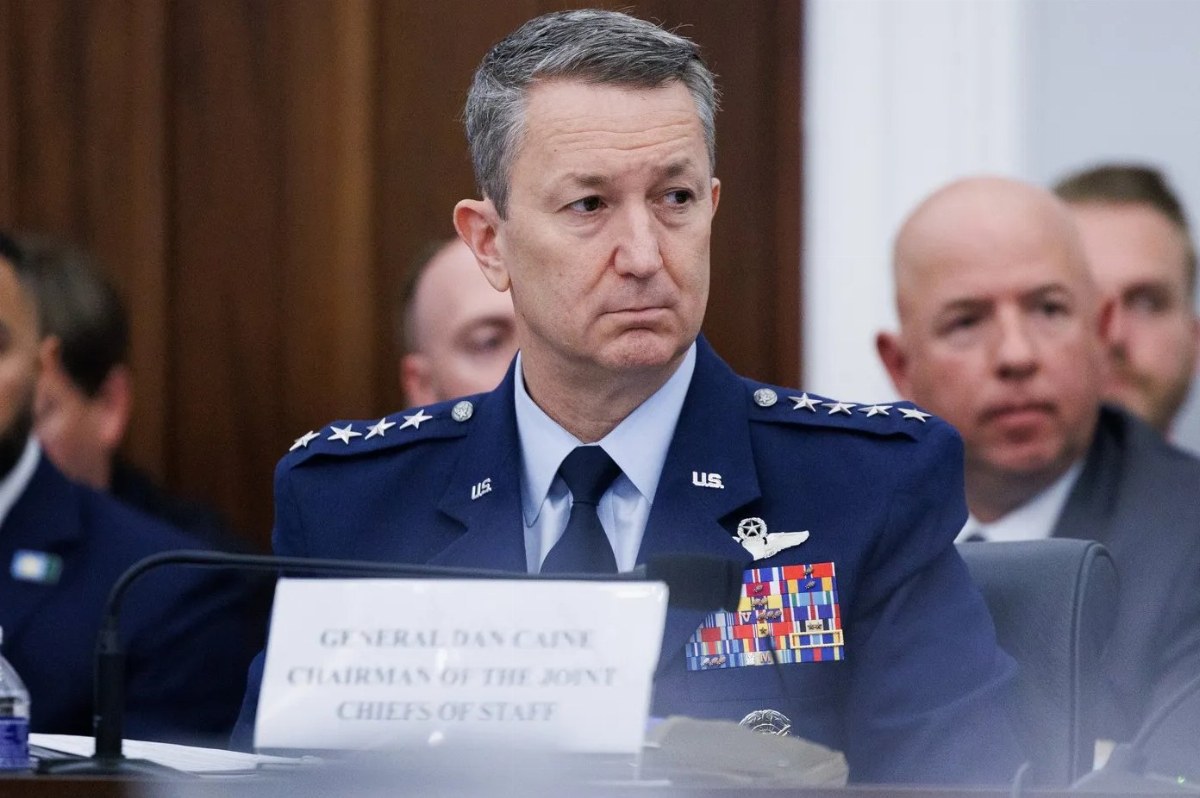
The war has reached a critical juncture, according to General Dan Caine, head of the U.S. Joint Chiefs of Staff, who is actively seeking solutions to end the hostilities, as reported by three sources familiar with the situation.
In recent weeks, Caine has been consulting with several of Trump’s advisers about the prospects of the war, attempting to find a resolution as looming military escalation options could backfire on the U.S. The air force alone has limited chances of meeting the declared objectives set by the White House, sources indicated.
“Caine is looking for a way out,” one source told CNN candidly.
Caine is not the only official recognizing the difficulties of the war. He has expressed concerns regarding military options and has raised the need for finding a de-escalation solution in discussions with key officials, including CIA Director John Ratcliffe, Secretary of State Marco Rubio, and Vice President JD Vance, according to two sources.
The high-ranking U.S. general recently met with these key Trump advisors, who share a similar vision, to ensure alignment before meeting with the President.
“Protecting the Military”
The goal was to clarify the limits and pitfalls of available military options, including those that do not involve a ground invasion, sources stated.
“I think it’s simply his way of protecting the military,” one source remarked to CNN.
Trump has frequently been hesitant about deploying ground troops in Iran, suggesting instead that airstrikes could compel the Iranians to agree to terms dictated by him.
Caine and other members of Trump’s cabinet privately believe that this outcome is unlikely and have been exploring alternative options that fit within the parameters established by the President, according to several sources familiar with the recent discussions.
Nearly six months into the conflict, during which U.S. officials have repeatedly claimed that Iran’s military capabilities are diminished, it is significant that Trump’s top general asserts in private discussions that there is no simple military solution to end a war that the President chose to initiate, CNN commented.
In response to the published information, General Dan Caine stated, “We do not discuss the confidential conversations of the committee chairman with the President, Secretary of State, or other high-ranking leaders, nor do we comment on anonymous characterizations motivated by hidden interests, made by sources that did not have access to them.”
Caine Praised
A White House official praised Caine’s contributions to Trump’s national security team, stating for CNN: “General Caine is an incredible asset to the President’s national security team, and the overwhelming success of operations ‘Epic Fury,’ ‘Midnight Hammer,’ and ‘Absolute Resolve’ speaks for itself.”
“General Caine always provides accurate and impartial information, as well as a range of options for the Commander-in-Chief, who ultimately makes decisions based on what he believes is best for U.S. national security,” the official added.
The State Department and CIA declined to comment.
The war has reached a point where many of Trump’s key national security officials believe what Caine told lawmakers during a public hearing last month, that “air power has its limits.”
Calculating a Path to Victory
By the end of July, General Caine and other U.S. officials expressed skepticism regarding a plan for more aggressive attacks on Iran, fearing the consequences of escalation, despite Trump initially being ready to approve a “massive” operation.
The only supporters of such escalation were some from CENTCOM and Israel.
Consequently, Trump stepped back and ultimately abandoned the strikes after allies in the Middle East expressed fears over potential Iranian reprisals, particularly targeting their energy infrastructure. However, the option for these strikes remains open for the future.
The depletion of U.S. basic ammunition stocks has also been a significant factor, according to CNN. Several sources indicated that this concern was raised not only by Caine but also by officials in the Gulf.
These officials recently conveyed to the Trump administration that a lack of advanced U.S. anti-aircraft systems could hinder their ability to protect themselves against a possible Iranian retaliation should Trump opt to escalate the conflict.
Caine Cautious with Trump
However, while Caine expressed concerns, he has been careful to maintain his relationship with Trump, being cautious about how he conveys the potential drawbacks of military options when presenting them directly to the President, sources noted for CNN.
Even before the conflict began, Caine and other military leaders warned Trump that an extended campaign could impact U.S. military weapon stocks, but now high-ranking military officials consider the arsenal to be “dangerously low,” a source previously told CNN. Meanwhile, Trump appears increasingly frustrated that such information has become public.
The ammunition shortage is also one reason the Pentagon and U.S. Central Command have recently begun reevaluating U.S. military strategy. A high-ranking CENTCOM military official recently sent a crowdsourcing email seeking new, creative, and unconventional ways to apply pressure and punish Iran, previous sources indicated. They noted that doing this six months into the war amounts to a tacit acknowledgment that things are not going well.
Ground Invasion Not Considered
General Caine, analysts, and administration officials believe that the only way to decisively defeat Iran would be a major ground troop operation, but such an endeavor risks costing thousands of American lives.
Although the Pentagon has plans for such ground intervention, no one in the Trump administration currently supports such a radical action.
While Caine and other officials have warned Trump that smaller military escalations could have negative consequences, efforts are focused on finding a de-escalation path.
This path should provide the President at least a “symbolic victory” to present to the American public without blocking a potential diplomatic solution, starting with an agreement to reopen the Strait of Hormuz.