In a dramatic turn of events, approximately 50,000 Moroccan residents crossed into the Spanish territory of Ceuta in just one day, sending shockwaves throughout Europe. This unexpected influx has reignited discussions about the ongoing migration crisis that has been a significant issue in recent years.
Commentators argue that the situation in Ceuta highlights the unsustainable long-term impacts of Europe’s migration policies. Spanish authorities have reported discovering numerous bodies on the Spanish side of the border during this crisis. Spain’s Interior Minister stated that nearly all individuals who crossed the border have since returned to Morocco, following the mobilization of military forces to manage the situation.
Ceuta, a Spanish enclave located on the Mediterranean coast of Africa, has a population of only 87,000, making the recent migration influx particularly significant. Historically, Ceuta represents remnants of the Spanish Empire from the 15th and 16th centuries when a fierce religious war was waged against Muslims by Christian leaders.
Political and Humanitarian Responses
The refugee crisis, which erupted on Thursday, has drawn strong political reactions. Countries like Finland, which traditionally maintained a tolerant stance on migration, have criticized Spain for its failure to control illegal migration. Douglas Murray, a columnist for “The Spectator” and author of “The Strange Death of Europe,” expressed concern that the dream of a borderless Europe is quickly turning into a nightmare.
Murray criticized Spanish Prime Minister Pedro Sanchez for his handling of the situation, suggesting that the lack of deportations of illegal immigrants has increased the appeal of Spain as a destination for migrants, potentially leading to more arrivals throughout Europe.
Nighttime Activities in Ceuta
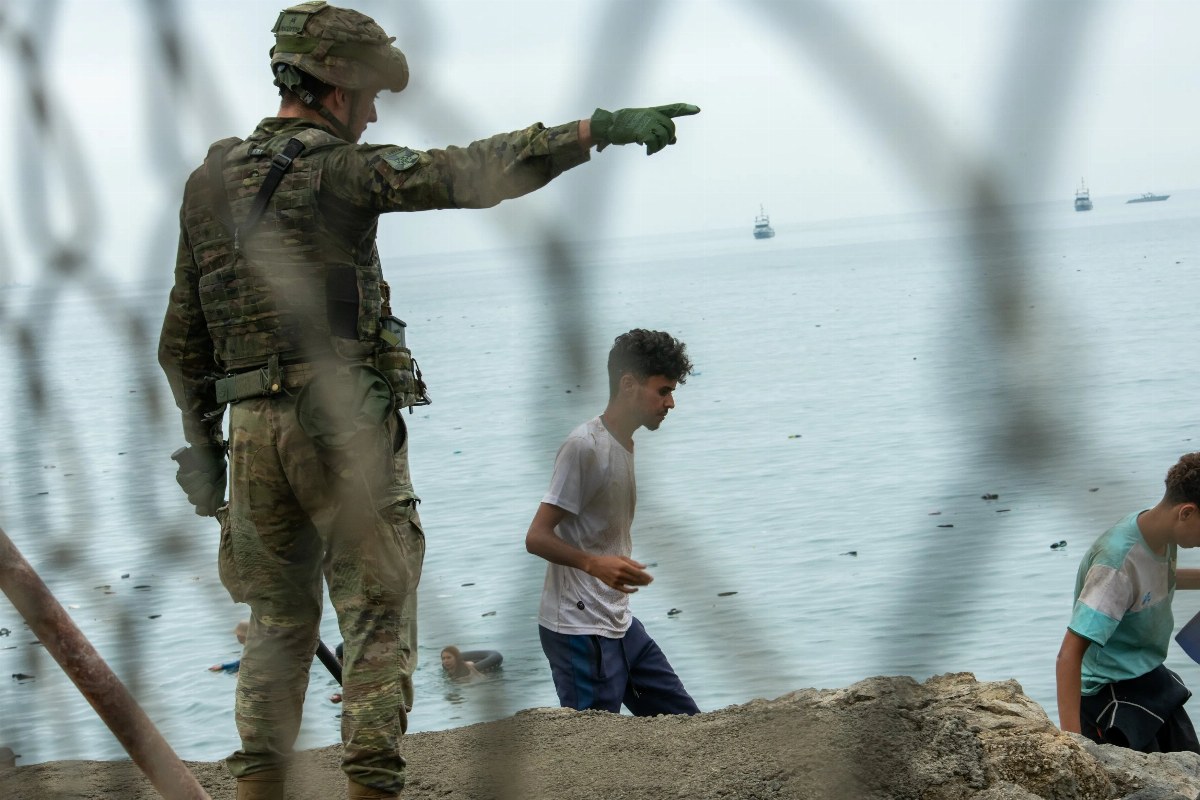
During the night from Friday to Saturday, groups of young people roamed the streets and beaches of Ceuta, where military personnel have been deployed, particularly around the ferry port to mainland Europe. Journalists reported that police were actively patrolling the area, attempting to disperse the crowds.
On the beach, dozens were seen sleeping in the sand, with some lighting fires near police vehicles. A local taxi driver named Mohamed stated, “They come because they have no future in Morocco; they are trying to fulfill their European dream.”
Return to Morocco
At the border crossing around midnight, amidst a substantial police and military presence, many youths were seen returning. Some waved goodbye to soldiers while heading back to Morocco. A 25-year-old hairdresser named Oussam jokingly shouted, “Next time, I’ll come with a passport!” He expressed his desire to leave Morocco, citing despair and lack of future opportunities.
Oussam swam three kilometers to reach Ceuta and dreams of a life in Europe but returned home to freshen up and eat, acknowledging that he hadn’t eaten in two days.
Tragic Discoveries
On Friday, Spain announced that it had managed to halt the massive influx of migrants to Ceuta, with most of the 50,000 individuals who crossed the border returning voluntarily. The representative of the Madrid government in Ceuta confirmed that 57 bodies had been recovered on the Spanish side, indicating a tragic loss of life during this crisis. Many may have drowned or been crushed while attempting to scale the border barrier.
Spain’s Interior Ministry reported that around 50,000 people had crossed the border since Thursday morning, with an estimated 48,300 having returned to Morocco by 6:00 PM local time on Friday. Moroccan forces attempted to repel the surge using batons and tear gas to prevent additional migrants from entering the small Spanish territory that juts into the Mediterranean from Morocco.