Amid rising concerns over digital dependence, the European Commission is working towards establishing a “sovereign” artificial intelligence (AI) infrastructure, targeting operational readiness by mid-2028.
The EU executive has issued a call for proposals for public funding of up to seven AI “gigafactories” across Europe, as Brussels races to develop a self-sufficient infrastructure for training advanced AI models and to close the gap with global technology competitors, according to reports.
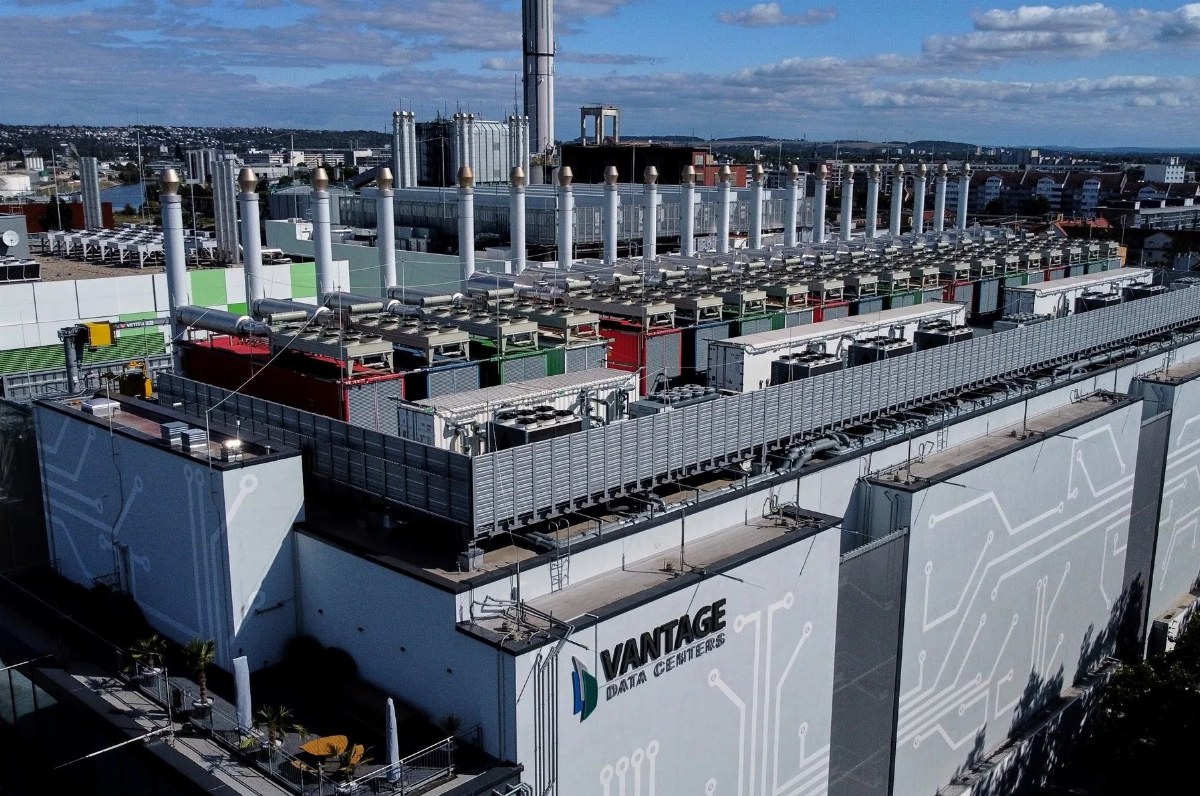
AI gigafactories are large-scale computing centers equipped with cutting-edge, highly specialized chips intended for training next-generation AI technologies, particularly large language models (LLMs) that require processing trillions of data points.
This initiative is part of a broader effort to ensure technological sovereignty, aimed at reducing the EU’s reliance on foreign cloud service providers and chip manufacturers.
The global race to develop increasingly powerful models promises transformative advancements economically and militarily, triggering a parallel competition for the foundational infrastructure. Major data center projects are already underway in the U.S. and China.
In response, European Commission President Ursula von der Leyen announced plans for AI gigafactories during the AI Action Summit held in Paris in February 2025, aspiring to replicate the success of the CERN laboratory in Geneva.
Since then, the initiative has garnered considerable interest from the industry, with 76 potential consortia expressing preliminary interest in submitting project proposals.
To address this private sector interest while ensuring a reasonable geographical distribution of the infrastructure, the Commission expanded its initial plan from four or five gigafactories to seven.
Lack of Funding
However, the Commission has faced criticism for repeatedly delaying the initiative, thereby slowing Europe’s development pace in a manner that undermines its own rhetoric regarding the urgency of closing the gap with the U.S. and China.
The procurement process has already been divided into two consecutive phases, with a staggered approach intended to gradually build capacity over the next six and a half years.
This staggered approach is largely due to a lack of available funding.
Although it initially seemed determined to allocate a €20 billion fund for the gigafactories, the Commission has gradually scaled back its financial commitments.
The proportion of public funding for the project has been reduced to approximately one-third of the total investment, with the remaining two-thirds expected to come from the private sector. Of the third from the EU, only half will be financed by Brussels, while the other half will be covered by member states supporting the initiative.
Consequently, Brussels is set to contribute around €5 billion, matched by another €5 billion from European governments, alongside approximately €20 billion from private investments.
Under the current budget, however, Brussels can commit only €1 billion, with the remainder to be sourced from the upcoming Multiannual Financial Framework (MFF)—which itself remains a moving target, as it is still subject to intense negotiations among member states.
“We cannot anticipate decisions regarding the next MFF. We have presented you with our best estimate regarding the amount of money we expect to be available from the next MFF to support phase two,” stated a senior Commission official.
In exchange for their public contributions, the EU and participating member states will receive a proportional share of access to computing resources, to allocate to public projects, research centers, and AI laboratories of their choosing.
All operational costs will be borne by the involved private entities, with EU officials insisting that the projects must be financially sustainable through the development of their own commercial services, considering that access to computing resources for AI remains limited and valuable.
Criticism
Massive infrastructure projects of this nature have drawn criticism in the past for favoring member states with greater financial resources.
So far, ten countries have expressed interest in hosting a gigafactory: Germany, Italy, France, Poland, the Czech Republic, Denmark, Finland, Greece, Portugal, and Spain. Single-country as well as multi-country consortia are possible, with Paris already signaling its intent to act independently.
Another recurring criticism is that while the gigafactories aim to build a sovereign European infrastructure, the EU remains largely dependent on foreign suppliers for specialized AI chips.
In this regard, the Commission has signed memorandums of understanding with three chip manufacturers: Nvidia, AMD, and Qualcomm. Among the criteria for evaluating proposals are measures to avoid potential “lock-in” effects from suppliers.
“We are fully aware that we want to strengthen Europe’s capacity, but we must also recognize that we want to do something in AI right now. So, it is about finding the right balance,” remarked a senior EU official.
Construction of selected projects is expected to begin in early 2027, with facilities slated to become operational by mid-2028.