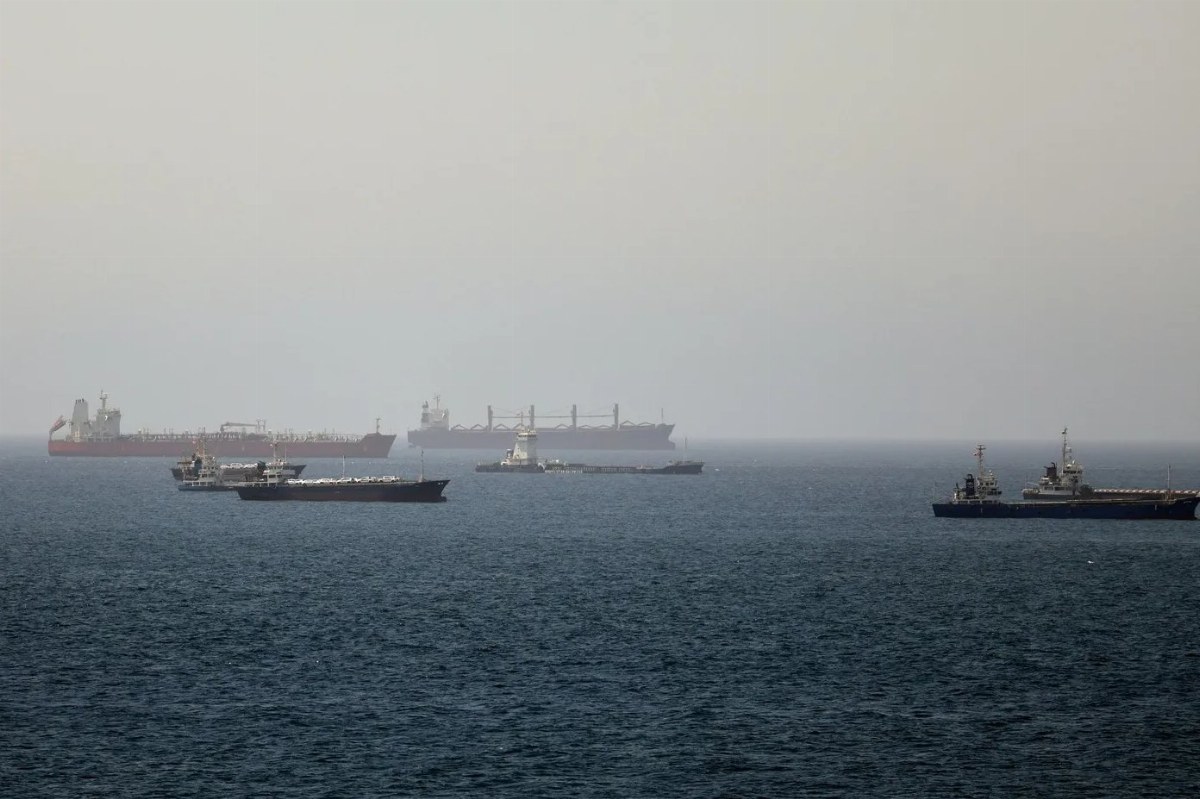
Shipping companies are steering clear of the U.S. military’s guided transit system through the Strait of Hormuz, following a series of Iranian attacks on vessels that have raised safety concerns, according to seven sources from the maritime security and shipping industry.
For decades, vessels have navigated to and from the Gulf using a secure set of lanes established by the United Nations maritime agency in 1968, known as the Traffic Separation Scheme.
Since the U.S. and Israel initiated their campaign against Iran on February 28, Tehran’s forces have mined the area, forcing ships to use two improvised routes that are closer to the Iranian and Omani coasts.
In June, reports indicated that the U.S. military assisted ships in navigating the strait as part of an operation that involved dozens of covert oil transfers from one vessel to another to maintain the flow of energy exports from the Gulf, employing aerial and aquatic drones, as well as helicopters to guide tankers.
Iranian Attacks on Vessels in Omani Waters
This U.S.-backed initiative enabled the export of tens of millions of barrels of oil, helping to mitigate the impact of the largest disruption to oil and gas supplies in history.
However, carriers are increasingly assessing the Omani side of the strait as dangerous following a wave of attacks on ships.
The Iranian Revolutionary Guards claimed responsibility on Tuesday for attacks on two oil supertankers near the Emirates.
Since July 7, five vessels have been attacked in Omani waters — including three crude oil supertankers, a liquefied natural gas tanker, and a container ship — that fell within the American scheme, according to incident analysis based on data from the U.N. maritime agency.
It remains unclear whether all vessels were operating under the American framework, sources noted.
“The U.S. does not seem to have any control over the situation,” stated a maritime source, adding that their firm opted not to navigate through the strait due to concerns over crew safety and deteriorating security conditions.
“Iran’s continued ability to target vessels navigating the Omani route suggests that the solution proposed by the Trump administration to keep ships moving is unlikely to be effective,” stated Torbjorn Solvedt, a senior analyst for the Middle East at Verisk Maplecroft, a risk intelligence company.