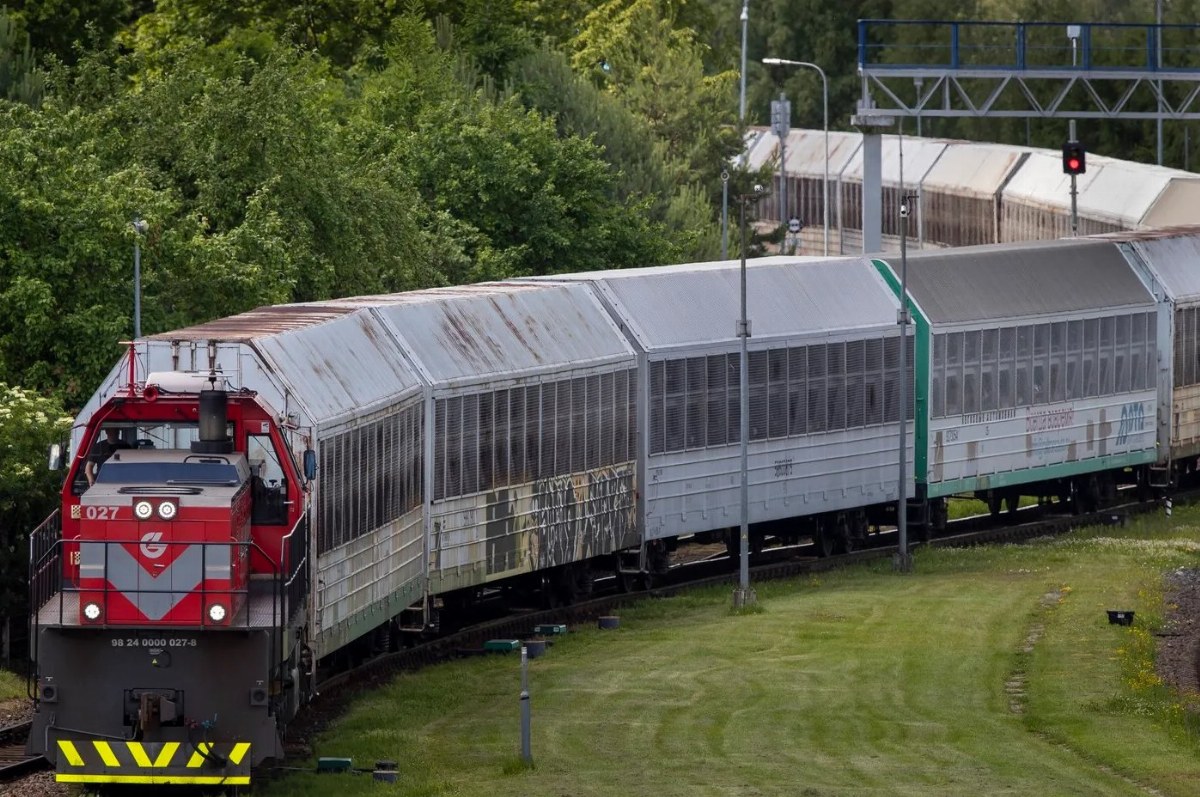
Baltic leaders confirmed on Friday the temporary closure of railway points at the border with Estonia and Latvia by Russia, clarifying that this action should not be seen as a step towards escalating tensions. Instead, they view it as a signal that European pressure on the Russian economy is taking effect, according to reports from EFE and Agerpres.
Estonian Prime Minister Kristen Michal stated during a press conference in Berlin, alongside Lithuanian President Gitanas Nauseda, Latvian President Edgars Rinkevics, and German Chancellor Friedrich Merz, that “there is currently no immediate threat to the Baltic states or NATO.”
The officials were asked about potential concerns that Russia might escalate tensions with the Baltic countries in light of the railway closures for people, vehicles, goods, and merchandise, effective from July 1. Michal explained that the closed railway points with Latvia and Estonia, as well as with Finland (which had previously ceased operations due to an earlier decision by Helsinki), had limited utility.
He described the closure as a move by Russia to exert “psychological pressure.” However, he emphasized, “We continue to maintain pressure on Moscow.”
Michal noted, “The plan seems to be yielding results, as the goal is to disrupt supply lines and economically isolate Russia.” He added that Russia is already facing fuel supply issues and shortages even in major cities.
“Economic Reasons, Not Necessarily Provocation”
Nauseda highlighted that Lithuania is not among the countries affected by Russia’s railway suspensions. “The reason is that Russia relies on maintaining a relatively high and fluid transit flow to (the Russian exclave) Kaliningrad, which is only possible by crossing our territory,” he explained.
He acknowledged that there are alternative maritime routes, but these options are limited, and “Russia is currently facing major difficulties in using or expanding them.”
“Therefore, we consider this a technical decision and do not interpret it as preparation for new escalation. We do not believe that is the case,” Nauseda underscored.
Latvian President Rinkevics expressed a similar view, stating that the closure of the railway link with Estonia is primarily due to economic reasons and holds limited political significance, not necessarily representing a provocation. He pointed out that the closed railway line “was precisely the one with the lowest traffic volume,” advising against drawing exaggerated conclusions regarding Russia’s intentions.