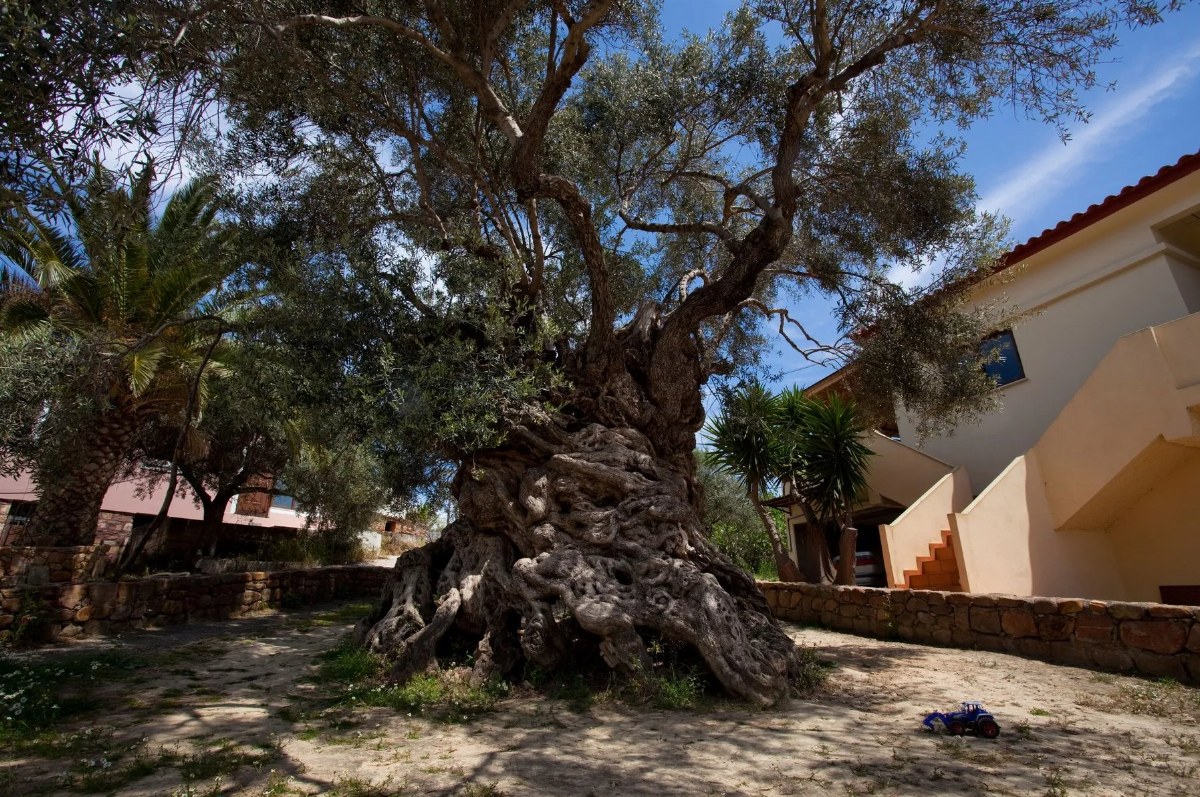
The oldest olive tree in the world resides in the village of Ano Vouves, located in the Kissamos region of Chania, Crete, Greece. According to the international scientific community, this remarkable tree is approximately 3,000 years old.
The Vouves olive tree boasts a trunk with a circumference of 12.5 meters and a diameter of 4.6 meters. It belongs to the local tsounati variety and was grafted onto a wild olive at a height of three meters, as reported by Greek media.
Over the years, the grafting process has given its trunk a breathtaking shape, resembling a natural sculpture. In 1990, the olive tree was declared a natural monument by unanimous decision of the Chania prefecture authorities, recognizing its exceptional significance as the oldest olive tree in the world.
The Ancient Olive Tree Still Produces High-Quality Olives
This ancient tree continues to bear fruit, yielding exceptional olive oil. Consequently, the area is regarded as one of the historical centers for olive cultivation on the island of Crete.
Currently, the trunk of the tree is hollow, as the wood inside has deteriorated over time. Nevertheless, the olive tree continues to regenerate outwardly as the central trunk gradually decomposes.
Due to its continuous renewal of wood, the olive tree has been considered a symbol of immortality since ancient times.
Every summer, thousands of tourists flock to admire this impressive olive tree and learn about its rich history. Many are captivated by its enormous size and imposing trunk, as well as the fact that it remains alive and productive after nearly 3,000 years.
For the ancient Greeks, the olive tree was one of the most revered sacred trees, alongside the oak. This respect and admiration for this symbol have endured to this day.
Greek Olive Oil: The “Liquid Gold”
Greek olive oil, referred to by Homer as “liquid gold,” has been a part of Greece’s history since ancient times and remains an essential element of the Mediterranean diet.
In antiquity, the Greeks used olive oil not only for food but also for skincare and haircare. Today, olive oil produced in Greece is globally recognized for its high quality.
Currently, there are approximately 800 million olive trees worldwide, with about 95% of these growing in the Mediterranean basin, where the climate and soil provide ideal conditions for this crop.
In Greece, the olive tree is the most widespread fruit tree. Olive plantations occupy roughly 15% of the country’s cultivated agricultural land and nearly 75% of all fruit tree plantations.