“This is a new type of war.” Expert on the situation in Russia after the Ukrainian attacks

Mariia Tsiptsiura, Onet: One of the largest oil powers in the world grants gasoline vouchers to its citizens. What is happening to the Russian fuel market?
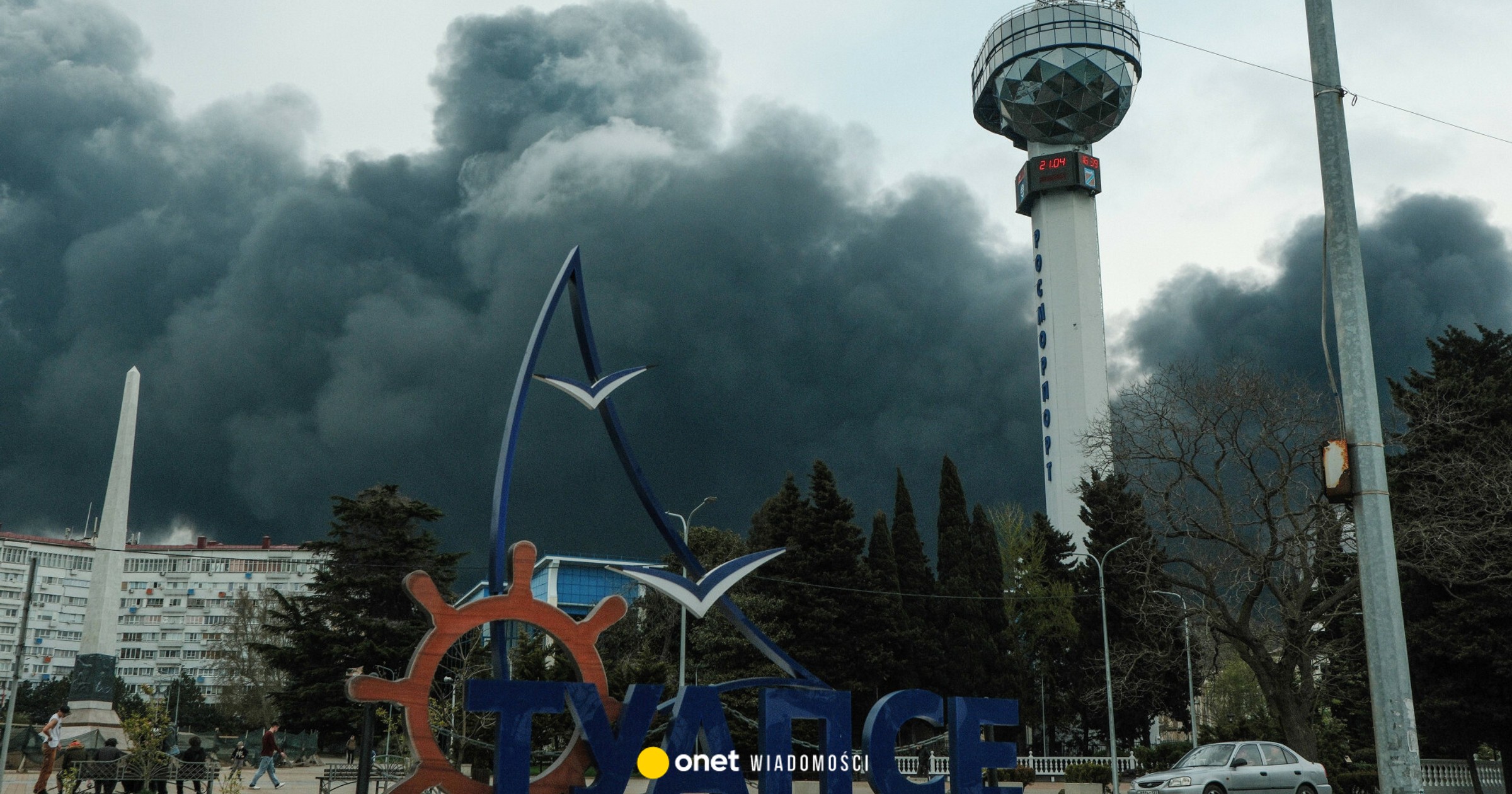
Oleg Sarkic: There is a disconnect between the raw material and the product and this is crucial. Oil in the ground and gasoline in the tank are two different things, and in between there is infrastructure, plants and transportation. Ukraine is attacking this space, which is why Russia, sitting on an ocean of raw materials, cannot supply fuel to its own gas stations. The consequences can no longer be hidden.
Gasoline ration cards have been introduced in Crimea and Sevastopol since the end of May, one of the biggest fuel restrictions since Soviet times – the last time something similar happened in 1990.
Things are getting worse because today Crimea has stopped all cash sales of gasoline and stopped issuing new cards. In addition, this no longer applies only to the occupied peninsula. In Moscow and the surrounding area, gas station chains have limited sales to 60 liters of gasoline per driver, and in some places to 20 liters; the same limits were introduced in Saint Petersburg, Karelia and border regions. According to various estimates, the demand for fuel exceeds the supply several times.
Ukraine increases pressure on Russia. This is what tactics look like
Let's start with the refinery. How seriously has Russian oil processing been hit?
This is the largest decline in years and it is not just an assessment, but a confirmed indicator. In May, Russian refineries recorded the lowest level of oil processing in 16 years, amounting to approximately 4.69 million barrels per day. Ukrainian intelligence, based on internal Russian documents, estimates the decline in processing to be at least 10 percent. However, what is more important than the size is the dynamics of the attacks.
Since the beginning of 2026, Ukrainian drones have hit Russian refineries 38 times, including 16 times in May alone, and eight of the ten largest plants in the country have been damaged. The specific data is even more telling. After subsequent strikes, the plant in Kirishi completely stopped production, and the Slavic-Yałoslav “Słowianeft-JANOS” was hit twice in one month. This is the crux of the matter. The plant cannot be repaired overnight. It is a complex installation with equipment, some of which was produced in the West and which is no longer supplied due to sanctions. Each successful missile delays repairs by months, and more drones arrive every few days. Russia finds itself in a race in which it physically cannot keep up.
You pointed out that what is crucial is not so much the factories but logistics. Could you tell us about the attacks on tankers and means of transporting oil?
Logistics is a multiplier. A destroyed factory means the loss of one manufacturer, and a destroyed transport hub means the loss of dozens of routes at once. This is most visible in the example of Crimea. Ukraine deliberately attacked tankers on the R-280 Novorossiya route, connecting Crimea with the Rostov Oblast. Just block one artery and the entire peninsula is left without supplies, hence the food stamps.
The situation is similar at the strategic level. Operations at the Ust-Luga terminal were suspended after drones damaged a railway drainage overpass, as a result of which the terminal stopped accepting deliveries from plants in Kirisha, Yaroslavl, Moscow and Ryazan. One flyover, consequences for four giants. Nearby is Primorsk, where after the raid they stopped accepting loads of diesel oil, which is why approximately 40 percent Russia's oil export capacity has come to a standstill. However, the most sophisticated attacks are on Transneft's transshipment stations, because the destruction of their warehouse complexes deprives the enemy of the opportunity to redirect the flow, bypassing the already damaged terminals.
From zero to hundreds of strokes in half a year
Let's move on to weapons. Can you talk about the achievements of Ukrainian mid-strike drones? What does airspace control look like over the frontline areas?
It's a quiet revolution that's underappreciated. Just look at how the blast zone has expanded. Initially, ordinary FPV drones had a range of approx. 10-15 km, then approx. 35 km, and newer systems now hit moving targets at a distance of 30-150 km from the front line. There is even a separate category with this name. Ukrainian forces already regularly use Middle Strike class drones at distances of over 200 km, effectively ensuring firing control over the entire territory of the Luhansk Oblast and most of the Donetsk Oblast.
In early 2026, the Unmanned Systems Force established a separate Long-Range Strike Center that combines reconnaissance, target designation and execution into a single structure. The impact on enemy logistics is enormous.
The number of recorded attacks on Russian trucks increased from almost zero in January to hundreds of geo-located strikes in May. Therefore, Russian commanders in some cases banned the movement of columns and forced them to be escorted by anti-aircraft protection groups, and some magazines were moved back into Russia by more than 100 km.
This particularly hits enemy forces because the systematic destruction of the Buk and Pantsir complexes clears the sky, and Russia cannot keep up with their reconstruction at the rate at which Ukraine is destroying them. And the brain behind it all is artificial intelligence. The Hornet drone, which, by the way, is quite cheap, can independently detect targets such as fuel tankers and deliberately destroy them.
Ukrainian attacks may lead to protests in Russia
What is the economic effect of these actions and what are their consequences for Russia?
The effect is twofold, and both aspects hit the state budget. The first aspect is direct losses. Attacks on oil infrastructure alone have caused losses exceeding $7 billion since the beginning of 2026. The second is the loss of income, because oil and gas are the basis of the military budget, and the hole in the budget has already exceeded all limits. The federal budget deficit in the first quarter of 2026 exceeded the entire annual plan.
Exceeding the annual deficit plan within three months is a signal that the system has begun to self-destruct. Moscow responds with administrative measures, but this only treats the symptoms. Gasoline exports were suspended and the export of aviation fuel was banned until November 30 in order to keep fuel in the country. Only if the refineries are physically burning out, there is no point in banning exports, because there is nothing to export.
Prices, meanwhile, are going up, as the wholesale price of AI-92 gasoline at the end of May was 25-27 percent higher. higher than in mid-February. This is where politics comes into play, as expensive fuel has previously sparked protests among Russians, the last of which took place in 2018.
Ukraine has found the point where the enemy's military, budgetary and political sensitivities converge into one. This is a new type of war in which the winner is not the one who has more oil, but the one who chooses targets more wisely.