China's export offensive is putting increasing pressure on European industry, which is why the EU is starting to discuss customs duties, trade barriers and state industrial policy. Politicians who have criticized Trump's economic policy for years, considering it a manifestation of nationalism, increasingly share his diagnosis: China threatens Western industry.
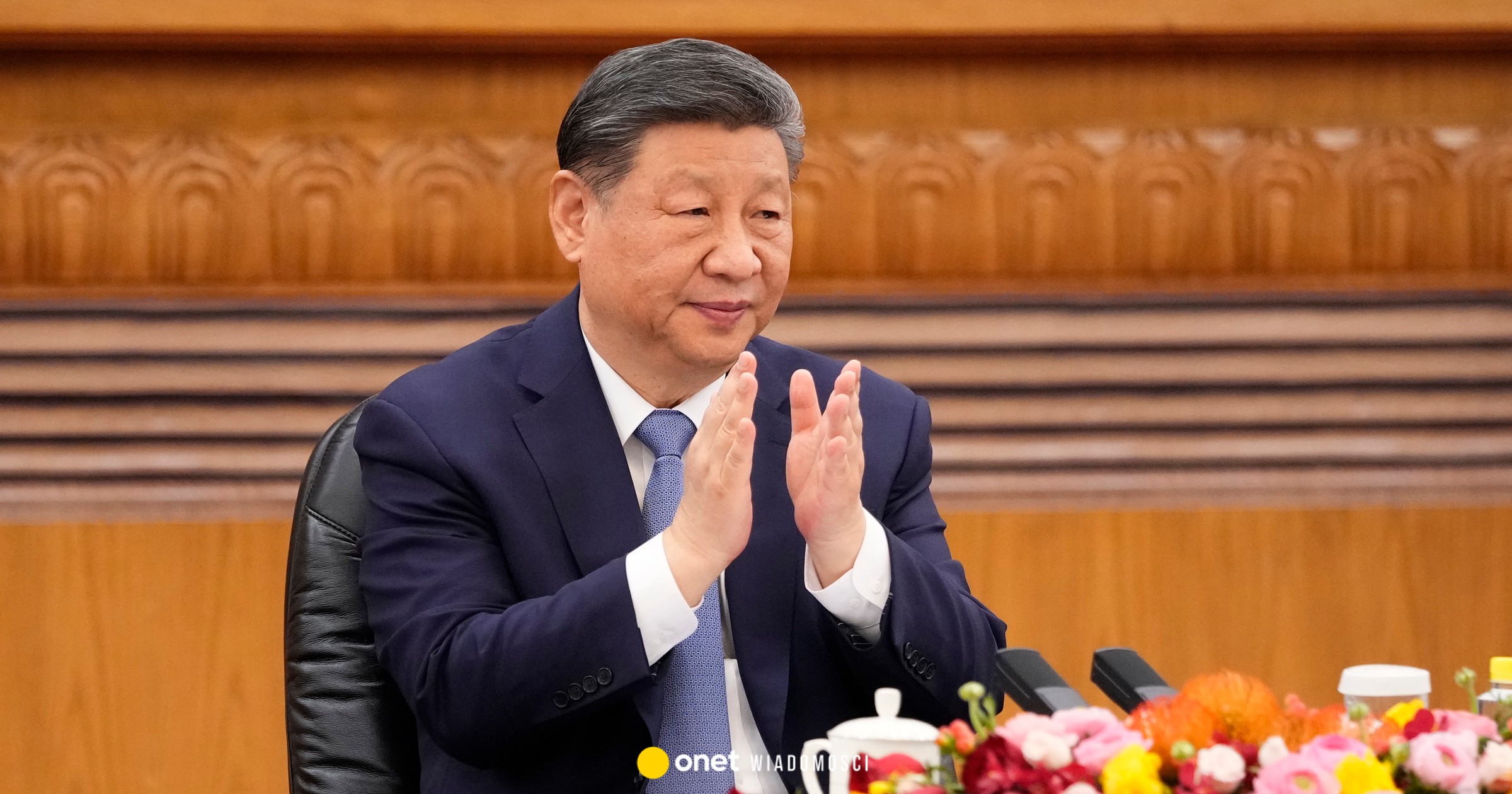
The irony is that it is not Trump who is leading Europe away from free trade, but Xi Jinping. This promises to be a radical change of course.
Europe's faith in free trade is starting to shake
During the G7 summit, which will start on Monday in Evian on Lake Geneva in France, Western leaders of states and governments will discuss how Europe should respond to China's export offensive. Since the COVID-19 pandemic, the EU's trade deficit with China has doubled and now amounts to approximately EUR 1 billion (PLN 4.3 billion) per day. Germany alone lost about 143,000 in 2025. jobs in industry.
European producers complain about Chinese competition, which – thanks to huge state aid – is gaining more and more market shares. Over the past two decades, Chinese companies have received three to eight times more state support than companies in Western industrialized countries, according to the OECD.
There is currently a significant change in course in Europe. France demands new protective instruments against Chinese imports – modeled on the American ones. The EU is considering introducing additional tariffs, import restrictions and a more active industrial policy. Even a European equivalent of the US “Section 301” (Trade Act of 1974), under which Washington can impose wide-ranging punitive tariffs, is being considered. For economist Shahin Vallee, this is a “significant intellectual change” in Europe.
The article continues below the video
Even more noteworthy is who joins this debate. France, Italy, Spain, the Netherlands and Lithuania already in May called on Brussels to adopt a tougher course. For a long time, Germany was one of the biggest brake companies. The Chinese market was too important for German exports. Now, however, the situation is changing – the German trade surplus towards China has turned into a deficit of approximately EUR 90 billion (PLN 382 billion).
As a result, even Chancellor Friedrich Merz is now demanding that Europe take more decisive action to protect itself from competition.
So was Trump right about China? This question is being asked in Europe today with much less indignation than a few years ago. In fact, the EU is increasingly adopting Trump's diagnosis — but not his method. Europe is trying to defend free trade by partially restricting it.
But this is where Europe's dilemma begins. A US-style trade war is unlikely to occur – the economic damage of such a move would be too great. A middle ground solution is more likely: targeted tariffs on sensitive industries, tighter controls on subsidized imports, and an industrial policy that strengthens European producers.
Xi has stronger cards
Even this compromise comes with risks, however. China controls a significant part of the global processing of rare earth metals and other key raw materials that are necessary for the production of batteries, wind turbines, semiconductors and elements in the arms industry. When Beijing imposed export restrictions on them last year in a dispute with the United States, Europe also felt the consequences.
There is therefore growing concern in Brussels that Xi may use the same measures against Europe in the future. The Chinese authorities are already openly warning against a trade war. Several high-level meetings with the EU were canceled by Beijing at the last minute. At the same time, it tightens control over foreign enterprises and makes it more difficult for companies to withdraw their supply chains from China. The European Chamber of Commerce in China warns of “unprecedented damage” to European companies.
This is why the real dividing line in Europe is not between free traders and protectionists. Most governments now share the view that Europe must better protect its industries. What is controversial is how far he wants to go.
The prediction is obvious – Xi Jinping will not turn European free trade supporters into Trumpists overnight. However, it forces them to use instruments that have long been considered taboo in economic policy.
Fearful of China's economic power, Europe is becoming more protectionist — and thus more like Trump than many politicians in Brussels would like.
I’m Ashley Davis as an editor, I’m committed to upholding the highest standards of integrity and accuracy in every piece we publish. My work is driven by curiosity, a passion for truth, and a belief that journalism plays a crucial role in shaping public discourse. I strive to tell stories that not only inform but also inspire action and conversation.