Armand Goshu's essays are dominated by a lucidity that cannot leave room for pacifist naivety, writes political scientist Ioan Stanomir, in a review of the volume “The Endless War. How the invasion of Ukraine changed the rules of the game.”
The last book of dialogue essays due to Armand Goshu is part of the attempt, ambitious and daring, to write for our contemporaries the chronicle of a war that opened the door to the world of tomorrow. The interviews it includes (the most numerous of which are given, on the “Contributors” platform, to Lucian Popescu) represent the photos of the present that becomes, through the simple act of passing the moment, the past.
Eminent historian and formidable political scientist, Armand Goshu is a seismograph attentive to the changes in international society. His judgments and testimonies are essential material for the reading effort that will follow. The voice in these conversations is always related to the long duration. The drama of the seemingly endless war is part of the legacy of the Russian and Soviet imperial space.
By its very nature, the conversational essay is the kind that frames, organically, the process of the birth of ideas and what we observe is the direct reflection of the events themselves. The past, the present and the future come together in this dialogue, which means, as Goshu himself notes, an act of pedagogy, but also of collective introspection.
The years recorded by Armand Goshu are those in which, gradually, the illusions of peace are removed by the reality of war frozen in its own dynamics. The mediation efforts of President Trump have failed and, together with them, the attempt to end the conflict by negotiation has also failed: the anatomy of the plans proposed to Ukraine and Russia is part of this effort as a chronicler and interpreter undertaken by Goshu.
Ultimately, the failure of the American peace plan can be attributed to the misunderstanding of the deep stakes that motivate Russia in the years after 2022. The purpose of the war is inseparable from the nature of the regime itself: Putin's order needs the imperial elan to legitimize itself. The only acceptable peace for Russia would be the one that would establish the capitulation of Ukraine and its reduction to the position of a satellite in the orbit of the Russian world.
This book refers to one of the most important changes that took place during the war years – the transformation of the relationship between Russia and China, through the increased consolidation of the Chinese ascendant. And perhaps this is the lasting effect of the Russian military adventure in Ukraine, the formalization of Russia's economic and military vassal position in relation to China. The new totalitarian hegemon of our world finances the war that accelerates the decline of Russian power, in order to build the foundation of his own domination.
Because it is clear that, in the axis of revisionist states, communist China is the actor with the most extensive global ambitions. Russia's decline allows China to take over as a systemic rival to the United States. To imagine a policy of separating Russia from the Chinese state is, in these moments, a proof of naivety and blindness.
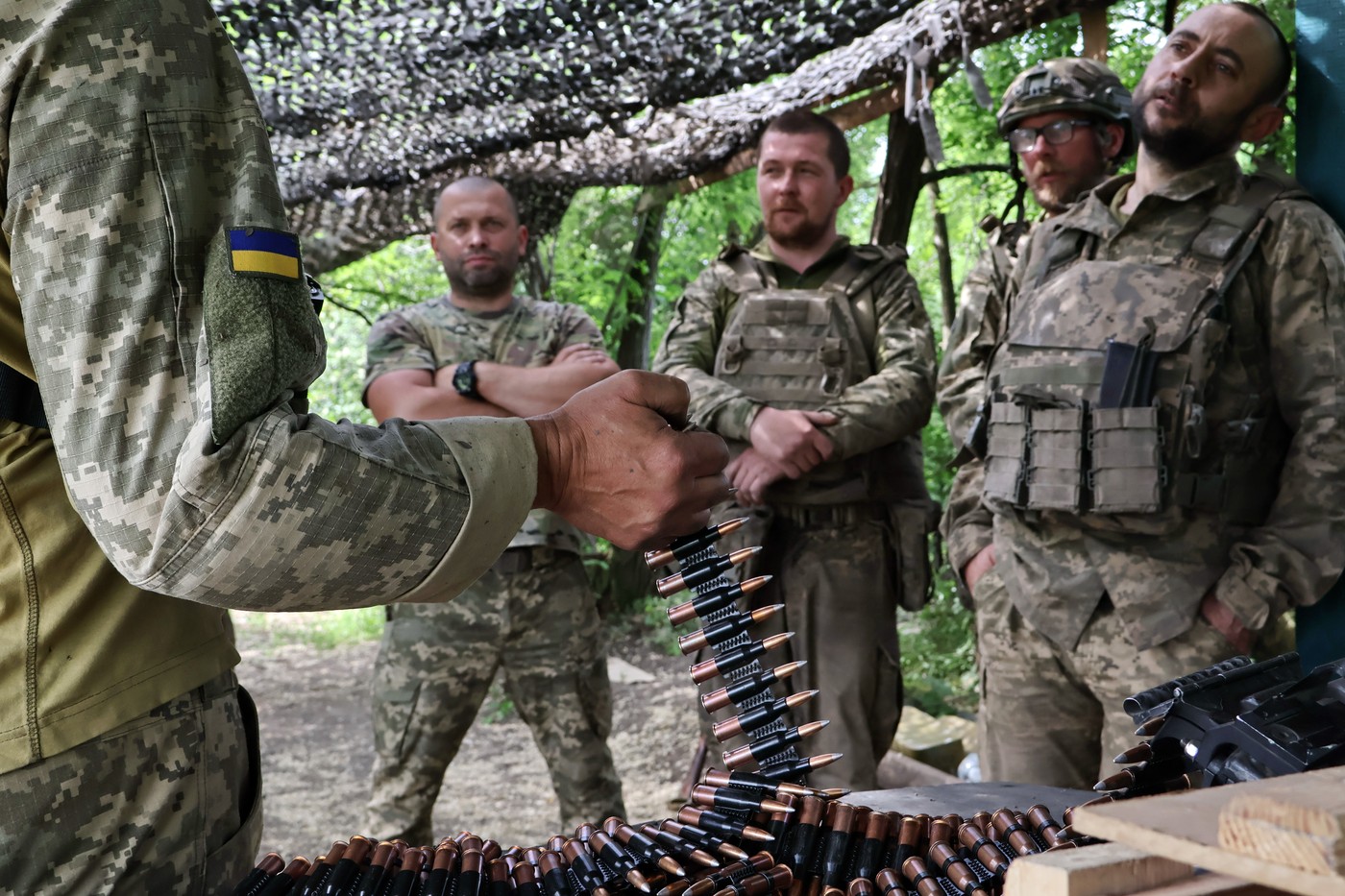
Trapped in this gear of the war economy, Russia is, at the same time, incapable of defeating Ukraine militarily. The deadlock on the front is doubled by the terrible loss of human life. Putin's Russia practices a type of post-Stalinist war, in which war crimes are mixed with the sacrifice of those who are not citizens, but slaves of the Russian state.
Armand Goshu's essays are dominated by this lucidity that can no longer leave room for pacifist naivety. The challenge of the revisionist coalition can no longer be ignored: Russia and China support the criminal Iran, while the nuclear dictatorship in North Korea exports weapons and soldiers to Ukraine. To conclude a peace that would give Russia victory would be to accept that the future of our nations will be dictated by the new totalitarian empires.
Endless war is, for Russia, the only path that can be followed. For Ukraine, the definition of victory is as clear as possible – its survival as a free nation, included in the family of free nations of our continent. The age of uncertainty we are going through is one of choice. Giving in to aggression and blackmail is just the beginning of other wars. Confronting the new “axis of evil” is the duty we cannot abdicate.
*Text originally appeared on Contributors
** “The endless war. How the invasion of Ukraine changed the rules of the game”, by Armand Goșu, Polirom publishing house, Iasi, 2026