The F-35 is slowly getting old. These may be his successors

Today, the F-35 is a symbol of modernity – not only in Poland. The problem is that the technology is not that new anymore.
The F-22, the first aircraft of this generation, made its first flight in… 1997. The F-35 had its first flight in 2006. That's a lot of time. So work on the successors of these machines is becoming more and more advanced. The question is whether these will still be fighters in the classic sense of the word. Apart from the fact that questions are being asked whether such machines, costing hundreds of millions of PLN each, are needed at all today.
Read also in BUSINESS INSIDER
It's not just the F-35 that's getting old. The Chinese Chengdu J-20 first flew 15 years ago. And in such difficult times, technology on the battlefield is changing extremely quickly.
Several countries are already working on sixth-generation fighters. However, it looks like one key project is unlikely to work out. The plan to build a Future Combat Air System (FCAS) fighter, which was worked on by the Germans, French and partly also by the Spanish, failed.
Look: F-35s fly over Poland. “The most modern acquisition of Polish aviation”
After nine years, it was announced that the project worth up to EUR 100 billion would fail because Dassault Aviation and Airbus Defense and Space could not agree on the details.
This does not mean, of course, that a European sixth-generation fighter will not be created, but the failure of the FCAS project makes this prospect much more remote. Some European media suggest, however, that there is some scope for cooperation between Berlin and Paris. However, it won't be easy. France wants the plane, among other things. to carry nuclear weapons and operate from aircraft carriers. The Germans are turning up their noses here – for example, they do not have aircraft carriers and probably will not have them.
Look: Germany and France will not build the fighter of the future. Three scenarios for Europe
Sixth generation fighters. These projects are in play
Of course, Europe does not end with Berlin and Paris. The British and Italians are working on their project together, in cooperation with the Japanese. The fruit of the cooperation is the Tempest project. The British consortium BAE Systems plays the leading role here. The work here seems to be quite advanced and there are no major disputes – as in the case of FCAS.
Tempest aircraft prototype
|
James Glossop / News Licensing / Forum / Forum Polish Photographers Agency
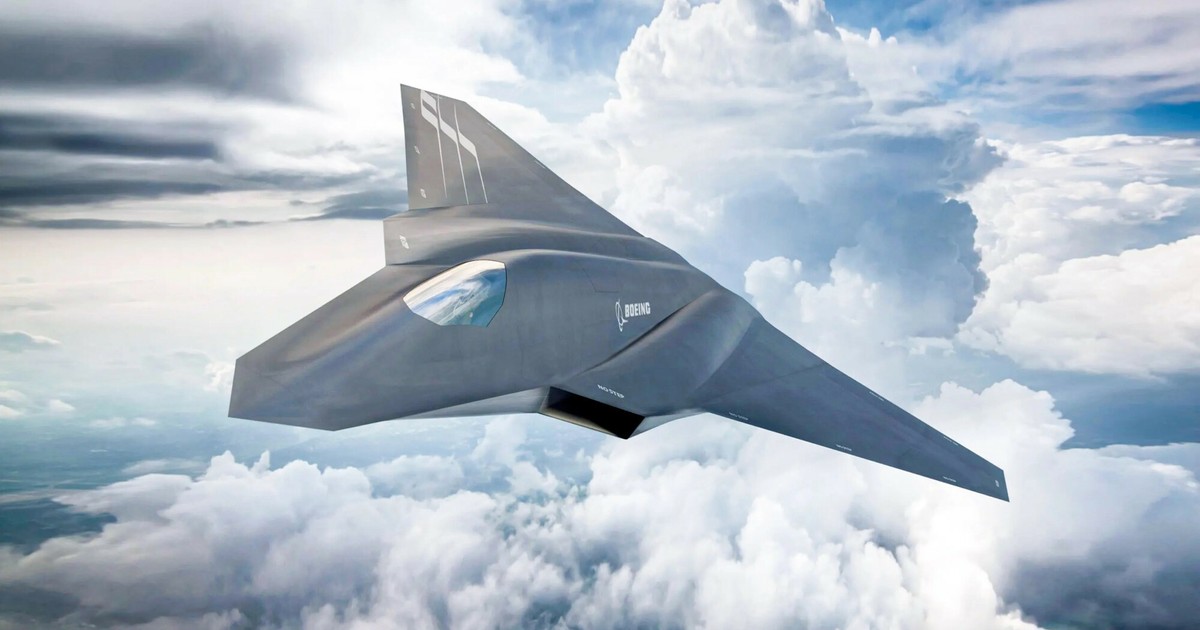
Of course, the Americans have their own project, it will be the F-47. The name is intended to refer to the fact that Donald Trump is the 47th president of the USA. Interestingly, the project is being handled by Boeing, not Lockheed Martin, which was responsible for the F-35 project. Part of this may be due to the design problems that have plagued the F-35 in recent years.
The project from China is much more mysterious. Or even projects. At the end of last year, photos and videos of a test flight of an aircraft, which was probably a Chengdu J-36, circulated online. But in the military world there is talk of another project – the Shenyang J-50. Are these projects competitive or complementary to each other? This is not known for sure. Analysts from the West, however, are sure that work on projects in the Middle Kingdom is advanced – perhaps even more advanced than in the USA.
There were also reports of projects from Brazil, India and Sweden. Interesting cooperations may also come into play here – for example, it is said that the Brazilians want to develop their new fighters based on the current models of Swedish Saabs. The question arises whether in this way “real” next-generation fighters can be created, or whether it will be an “improved” fifth generation.
Russia seems to be the major absentee in this race, although there was also talk of the MiG-41 project – but the available information shows that it is not very advanced yet.
See also: “It'll be like a living room in the clouds.” The creators of a new futuristic plane describe their project
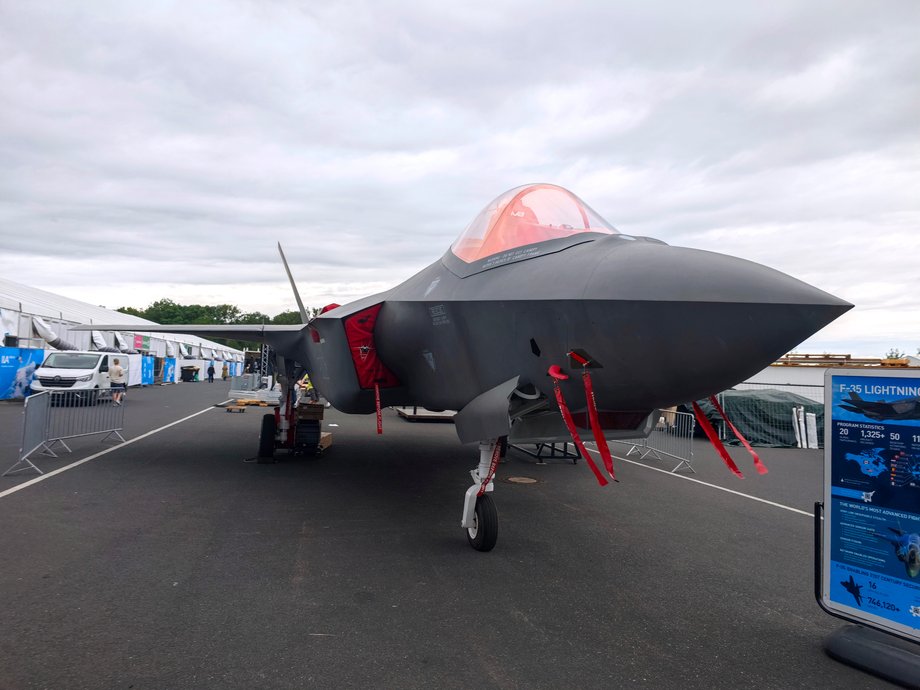
F-35 plane
|
Mateusz Madejski / Business Insider Polska
So what will the new superfighters be like?
The Economist weekly notes that they will all probably have one thing in common – they will be very big.
Where does this come from? Anti-aircraft systems are becoming more and more advanced, so “deceiving radars” is becoming a priority. Therefore, the designers decided that it would be better to hide all the bombs and missiles inside the machines – because if they “hang” on the wings (as in the F-16), it is easier for the enemy's radars to spot them.
And so: the current F-35 is 15.7 m long, while the F-47 is to be 19.2 m long. And it will probably be one of the smaller sixth-generation fighters anyway – the Chinese competition is expected to be much larger.
Reach will also be key. The reason here is also that the military expects that the future major conflict may take place over the waters of the Pacific. Therefore – according to the Defense One website – the F-47 is to have 70 percent greater range on one refueling than the F-22. The British-Italian-Japanese Tempest will be able to cross the entire Atlantic on one refueling.
I guess it won't be a surprise to anyone that the new fighters will be much faster than the fifth generation ones. The F-47 will be able to move at Mach 2, while the F-35 can reach Mach 1.6.
However, this will not be the most important thing. Gen. Dariusz Parylak told us that it is artificial intelligence that will decide the fate of future wars. The designers of new planes are certainly aware of this. “The Economist” describes that the new machines will not only be airplanes, but also mobile data centers connected to tanks or ships. Data can be transferred to “artificial intelligence centers”. This artificial intelligence will be able to decide on the targets of attacks – or when attacks should be carried out.
It's hard not to ask questions about the role of pilots here. For now, probably all countries assume that a person at the helm is necessary. At least for now.
However, there are many people who would like to go in a completely different direction. It cannot be denied that drones have been developing very quickly recently – especially in the conflict in Ukraine, there has been incredible progress, even in recent months.
The question is whether AI is already developed enough to completely replace pilots. There are analyzes that their role in new generation fighters will be reduced to something like an “officer responsible for weapons selection”. Key decisions will be made by commanders who will have access to data collected by AI. It cannot be ruled out that the AI itself will make decisions, and the officer on the plane will only verify and execute them. Perhaps sixth-generation fighters will also be a kind of “command center” for drone swarms. Nevertheless, it is very likely that the sixth generation of fighters will be the last to need a human in the cockpit.
See also: Boeing is fighting for a contract for the Polish army. The US giant promises investments
Ok, but when will these machines appear?
According to information from the Defense One website, there is pressure for the F-47 in the US to be ready for its first flight in 2029 – that is, before the end of Donald Trump's term. Other sources say that the first test may take place a year earlier. It usually takes a long time to put a machine into production and service. For example, the first F-35 flight took place in 2006, and the plane entered service nine years later. With such complex designs – and yet the sixth generation will be much more technologically advanced than the fifth – countless problems and delays can be expected.
The British-Italian-Japanese Tempest is scheduled to enter service in 2035. Looking at China's development, it can be expected that Beijing will be faster here. “The Economist”, however, emphasizes that in many capitals there are questions about whether it is really worth investing huge amounts of money in projects that will not be useful for at least a decade. Again, many experts draw attention to Ukraine. This country's troops have recently been attacking targets in Moscow and St. Petersburg, but they are not doing it with F-35 or F-22 planes – they do not have them yet and this will not change soon. They achieve this by relying on modern unmanned systems that are dozens, if not hundreds, of times cheaper than complex latest-generation fighters.
Author: Mateusz Madejski, journalist of Business Insider Polska