IRES study: Scientific information is the main benchmark of adult consumers in evaluating the risks associated with smoking

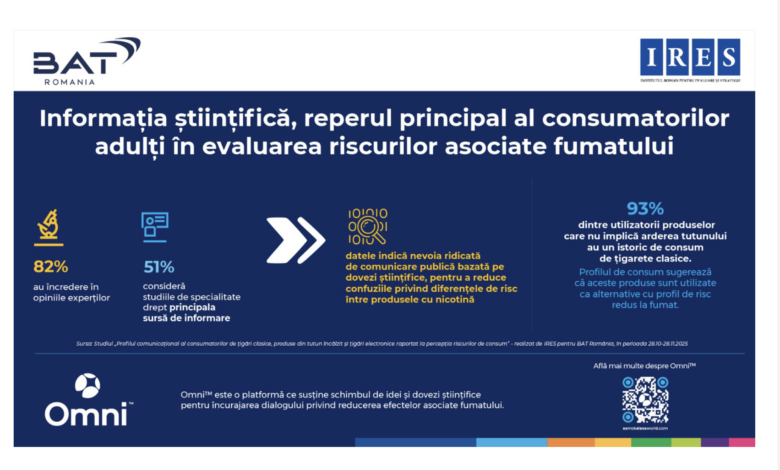
The main conclusions of the latest IRES study that analyzes the communication profile of consumers of tobacco and nicotine products, as well as the perception of the risks associated with consumption, show that the main source of information is represented by scientific information (51%), followed by websites (40%) and mass media (37%).
“The data from the IRES study shows that the public places the most trust in scientists and validated studies, while myths, conspiracy theories and influencer messages have little credibility in the risk information process associated with smoking,” said Dan Jurcan, IRES research director.
The study also indicates significant differences in the level of information of consumers of products containing tobacco or nicotine about different types of products. Cigarettes lead the way, with 93% of respondents saying they are very well informed, followed by heated tobacco products (67%), e-cigarettes (58%) and oral nicotine sachets (29%).
These gaps highlight the need for Romanian consumers to be able to make informed decisions regarding the risks of the products they consume. In this context, the results of the IRES study reflect an important opportunity for evidence-based public communication aimed at reducing confusion and supporting informed decisions about the use of tobacco and nicotine products.
This is precisely why BAT has developed the global platform Omni™a digital hub bringing together the latest research, studies and scientific data on tobacco and nicotine products and the harm reduction approach. The platform provides transparent access to evidence-based information for the scientific community, authorities, health professionals and the interested public, facilitating well-informed dialogue and supporting informed decisions. By centralizing relevant data in one accessible space, Omni™ functions as an up-to-date compendium of science, contributing to a better understanding of risk differences and technological and scientific progress in the field.
“The results of the study reconfirm that rigorous scientific information plays an essential role in shaping public perceptions of the risks associated with smoking. Transparent access to solid data is fundamental for making informed decisions. BAT supports constant collaboration between the scientific community, authorities and society, for the development of public policies and data-based communication that contribute to a better understanding of the differences in risk between various products.”, said Ileana Dumitru, Director for Foreign Affairs of the Southeast Europe Area, BAT.
The study data also shows that products that do not involve the burning of tobacco are used as low-risk* alternatives to smoking: an overwhelming majority of users of these products (93%) have a history of smoking classic cigarettes. This usage profile suggests that smokeless products are predominantly used as a low-risk* alternative by existing smokers.
The study “The communication profile of consumers of classic cigarettes, heated tobacco products and electronic cigarettes in relation to the perception of consumption risks” was carried out by IRES for BAT Romania on a total sample of 1,370 adult respondents (1,068 main sample and boost of 302 users of heated tobacco products) in the period 28.10-28.11.2025. The research targeted adult users of tobacco and nicotine products and analyzed consumption behaviours, sources of information and perceptions of associated risks.
–
About BAT
BAT is an industry-leading global consumer goods company committed to accelerating the transition to A Smokeless World and transforming its portfolio for long-term sustainability. Its portfolio includes cigarettes and a rapidly growing range of smokeless alternatives that do not involve combustion, such as vaping products, heating products from tobacco and plants, and modern oral nicotine products.
The company aims for 50 million adult consumers to choose its smoke-free products by 2030, and for these products to generate 50% of the Group's revenues by 2035. As of 31 December 2025, BAT's new product categories were used by more than 34.1 million adult consumers worldwide, many of whom have quit smoking altogether or reduced their consumption. Smokeless products represented 18.2% of the Group's revenues.
BAT employs more than 47,000 people and in 2025 generated revenues of £25.6 billion. Powered by Omni™, BAT's platform for integrating evidence for change, the company continues to strengthen its scientific capabilities in systemic toxicology, clinical and behavioral research and post-market studies.
In addition to portfolio transformation, BAT is stepping up its efforts to reduce its environmental footprint and support positive social impact throughout the value chain. In 2025, the company received a Triple A rating from CDP for its reporting on Climate Change, Water Security and Forests.
For more information, visit www.bat.com and www.asmokelessworld.com.
*Based on existing evidence and assuming full transition from smoking to these products, which are not without risk and are addictive.
Article powered by BAT