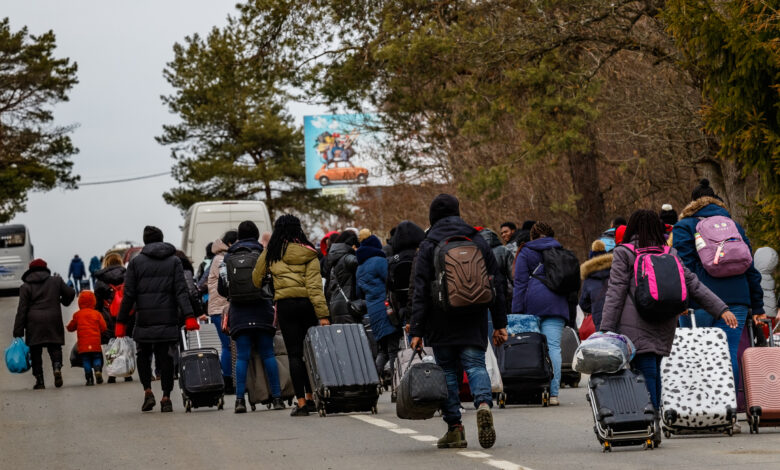
The member countries of the European Union are analyzing the possibility that Ukrainian men of military age will no longer benefit from a future extension of the protection scheme from the EU bloc, which provided shelter for more than four million people from Ukraine who fled the Russian invasion, writes Euractiv.
The proposal was made in discussions on the EU's Temporary Protection Directive (TPD), which allows Ukrainians to live and work in Europe without going through national asylum systems. The scheme, activated after the full-scale invasion of Russia in February 2022, currently runs until March 2027, following an extension agreed last year.
According to an internal EU Council document seen by Euractiv, options being discussed include extending temporary protection while narrowing its scope, including by “excluding men of compulsory military age” or people who have not legally left Ukraine. Any such limitation would apply to new applicants seeking temporary protection status.
Some national governments have expressed concern that “an increasing proportion of recent arrivals” are men of conscription age, saying the framework should be revised “also in Ukraine's interest” both to support the country's resistance against Russia and to support future reconstruction efforts, the document said.
Ukraine faces growing labor shortages and recruitment challenges as its war with Russia enters its fifth year. In 2024, Ukraine lowered the age of mobilization from 27 to 25 and introduced measures to improve military recruitment and registration.
The future of the aid scheme for Ukraine will be discussed at this week's Justice and Home Affairs Council.
Euractiv first reported in March that EU countries were exploring another extension of the framework, which could push the scheme into a sixth year. Any extension or revision of this aid scheme should be proposed by the European Commission, which so far has not specified whether it will officially propose another extension, writes Euractiv.