“Cancer is essentially a genetic disease.” Testing that can save lives: How NGS helps to faster and more accurate oncological treatments

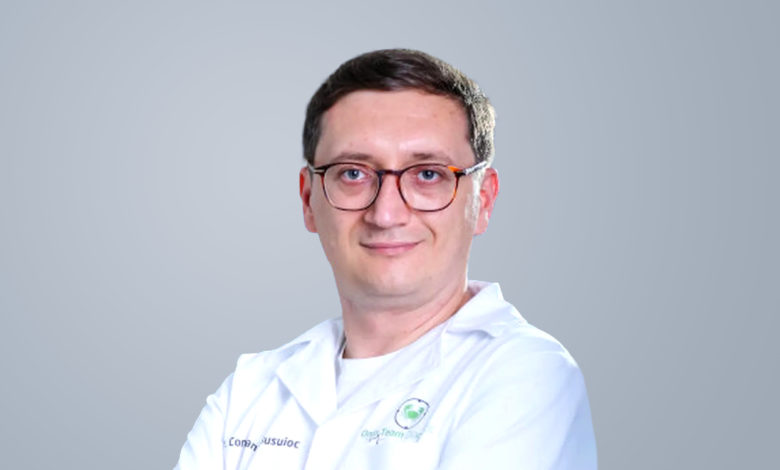
Cancer patients in Romania currently have access to an advanced diagnostic technology, which until recently was available only in the big oncological centers abroad. It's called NGS – Next Generation Sequencing -and allows simultaneous reading of hundreds of thousands of DNA or RNA fragments in a tumor, offering a complete genetic profile. “Cancer is essentially a genetic disease. It occurs due to mutations that can be spontaneous, caused by environmental factors or even hereditary acquired. These mutations, although it gives cancer cells certain advantages that facilitate their development, can also be a vulnerability, a true heel of Achilles, because they can be attacked with modern therapies,” explains Constantin. Busuioc, primary physician pathological anatomy, over -specialized in molecular pathology in the Oncoteam Diagnostic Laboratory. With the help of NGS technology, doctors can identify these mutations through a single test, which means less expectation and more suitable treatments for patients.
While traditional methods of genetic analysis can examine one or two genes at a time, NGS tests simultaneously analyze tens or hundreds of genes relevant to cancer. “We can detect punctiform mutations, genes of genes, variations in copy number and other essential markers, such as microsatellite instability (MSI) or tumor mutational load (TMB). All in a single experiment,” says Dr. Busuioc.
The technology is useful in many types of cancer: lung, colorectal, breast, ovarian, prostate, but also in melanoma, sarcomas, lymphomas/leukemia, brain tumors or rare tumors. The result of the test suggests to the oncologists what treatments could work and if the patient is eligible for clinical studies with innovative therapies.
What NGS testing involves
First of all, a tumor sample is needed – most often taken during a biopsy or surgery – which arrives in the Oncoteam laboratory. After the anatomopathologist selects the area with malignant cells and establishes the percentage of tumor cells, follows the DNA/RNA extraction, the quality of the nucleic acids, the actual sequence and the bioinformatic analysis of the data. Finally, the report is validated by a multidisciplinary team of two molecular pathologists and biologists.
“If the sample is not quality, we do not continue the analysis, to avoid unnecessary costs for the patient. Either another sample is recommended or another method of analysis,” stresses Dr. Busuioc.
Results in 10-20 days
A major advantage of NGS testing is speed. If the test is sent abroad, it takes at least 4-6 weeks until the result comes, due to the transport, clearance and agglomeration of the Western laboratories. At Oncoteam, the average response time is 10-20 days, depending on the complexity of the test, explains Dr. Busuioc. The report is sent by E-secure email to the attending physician and can be accessed by the patient by a unique code, and upon request, tele-consiliation is organized.
The costs range from 7,000 lei (for 52 genes) to almost 10,000 lei (for extended profiling with over 500 genes). Although these analyzes are not yet reimbursed universally by the National House of Health Insurance, some types of cancer – colorectal, pulmonary, breast and ovarian – benefit from free tests, under certain conditions, which allows us to offer tests by NGS settled. “In the near future, the gastric carcinoma will be added. Although multigenic panels are not explicitly reimbursed, for example, on Oncoteam, in the case of pulmonary carcinoma, for reimbursed tests and fusion Egfr, alk1 ros, ntrk and Ret We use the NGS opa panel, which includes 52 genes, having the potential to detect many other possible therapeutic targets, offering an extraordinary benefit for patients, keeping the doctor, ”details the doctor.
What do the test panels contain
Oncoteam offers several types of NGS panels, adapted to the clinical needs of patients. An example is Oncomine Precision Assay GXwhich checks 50 essential genes for solid tumors, with results in 10 days. Oncomin Comprehensive Assay Plus It scans over 500 genes and offers extensive profiling for difficult cases. Gynecological panels and/or BRCA It is used for breast cancers, ovary, prostate, pancreas, endometrium, with information on genetic risk and eligibility for targeted therapies.
Panels can be customized, and in some cases “on request” genes can be added, especially for translational research purposes.
Multidisciplinary collaboration for relevant results
A genetic test is not enough. His correct interpretation requires a close collaboration between the anatomopathologist, the molecular biologist and the oncologist who knows the patient's history. In complex cases, Oncoteam team organizes type meetings Molecular tumor boardin which the patient's file is analyzed in detail for the recommendation of the most appropriate therapy.
NGS testing helps patients in several ways, according to Dr. Busuioc: Immediate stratification – “Actionable” mutations are reported with the indication of drugs approved by the European Medicament Agency (Food and Drug Administration) and CNAS; Predictive Biomarkers (TMB, MSI, HRD) -eligibility condition in therapies such as PARP-I + immunotherapy combinations; Monitoring of variants with uncertain significance – Vus (Variant of Untiltain Significance) – Oncoteam updates the internal database, and the doctor receives Addendum when a Vus becomes “Likely Pathogenic” (probably pathogenic). “This approach increases the inclusion rate in 15%-25%studies, according to ESMO/ASCO reports.
The future NGS in Romania: more accessible, faster
NGS technology becomes more and more accessible as costs decrease. In the near future, it is expected that the 50-100 gene panels will become part of the care standard for several types of cancer. The Law on personalized medicine and the National Cancer Plan 2023-2030 already provide for the implementation of this type of diagnosis within the public, and the pilot projects are funded by the PNRR.
“Of the 20,000 genes we hold, only about 900 are involved in cancer. For this reason, in a not very distant future, it is possible to have a single comprehensive panel for all cancers. The oncological diagnosis changes from A mutation – a test TO A test – all mutations. The fact that these services are available now, in Romania, can make the difference between weeks and days in the initiation and choice of the best possible treatment ”, concludes Dr. Constantin-Ioan Busuioc.
***
Read also other informative articles, on medical topics, in the section we well.
This article is supported by MedLife, the largest network of private medical services in Romania, and aims to be a source of information and inspiration for a healthy and balanced life.
Health is the main source of happiness of Romanians. At MedLife, the happiness of people enjoys us and motivates us to offer medical solutions to the highest standards.
Regardless of the specialty, at MedLife you will find good doctors at any time, whose expertise is complemented by the most advanced medical technologies and a modern infrastructure, ensuring personalized care for each patient.
Find out more details about all services on https://www.medlife.ro/
Article supported by MedLife