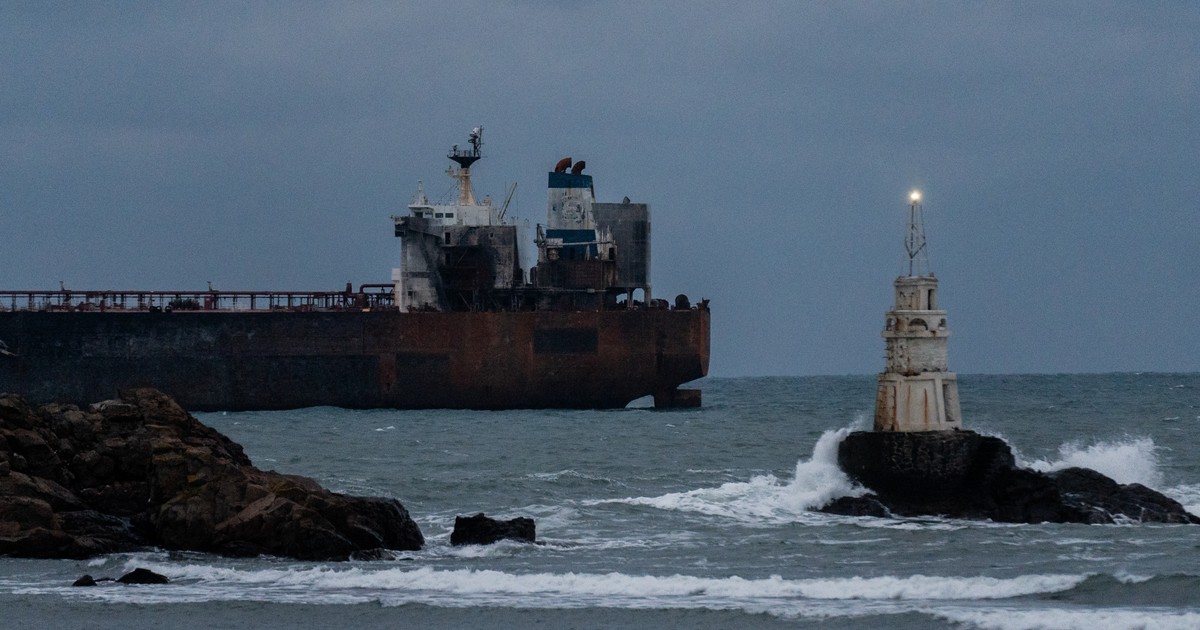
The shadow fleet is a group of at least 600 ships used by Russia to transport oil and circumvent sanctions. It became especially active after Russia's invasion of Ukraine and the resulting introduction of numerous economic restrictions. Some of them concern the sector related to the extraction and export of crude oil by Russian companies – which is painful for Moscow because the profit from the export of fossil fuels remains a significant part of the revenues to the Russian budget.
See also: Ghost ships in the Baltic Sea. This is how Russia mixes trade with sabotage
Shadow fleet. Russia's used tankers pose a threat in the Baltic Sea
The ships of the Russian shadow fleet are usually units that have been used for a long time and are seriously worn out (they are even several dozen years old), do not have appropriate insurance, and thus pose a risk of accidents and ecological disasters on a scale that is difficult to imagine. They often hide their location and transfer cargo on the high seas to hide their true origin. This creates an additional risk of dangerous incidents.
“The shadow fleet has become a key tool limiting the effectiveness of restrictions, and at the same time generating serious environmental and security threats on a global scale,” write the authors of the PISM report. They emphasize that the problem is also important from the Polish perspective, because the main area of operation of the shadow fleet is the Baltic Sea.
The authors of the report indicate that these units are also used for sabotage and intelligence activities targeting critical infrastructure. Starting from 2022 to March 2026, as the authors of the report indicate, there were at least 25 incidents related to shadow fleet units (groundings, explosions, breakdowns and collisions with other units). In fact, this number may be higher, but a precise determination is not possible due to the secret nature of the activities of these ships.
See also: Russians are circling the Baltic Sea. The Germans sent a special ship
How to fight the shadow fleet? PISM lists the expansion of controls and increasing the number of ship detentions in the Baltic and North Seas as key activities. Another element is the imposition of sanctions on new tankers and key entities supporting its operation, as well as limiting Russia's ability to purchase new ships that can strengthen the shadow fleet.
“The EU and the UK could draw up a list of high-risk countries to which the sale of tankers would be legally prohibited or subject to strict supervision,” the report says.
From the point of view of Western countries, the main problem remains the adaptation of activities and, above all, legal regulations to this type of activity. — We are currently chasing Russian flexibility, said Zuzanna Nowak from the Opportunity Institute for Foreign Affairs during the presentation of the report. It is necessary to introduce (at national and EU level) and effectively enforce more stringent technical and environmental standards. In this area, it is also important to counteract the practice of frequent flag changes on ships.