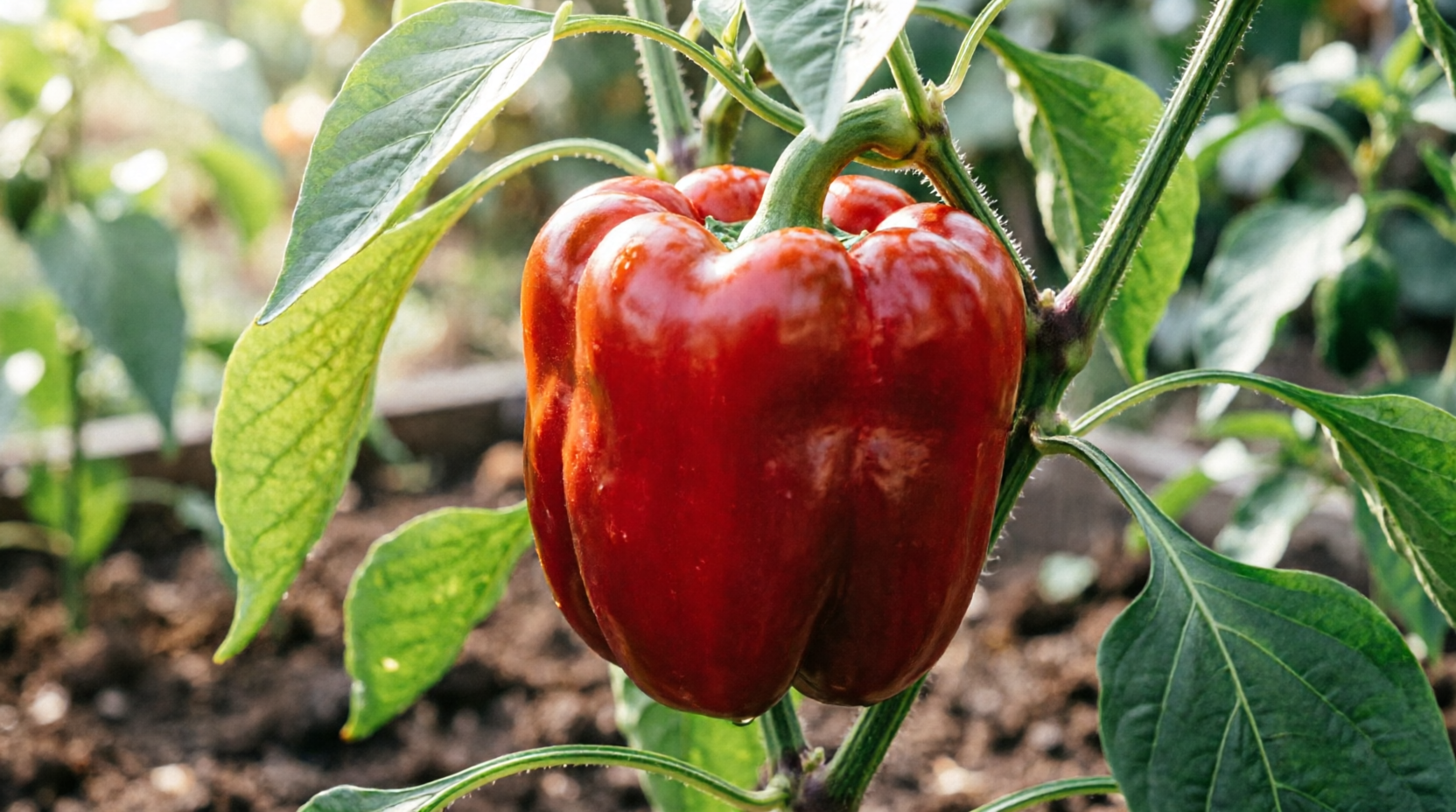
Immediately after planting peppers in open ground, it is important not to miss the moment of the first feeding. Their further growth and future productivity depend on how timely the plants receive the necessary elements.
When to fertilize
It is recommended to give the first fertilizer 10–12 days after planting. By this time, the seedlings have time to take root, adaptation to new conditions is completed, and the root system is ready to absorb nutrients. If you miss this period, the growth of the bushes may slow down, and fruiting will occur later.
Which elements are most important?
Horticulture expert Victoria Radzevskaya explains: at the initial stage, peppers especially need potassium and phosphorus. It is better not to force nitrogen during this period, since it stimulates foliage growth to the detriment of roots and ovaries.
Here's what the key elements provide:
- Phosphorus strengthens the root system, which directly affects the number of ovaries and the duration of fruiting.
- Potassium increases plant resistance to temperature changes and diseases, and also improves the taste of future fruits.
- Magnesium is involved in photosynthesis and prevents yellowing of the lower leaves.
If there are enough of these substances, the peppers develop smoothly, do not stretch out and can more easily withstand possible cold snaps.
A simple recipe for feeding
Take 10 liters of water (preferably settled and warm). Dilute 1 tablespoon of potassium monophosphate and magnesium sulfate in it. Stir thoroughly until the crystals are completely dissolved.
Water the mixture at the root of the peppers, being careful not to get it on the leaves. The consumption rate is approximately 0.5 liters for each bush. It is best to carry out this feeding in the morning or evening, when there is no active sun. After this, it is advisable to slightly loosen the soil to ensure air access to the roots.