Myret Zaki is a renowned Swiss journalist and author of several books, including: “The end of the dollar – how the dollar became the largest speculative bubble in history”
Is the world still willing to comply with US sanctions? The future of American dominance depends on the answer to this question. Beijing just gave us a clue.
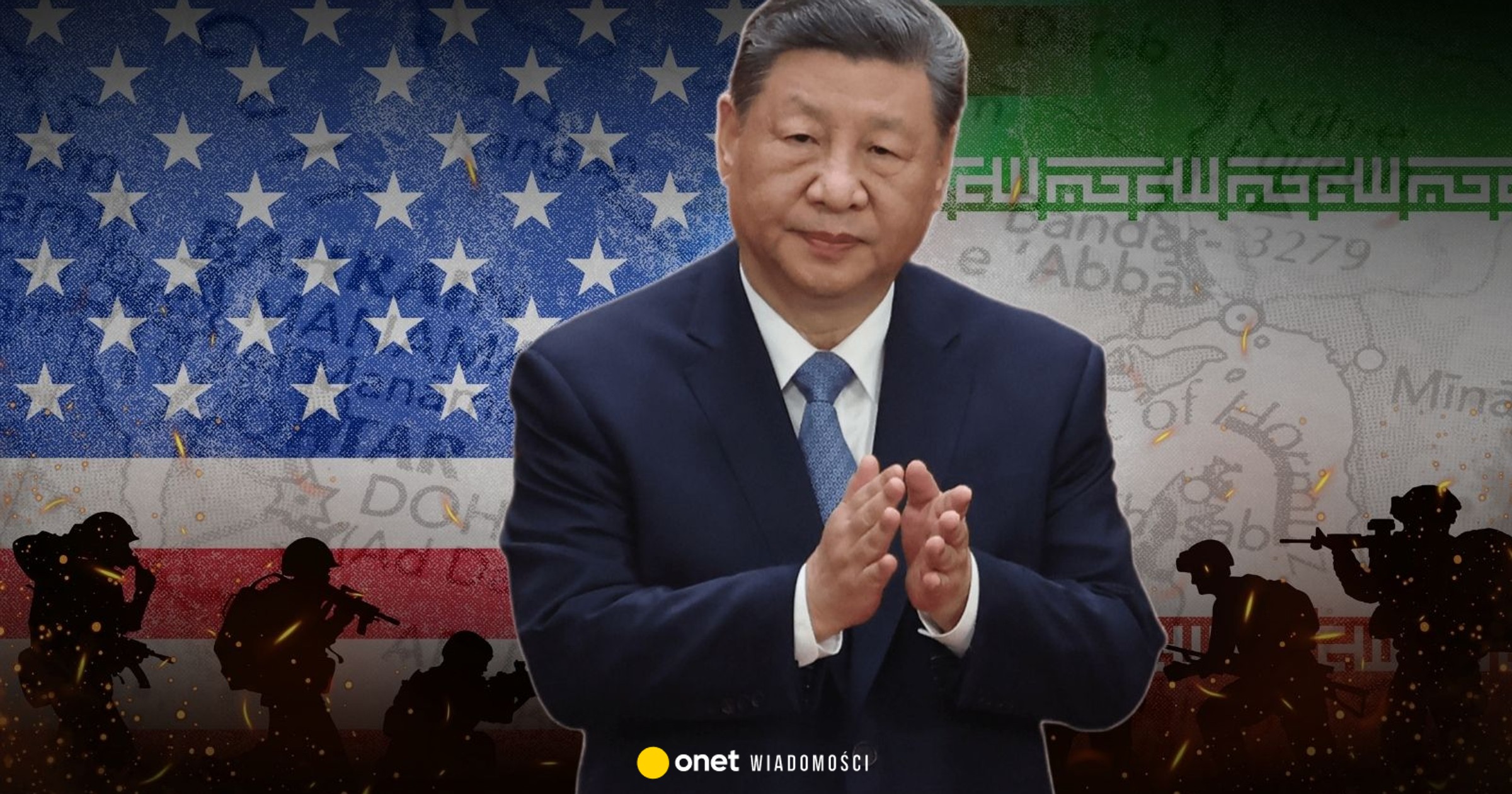
The Chinese government has informed the world that it will ignore US sanctions against five Chinese refineries that are accused of buying Iranian oil. In a statement circulated around the world, Beijing said the US measures “should neither be recognized, implemented nor complied with” because they “unreasonably prohibit or restrict the activities of Chinese enterprises with third countries… and violate international law.”
The crisis in the Strait of Hormuz became an unsuccessful test of the power of the United States. This has a number of consequences for the world order, including: China's dismantling of the US dollar system.
Beijing issued the decision not to comply with American restrictions last Saturday, May 2. Meanwhile, the US is gradually imposing restrictions on entities and persons from the People's Republic of China.
Today, China is a major player in circumventing U.S. sanctions — not only against Iran, but also against other sanctioned countries such as Russia and, previously, Venezuela. China still buys 90 percent. Iranian oil.
The article continues below the video
Already in mid-April, the Chinese tanker Rich Starry, subject to US sanctions, along with other ships passed through the Strait of Hormuz despite the US blockade. The passage of these vessels was considered a test of the U.S.'s ability to enforce the blockade.
To gain access to China and other audiences, Iran has created a sophisticated system. Iran's oil is exported using the shadow fleet [zdezelowanych tankowców omijających sankcje]. Cargoes are transferred between vessels on the high seas. Ships regularly change names, flags and owners, use front companies to conceal the origin of funds and cargo, and disable signals to make them harder to track.
For this reason, Tehran is far from economic collapse and exports almost as many barrels as before the war. This proves the limited effectiveness of the restrictions in the Strait of Hormuz introduced by US President Donald Trump.
In addition to Iran, shadow fleets are also used by Russia and North Korea to circumvent oil sanctions. In total, no less than 900 ships are said to have been involved in bypassing sanctions, which reveals the scale of this practice. For Washington, an attack on this system would involve such prohibitive costs that, in practice, US threats often turn out to be empty.
Sanctions countered by rivals
For analysts, China's direct rejection of US sanctions was a signal and a turning point in the conflict in the Strait of Hormuz. From now on, it will be difficult for the Trump government to obtain concessions from Iran and effectively counteract China's dismantling of the dollar system.
The U.S. defeat in the Strait of Hormuz is a consequence of earlier events. China and India have already partially undermined sanctions against Russia by supporting the purchase of Russian oil, which the Americans have banned.
In other words: the existence of these disobedient powers makes it impossible for Washington to impose a credible, unilateral sanctions regime on the world.
Today, the Strait of Hormuz is becoming the graveyard of American power in the world. This is especially true because the United States also faces significant military challenges, which partly explains the widespread disregard for sanctions.
Democratic Congressman Ted Lieu put it this way: “If Iran — a second-rate army — can severely damage U.S. bases, that means China or Russia can destroy our bases abroad.”
A new definition of power
In the face of the US military stalemate in Iran, the issue of the “most powerful army in the world” takes on a new dimension: it becomes relative, and myth gives way to reality. Technological advantage is no longer a decisive criterion and may even lead to excessive and unsustainable costs in the long run.
As a result, the United States is left with damaged military bases and half its ammunition supplies, having failed to defeat Iran, a much weaker adversary on paper.
As such, America's war with Iran is redefining what it means to be “the most powerful army in the world.” If the US armed forces are not prepared for Iran's modern drone war, if their stocks of air and anti-tank defense systems are depleting at such a rate, it is worth considering the scenario of the United States being involved in a fight on two fronts at the same time. The USA might not be able to cope with such a situation, which proves the limitations of this empire.
The US armed forces are one step behind Tehran. Iran is already using a new generation of stealth drones and drones to track moving targets.
An even greater challenge is cheap alternatives to Patriot anti-aircraft missiles, costing $4 million. (approx. PLN 14.4 million, calculated at the current exchange rate) per unit. They are used to shoot down drones worth 30,000. hole. (less than PLN 108,000). The United States is working to develop cheaper interception systems, but they may be less effective against Iran's faster and more precise next-generation drones.
Ultimately, the Strait of Hormuz becomes the gravedigger of some Western illusions. The United States believed it had the power of sanctions. They thought they had the most powerful army in the world. Then they unexpectedly discovered their sensitivity to asymmetric warfare. This should be a valuable lesson for Washington.
I’m Ashley Davis as an editor, I’m committed to upholding the highest standards of integrity and accuracy in every piece we publish. My work is driven by curiosity, a passion for truth, and a belief that journalism plays a crucial role in shaping public discourse. I strive to tell stories that not only inform but also inspire action and conversation.