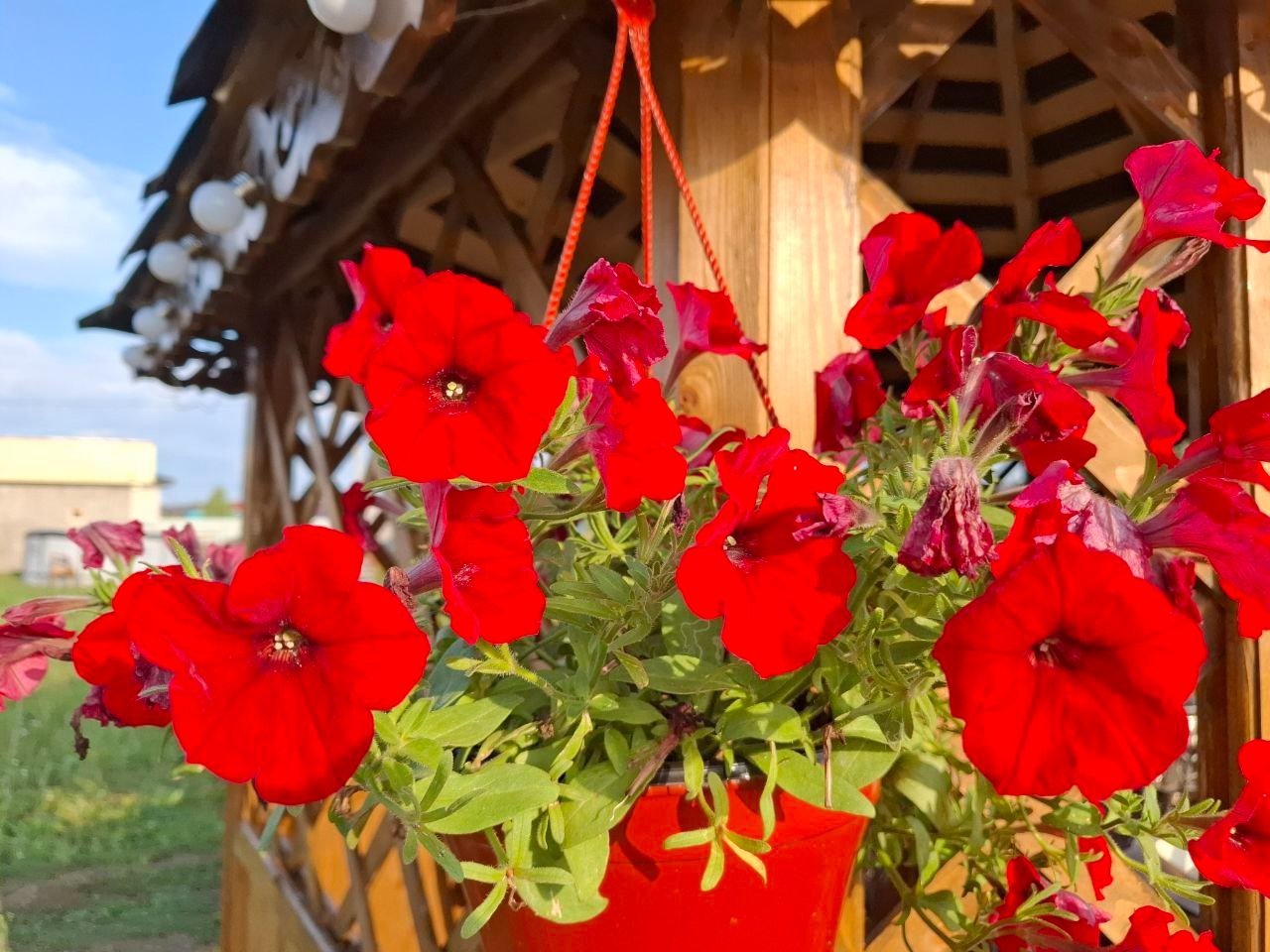
Many flower growers are faced with a situation where by mid-summer petunia loses its splendor, stretches out and blooms sparingly. The reason lies not in the vagaries of the weather or a bad variety, but in one mistake that is made precisely at the moment of planting.
Four conditions for stable flowering
The first is the volume of soil. One plant needs at least 5 liters, preferably 8–10. In a cramped pot, the roots cannot expand, and the petunia switches to survival mode instead of flowering.
Second – hydrogel. Add dry granules to the soil at the rate of 0.5–1 grams per liter. Here's what it gives:
- the soil remains moist longer, the roots do not dry out in the heat;
- You can water once a day instead of twice;
- the plant spends energy on flowering, and not on fighting drought.
Third – long-term nutrition. When planting, place two layers of granulated chicken humus in the pots, sprinkling them with soil. Each watering will wash some nutrition directly to the roots.
Mix the top layer with complex mineral fertilizer to start. And every two weeks feed with potassium monophosphate, it is responsible for the buds.
Fourth – no pity for the buds. The first two to three weeks after planting, remove all flower stalks so that the young plant grows roots and green mass. Pluck spent flowers regularly throughout the season. Even a week's absence noticeably reduces the density of flowering, reports “About Fazenda. Country Life” (18+).
Which variety to choose
For hanging flowerpots, it is better to take ampelous varieties: they produce long hanging shoots, completely covered with flowers. F1 hybrids are more resistant to heat and temperature changes, although many beginners are afraid of them because of the “hybrid” prefix. Bush varieties are suitable for wide flowerpots on the ground – they are more compact, but with proper care they look no worse.