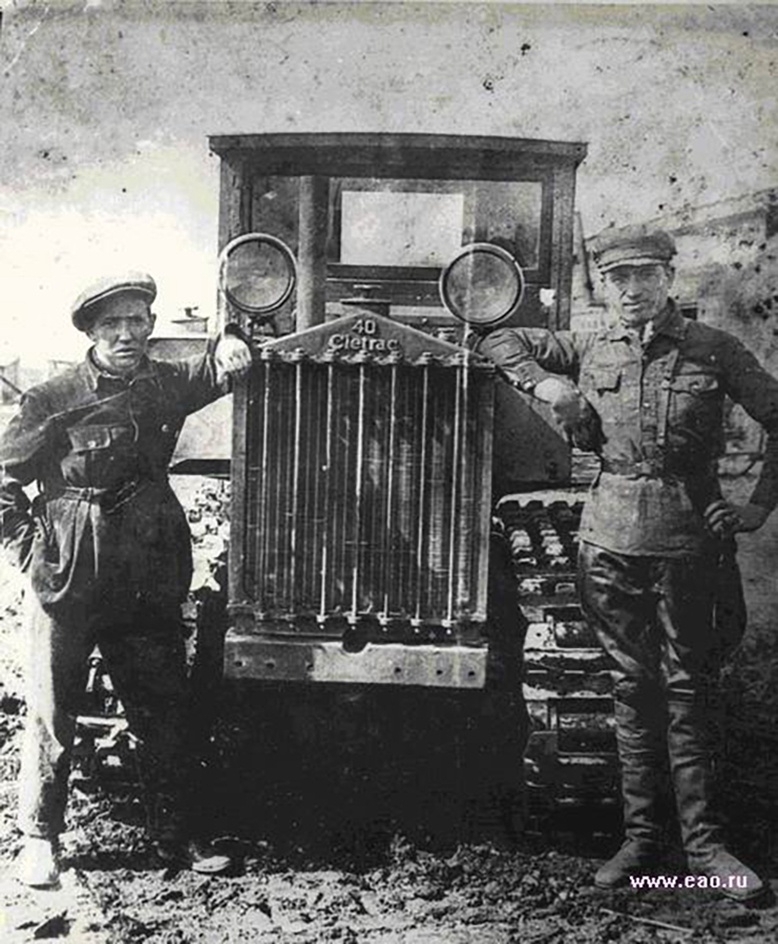
One of the first crawler tractors before being sent to Birofeld. 1930
Photo: State Archive of the Jewish Autonomous Region
April 29, 1929
A resolution was issued by the Bureau of the Dalkraykom of the All-Union Communist Party of Bolsheviks, which stated the following:
“Consider it necessary to use IKOR’s technical assistance for the industrialization of Biro-Bidjan, and invite the resettlement department to make requests for imported agricultural equipment for Biro-Bidjan in future applications.”
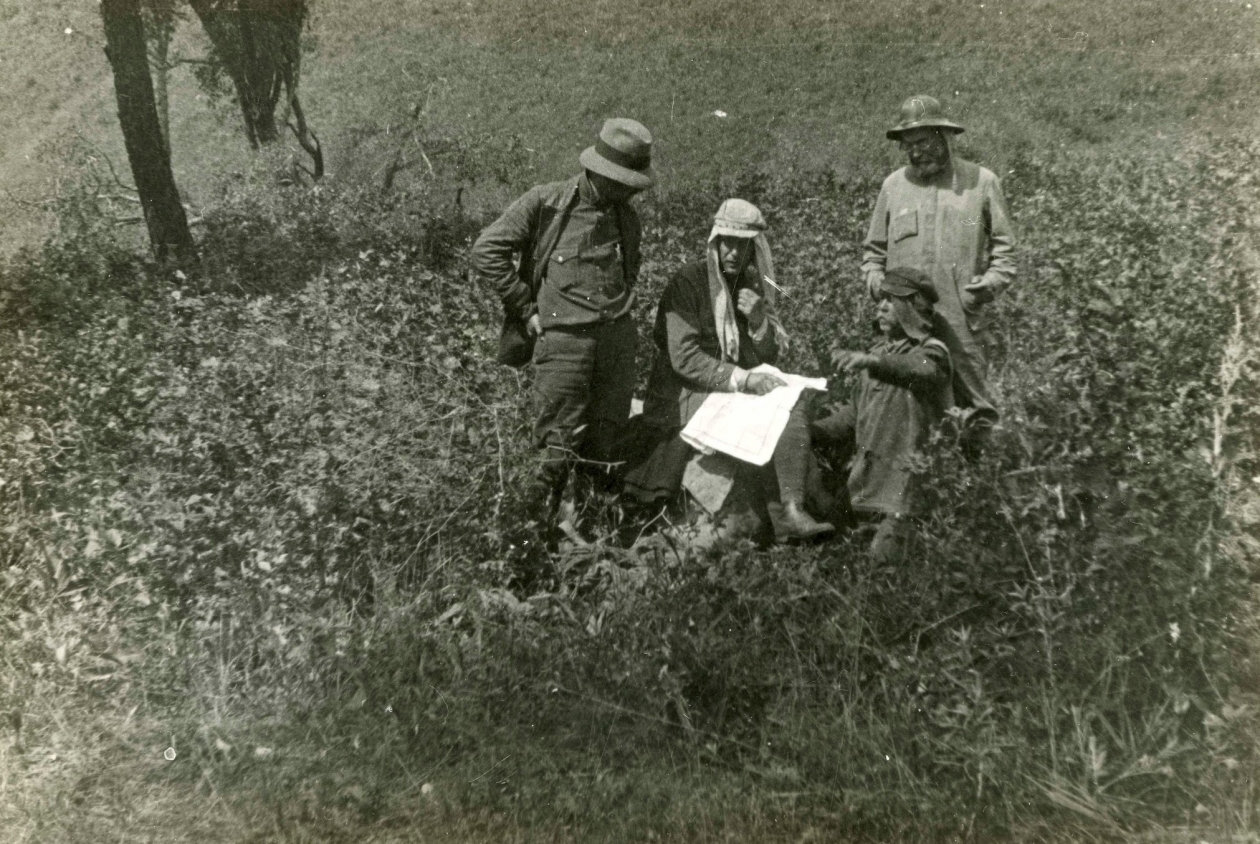
They are raising virgin soil on the IKOR collective farm. Photo: Photo: State Archive of the Jewish Autonomous Region
It was this point in the resolution that was very important for establishing cooperation with the organization “IKOR” (IKOR is an abbreviation for the name of the American organization for assistance to Jewish land management in the USSR – Yiddish colonization orbeiter).
At the heart of its policy, ICOR has identified four main directions:
- Helping pioneers in Jewish national areas in Belarus, Crimea, Ukraine and after 1928 in Biro-Bidzhan by disseminating information and collecting money. After 1933, the ICOR also promoted the idea that Biro-Bidzhan was a refuge and refuge for European Jews from the threat of fascism.
- Attracting Jewish sympathy to the Soviet Union, the only country in the world that, in their view, had established a strong economic foundation for its Jewish population and had all but eliminated anti-Semitism.
- Help for Jewish victims of pogroms, persecution and fascism in various capitalist countries.
- The Jewish belief is that Zionism is a capitalist ideology that works in alliance with the real enemies of the Jewish people, therefore Jewish settlement in Palestine is unjust. The latter goal was especially evident during 1928–1933.
These four main trends created the ideology of the organization and determined the basis of the various campaigns it carried out. At the same time, from the very beginning, the ICOR has insisted that it is a non-partisan organization that is not engaged in “the propagation of any social or economic ideal. It is completely apart from all parties and factions and stands midway between such extremes as Zionism and Communism. The ICOR is not a charitable society or a dole fund. Its purpose is not to offer benefits or give temporary relief to those in need, but to help through loans those who are trying to build their future on land. On a strong economic foundation in Soviet Russia.”
The magazine “Tribuna” (No. 15, 1929) (16+) reported the following information:
“IKOR sent the following vehicles to Biro-Bidjan before July 1: six Dodge trucks, two open Chevrolet passenger cars, five International tractors, five John Deere plows, two disc plows, 50 ploughshares for plows, spare parts for cars, tractors and plows, six motorcycles with carriages and spare parts, two typewriters and one movie camera for filming.”
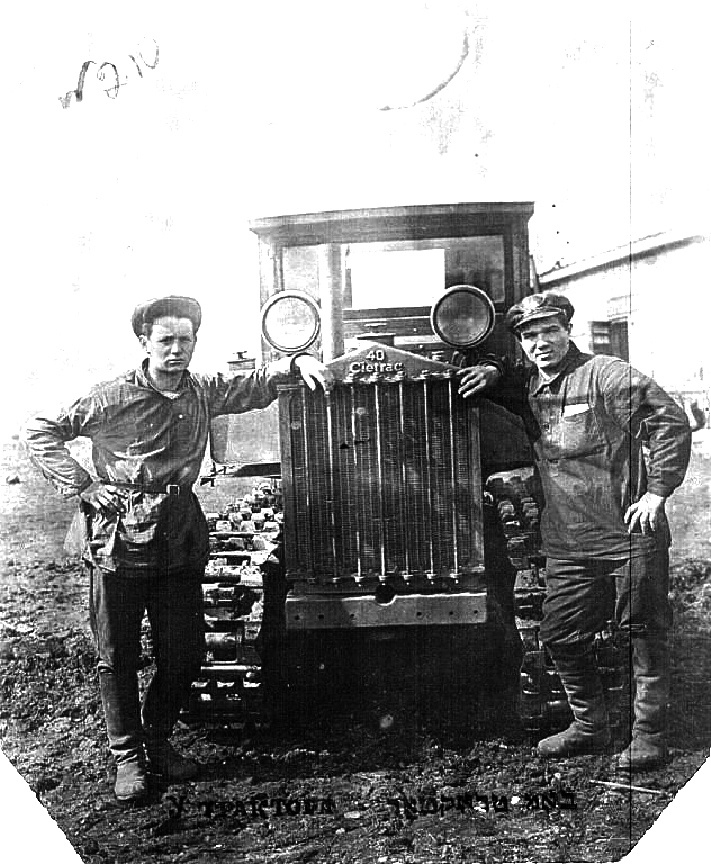
One of the first crawler tractors before being sent to Birofeld. 1930. Photo: Photo: State Archive of the Jewish Autonomous Region
IKOR's great assistance to the settlement of Biro-Bidzhan is assessed not only by the amount of currency spent on cars, but also by the mobilization of the sympathy of American workers for socialist construction in the USSR, which intensified after the creation of the Birobidzhan National District in 1930 and the subsequent statement of the Presidium of the All-Russian Central Executive Committee of the RSFSR about the orientation towards education by the end of 1933 within the borders of Biro-Bidzhan Jewish Autonomous Administrative Unit as part of the Far Eastern Territory.
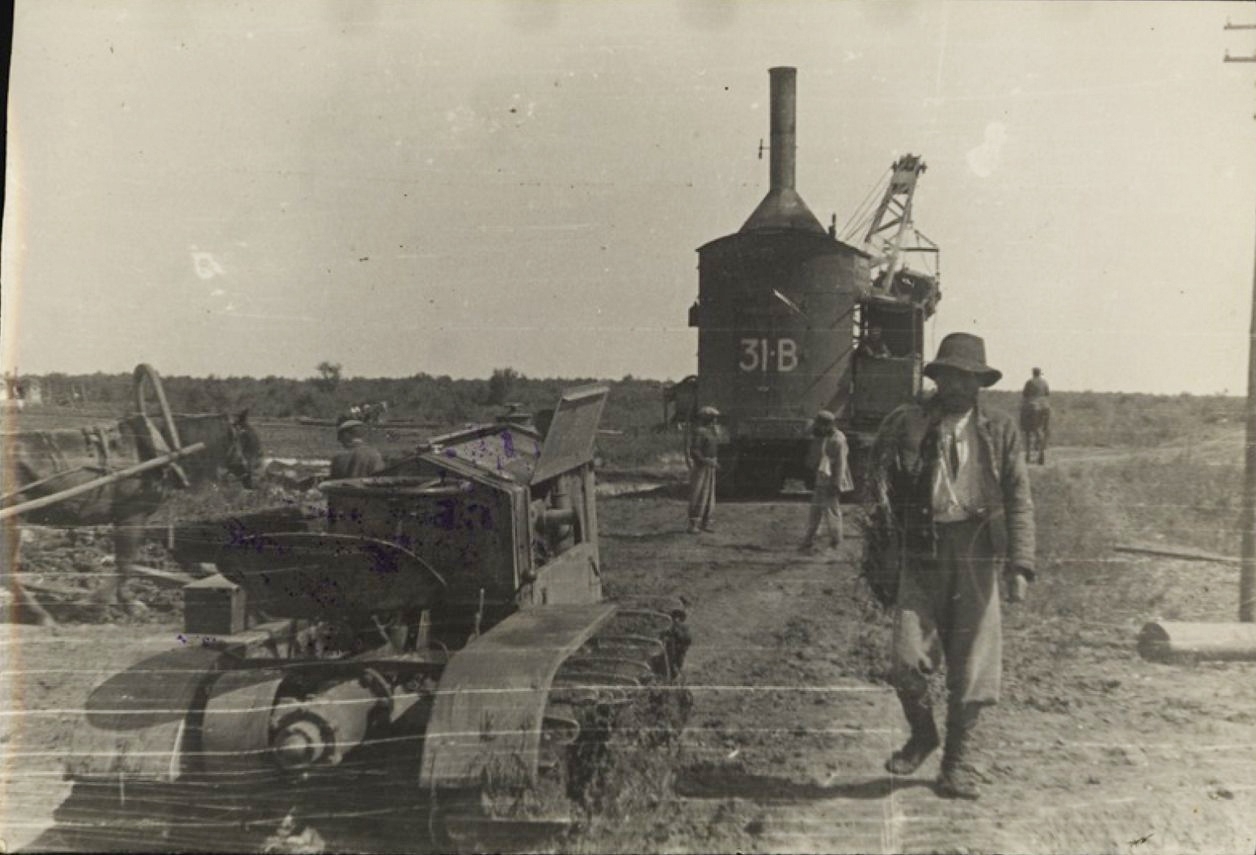
“…IKOR sent us more than a quarter of a million dollars worth of machinery and tools. The first cars, motorcycles and tractors, excavators appeared in Birobidzhan then, which began to lift virgin soil, connect scattered points of the region, etc.
IKOR sent parts for standard houses, machines for a power plant, equipment for a furniture factory, compressors, many different saws and other tools, a garden tractor, an electric laundry, medicines, medical instruments and much more…
Organizations promoting OZET abroad also helped us with people, skilled workers, who were needed in Biro-Bidzhan. Agronomists, engineers, technicians and other specialists were sent.”
April 29, 1934
A gathering of city shock workers dedicated to the fifth anniversary of socialist competition and shock movement took place at the city theater. Comrade Alperovich made a report. Then the best shock workers of the enterprises that fulfilled the industrial financial plan reported to the meeting: Comrade Granovskaya from the State Shveyfabrika, Comrade Zavodchin “Wheel of Revolution”, Comrade Zhebrak – “Chemkhoz Product”, Comrade Singer – printing house, Kim dooik – “Bricks”.
The delegate of the Gorky proletarians, Comrade Sporov, delivered a greeting to the shock workers of Birobidzhan from the shock workers of the enterprises of the city of Gorky.
A representative of the District Trade Union Council read out a list of the best drummers to be awarded by May 1 by the district trade union council.
The rally unanimously adopted an appeal to the workers, collective farmers, and workers of the region with a call to work hard and strengthen labor discipline.
April 29, 1961
The Bureau of the Regional Committee of the CPSU adopted a resolution on the organization of a regional school of excellence in raising young pigs on the basis of the pig farm of the Babstovsky state farm at the leading pig farmer of the region T. P. Lebedeva. Using advanced pig care and management techniques, she achieved high piglet production rates in 1960 and the first quarter of 1961.