US Secretary of Health suspends payment of $600 million. for vaccinations of children

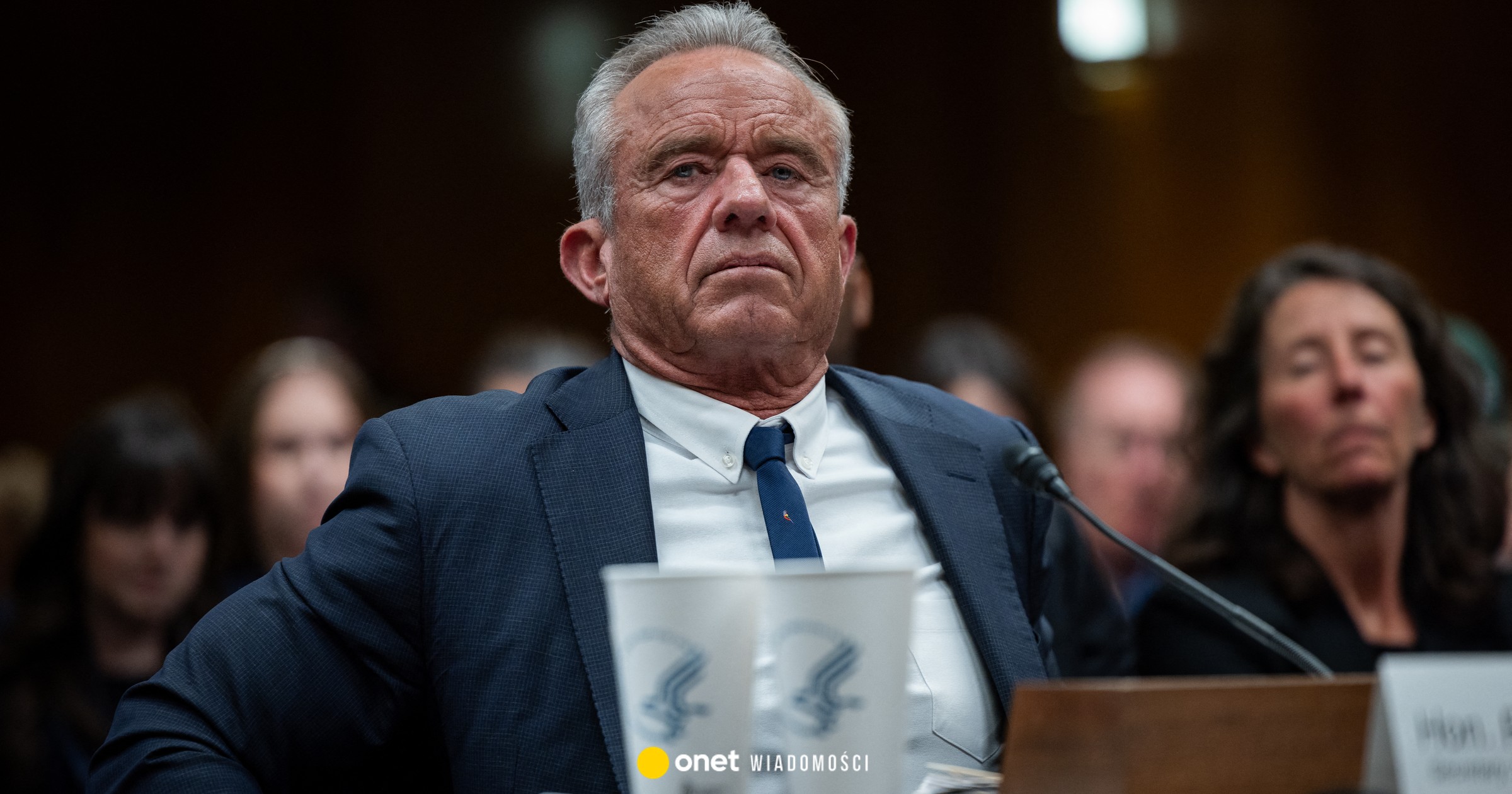
Robert F. Kennedy Jr.'s actions (RFK) efforts to change the U.S. vaccination schedule have been put on hold following a federal judge's decision last month. Yet the health secretary continues to use his powers to influence which vaccines children in poor countries receive.
Kennedy claims that children are receiving outdated vaccines containing dangerous ingredients that have long been withdrawn in the United States. RFK suspends payment of USD 600 million. (PLN 2,178 million) allocated by Congress for vaccinesto put pressure on the international humanitarian organization Gavi, which distributes them.
“Gavi has refused to provide the United States with specific data, studies or a detailed accounting of its use of U.S. funds,” Emily Hilliard, senior spokeswoman for the Department of Health and Human Services, said in a statement to POLITICO.
The United States co-founded Gavi a quarter of a century ago, [która powstała] to provide vaccines to the world's poorest countries, and Congress has long allocated a significant portion of its budget. However, Gavi claims that it has not received funds due to it for the current and previous financial years, which amounts to approximately 15%. its budget. These funds will expire on September 30 unless the Trump administration passes them. The organization provides vaccines against 20 diseases, including measles, malaria and polio, to more than 50 low-income countries around the world.
Gavi's funding is officially controlled by the Department of State, but Kennedy's actions show how his skeptical views about vaccines continue to influence government policy. That's despite a decision last month by a federal judge in Boston that found most of the changes in vaccination policy Kennedy ordered in the U.S., including a significant reduction in the number of shots routinely recommended for children, were invalid because he didn't follow his department's procedures. Kennedy has long believed, despite research to the contrary, that some vaccines have dangerous side effects.
Susan Collins, chairwoman of the Senate Appropriations Committee, told POLITICO in an emailed statement that her staff is in contact with Gavi regarding U.S. funding and that she plans to send a letter to Secretary of State Marco Rubio urging him to “take swift action to ensure the U.S. contribution to Gavi, as Congress intends.”
Collins said Gavi has helped vaccinate more than a billion children in the world's poorest countries and has purchased more than $12 billion and $500 million in U.S.-made goods and vaccines. (PLN 45 billion) to achieve this goal.
Gavi supporters say withholding funds will cost children's lives. They also say the organization's vaccines are safe and better suited to vaccination challenges in developing countries, where access to cold storage is limited and it is more difficult to provide people with booster shots than vaccines used in the United States and other wealthy countries.
Hilliard said Gavi has so far refused to develop a plan to phase out a mercury-based preservative in vaccines called thimerosal, which Kennedy said may cause autism. The Trump administration has asked Gavi to stop using vaccines containing the preservative.
In 2014, Kennedy wrote a book titled “Thimerosal: Let the Science Speak,” in which he argued that the drug was dangerous, and last year took action to withdraw it from use in the United States, where it is still used in some flu vaccines.
A Boston judge's ruling overturned that decision, finding that the Kennedy-appointed panel that advised the change had not been formed properly.
Given concerns about the safety of thimerosal, the Centers for Disease Control and Prevention (CDC) worked with vaccine manufacturers in the 1990s to withdraw it from use in the United States, and by 2001 it had been largely removed from pediatric vaccines offered to Americans. At the same time, however, the agency concluded that the preservative is safe.
Thimerosal is used in several vaccines provided by Gavi, including one against five diseases, according to the organization's former CEO Seth Berkley. He said many developing countries do not have adequate refrigeration facilities to store single-dose vials, which are often used in the United States and do not contain thimerosal. However, developing countries often use multi-dose vials, which take up less space in refrigerators but in some cases contain thimerosal to prevent bacterial infections.
Without thimerosal-containing vaccines, “children would not be vaccinated — which may be desirable — but it would lead directly to deaths from these diseases,” Berkley added, referring to the common view that Kennedy's goal is to reduce vaccinations overall.
During testimony before the Senate Appropriations Committee last week, Kennedy raised another issue regarding the vaccine distributed by Gavi to combat three serious bacterial infections — diphtheria, tetanus and pertussis (better known as whooping cough). Kennedy said it was withdrawn in the United States because it caused brain damage.
“It's still administered to 161 million children in Africa and Asia a year,” Kennedy said in response to a question from New Hampshire Democrat Jeanne Shaheen. Kennedy added that Gavi had informed him that it did not want to use the newer vaccine, which Kennedy considered safer.
The World Health Organization says that while a study in the late 1970s in Britain rarely linked the vaccine to permanent brain damage, more recent studies have found no evidence of this. However, the United States withdrew it in 1997 over these concerns.
Gavi said it continues to use the vaccine because it provides longer protection than that given in the United States and other higher-income countries. The vaccine used by Gavi also requires fewer doses than the one used in the United States to protect against pertussis.
In a statement, the humanitarian organization said the vaccine “is safe and effective and is estimated to have saved 40 million lives over the last 50 years.”
Berkley, an American infectious disease physician who led Gavi for more than a decade and spoke to POLITICO in a private capacity, said WHO recommends Gavi's vaccine because it helps prevent whooping cough epidemics in places where access to health care services is limitedand administering booster doses poses a greater logistical challenge.
Kennedy told Shaheen that his health department and the State Department were also concerned that Gavi would funnel U.S. funds to the WHO. Kennedy said she refused to say whether she would do so. Both organizations are headquartered in Geneva, Switzerland.
Gavi declined to comment on the matter. “We continue to engage with the U.S. government and cannot provide further comment at this stage,” she said in a statement.
Sania Nishtar, the organization's chief executive, told AFP in an interview on Friday that a lack of U.S. funding, combined with cuts from other donors, had hit Gavi's malaria program the hardest. Gavi helped deliver 39 million doses of a new malaria vaccine to 25 African countries where the disease is endemic (only found there) and mainly kills children under five.
Nishtar estimated that tens of thousands of children would die as a result of the cuts.
Last year, she traveled to Washington to persuade the Trump administration to maintain funding. Last week, she asked Kennedy to assign someone from his office to work with her office to resolve the dispute. Kennedy agreed.
In its 2027 budget request, the State Department said that any future funding for Gavi in 2027 “is contingent on the organization making necessary reforms and meeting certain vaccine safety criteria.”