Almost seven decades have passed since the British monarch traveled to the US to save the two countries' relations. In 1957, Queen Elizabeth II landed in Washington after the Suez Crisis, in which Great Britain, France and Israel made a military attempt to regain control of the strategic Suez Canal from Egypt. The intervention, sharply criticized around the world, ended in a political defeat and led to London's isolation on the international arena.
Dwight D. Eisenhower was by no means impressed with the British actions. However, at the end of the state visit, toasts were made, and the president unexpectedly spoke again “unshakable faith in a common future”. Although the crisis has not been resolved, it has been mitigated.
Queen Elizabeth II and Dwight Eisenhower, President of the USA. Washington, October 22, 1957UPPA/Photoshot / Avalon / PAP
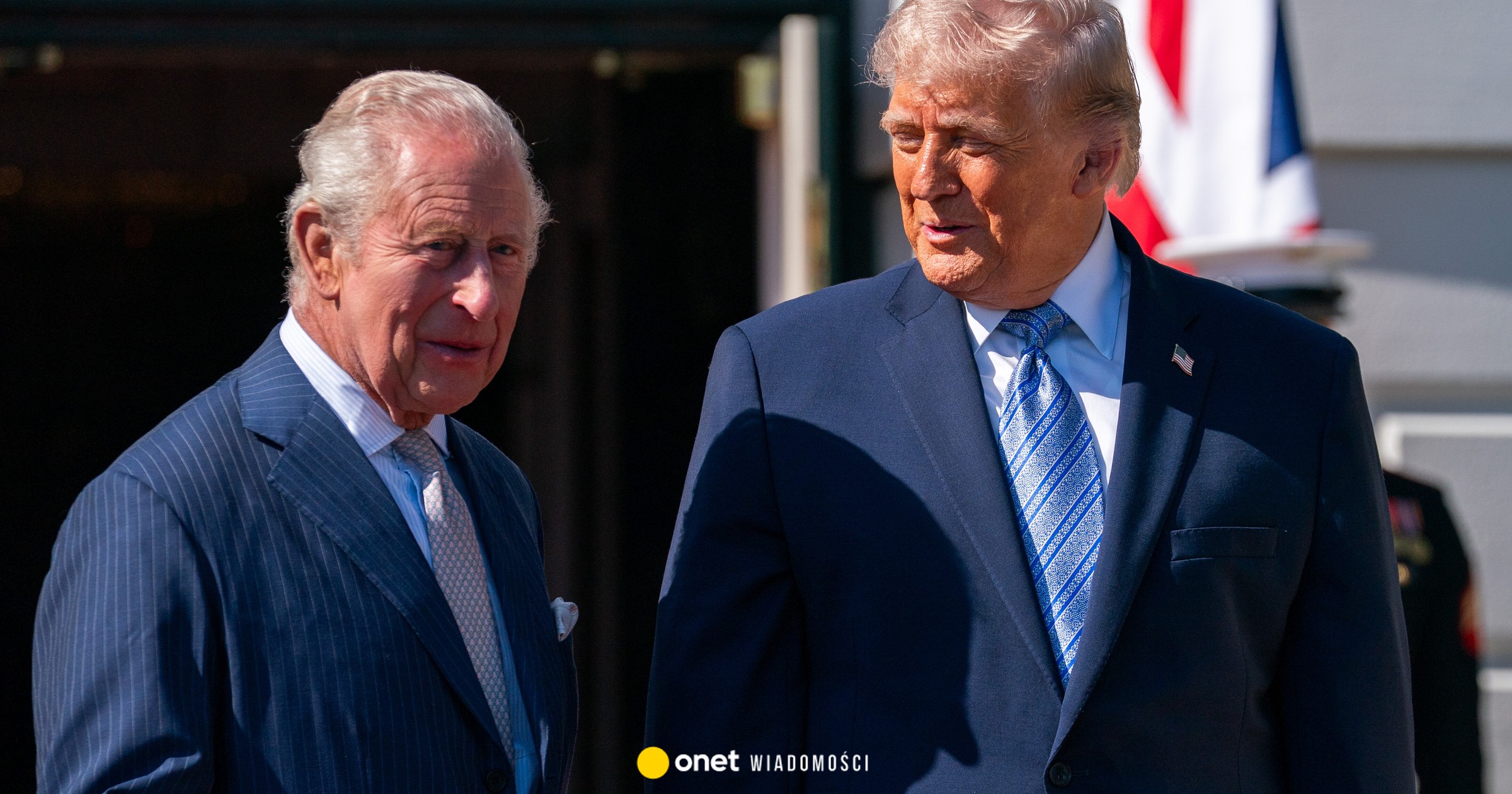
Today, Elizabeth's son, King Charles III, visits Washington. And again, it is a member of the royal family who has to fix what politicians have broken. However, Karol's visit may turn against him.
It's not London that's isolated, it's Washington. President Donald Trump's war with Iran has created deep divisions – also within the Western alliance. Britain refused military support, and a Prime Minister Keir Starmer was publicly criticized by Trump. Effect? An open diplomatic exchange of blows that has not been seen between these countries for a long time.
Officially, the visit has nothing to do with any of this. At least that's what they say in London: the king stands above current politicsdoes not comment, does not mediate, does not make decisions. Unofficially, that's what the goal is.
Expectations for Charles are high: a state banquet, a speech before Congress, laying wreaths, meetings with Americans. Themes: history, values, continuity. Downing Street hopes that pomp, ceremony and spectacle will achieve what politics currently cannot: remind Trump and his entourage what unites the two countries – especially in a year when the US celebrates the 250th anniversary of independence.
By remaining silent, the king becomes a decoration. When he reacts, he goes beyond his role
But therein lies the problem. Such diplomacy only works when everyone plays by the same rules. And Trump, as we know, consistently fails to do this. The biggest risk lies in a seemingly innocent item on the agenda: the meeting in the Oval Office. Officially, only a short photo session is planned, no questions asked. Off the record – this is when Trump used to improvise and deliver political messages. Volodymyr Zelensky's visit in late February 2025 showed how quickly such meetings can get out of control.
The article continues below the video
One sentence about Starmer, an insult to British military policy or a spontaneous statement about Iran and the situation can escalate rapidly. For the monarch, it is a diplomatic dilemma: by remaining silent, he becomes decoration, by reacting, he goes beyond his role.
There is another problem: Trump has already started using Charles politically. He made it clear that the king had a “completely different opinion” on Iran than the British government – but he could not express it. A clever ploy: an attempt to subtly pit the monarch against his own government, without Charles being able to deny it.
Risks also lurk outside the main stage. Protests are expected in the US – both against Trump and the monarchy. The matter related to Charles' brother, Andrzej, is particularly sensitive: there are demands to meet with the victims in connection with the Epstein case, to which the palace has not agreed. However, the debate itself may cast a shadow over the visit.
Royal charm offensive
Despite this, Karol and his wife Kamila flew to the USA. The reason is simple: almost no political channels work nowadays. The monarch offers something Starmer lacks: distinction. Trump loves the British monarchy and enjoys the spectacle. According to CNN, the US president himself was personally involved in organizing the banquet. – He is a wonderful and brave man – says the American president about the king and announces that the visit may help reduce tensions.
This is what Karol's mission is all about: a classic charm offensive, almost courtly overtures that focus on closeness, vanity and personal chemistry, instead of hard arguments. At best, there will be a willingness to talk – at worst, only beautiful photos and warm words will remain.
History allows for some optimism. Already in 1939, King George VI came to the USA to convince a reluctant America to support the British in the face of the impending world war. The goal: to arouse sympathy, build trust – and at the same time influence the political mood. The effect was moderate, but the strategy worked: when politicians fail, “royals” come to the rescue.
I’m Ashley Davis as an editor, I’m committed to upholding the highest standards of integrity and accuracy in every piece we publish. My work is driven by curiosity, a passion for truth, and a belief that journalism plays a crucial role in shaping public discourse. I strive to tell stories that not only inform but also inspire action and conversation.