Article by Remus Dinu – Published Sunday, April 26, 2026, 1:16 p.m. / Updated Sunday, April 26, 2026, 1:17 p.m.
On April 26, 1986, 40 years ago, the Chernobyl explosion definitively changed the destiny of millions of people in the ex-Soviet space and beyond. Among them, a nine-year-old child from Kiev, who would become, in years to come, one of the greatest footballers in Europe. Ukrainian Andriy Shevchenko, 49, has offered several disturbing statements over time about how he was affected by the catastrophic event.
As a child, young Andriy Shevchenko witnessed a seismic event in the history of the former Soviet Union. When he was only nine years old, a nuclear reactor exploded in Chernobyl, near the capital where he was, causing the worst nuclear accident in history.
Shevchenko, evacuated 1,500 kilometers from home: “No one was saying anything. I just knew something terrible had happened”
His home was approximately 200 kilometers from the scene of the incident, but he and his family arrived, following the evacuation, on the shore of the Sea of Azov, approximately 1500 kilometers from home.
Evacuated from Kiev, the kid who would become Ballon d'Or confessed that he had a surreal feeling about what happened.
“For us kids, it all seemed unreal, like we were living in a movie.” “Nobody was saying anything. I just knew something terrible had happened”Shevchenko recalled, according to The Guardian, regarding the cover-up attempt initially staged by the Soviet authorities.
“I was nine years old. I didn't understand what was happening,” Andriy Shevchenko recalled in the days after Chernobyl, in various interviews with Ukrainian media. For many of his generation, life after was tougher than the accident “Many of my childhood friends are gone. Not because of the radiation, but because of the life that followed“, he said.
“I was having a great time playing football everywhere. I was training at the Dinamo Academy (no Kyiv) and I felt like I was starting to live my dream.
Then Reactor 4 exploded and we were all taken. Schools were immediately closed. Buses arrived from all over the USSR, taking children between the ages of 6 and 15. I woke up alone on the shore of the Sea of Azov, 1,500 km from home. I lived the experience as a journey. I was a child”, recalled the former great footballer in an interview given to Italians from Corriere della Sera, quoted by Tribuna.com.
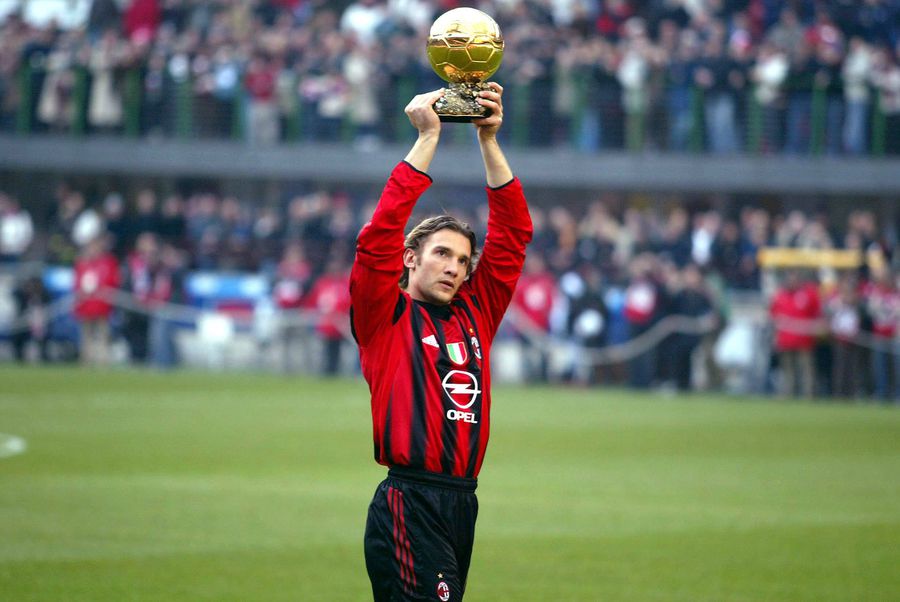
Andriy Shevchenko won the Ballon d'Or in 2004
In Shevchenko's case, as he often admitted, “football was the chance.” While in Milan, the former Ukrainian superstar offered a completely and utterly emotional statement:
“If my goals and wins can help the world remember Chernobyl and bring a smile to the faces of those who are still suffering, then I dedicate all my success to them!”.
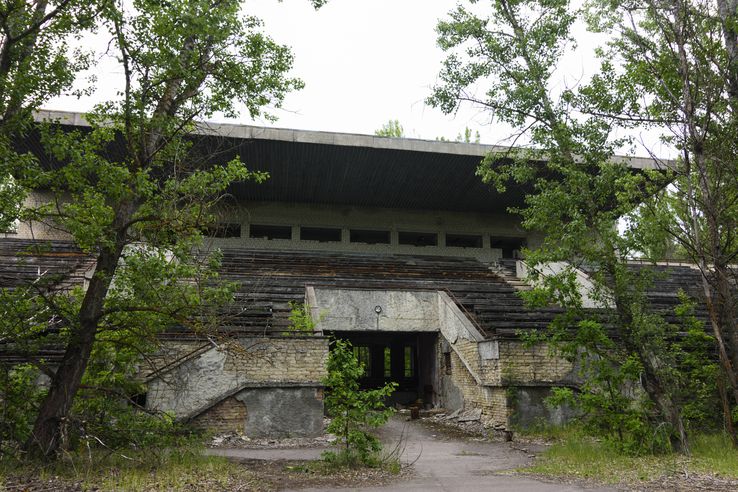
PHOTO GALLERY. The stadium in Pripyat, near Chernobyl, continues to offer sci-fi images: what grew in place of the lawn
Andriy Shevchenko's disturbing memory: “Because of Chernobyl, I played with a radioactive ball at the age of 9”
According to Mirror journalists, Shevchenko also revealed how, at the age of nine, he played with a radioactive soccer ball as a result of the Chernobyl disaster.
Shortly after the explosion filled nearby areas with deadly radiation, Shevchenko, then nine years old, brought home a contaminated soccer ball that turned out to be dangerous.
His father's Geiger counter (nr a device that detects and measures radiation levels) recorded shocking parameters, and the ball was immediately destroyed. “I had brought a small piece of Chernobyl into the family home,” recounted Shevchenko in his autobiographical book, “My Life, My Football.”
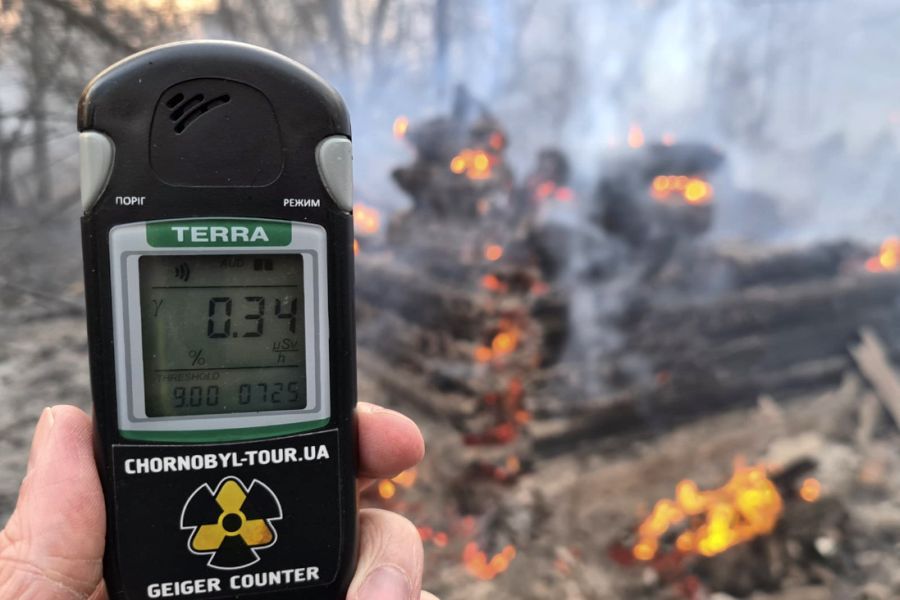
The level of radioactivity reached unsuspected levels, shortly after the Chernobyl explosion
“A little atomic bomb, hidden inside my greatest passion. My ball was buried in a basin. When I walked in the door, I held it under my arm like a prized trophy,” he recounted.
In my neighborhood, I began to see fewer and fewer people. All my friends died, not from radiation, but from alcohol, drugs or gun problems.
The cracks in the walls of the USSR were getting bigger, the world we knew was falling apart and, like everyone else, my friends stopped believing in anything and were lost. Only the love of my parents and football saved me.
– Andriy Shevchenko, in his autobiography
Chernobyl '86, the biggest nuclear disaster in history!
On April 26, 1986, exactly 40 years ago, at 01:23 local time, reactor number four of the Chernobyl Nuclear Power Plant exploded, causing the largest nuclear disaster in history.
Where did the scale of the disaster come from? One of the nuclear reactors exploded, causing massive destruction. The 1,000-ton roof was blown off, the graphite sheathing caught fire, and 190 tons of radioactive substances were carried into the air over vast distances, affecting entire areas. What was left after the explosion? 300 square km forbidden to any human activity. An abandoned city of 49,000 people. 254 dead, 600,000 people affected by radiation.
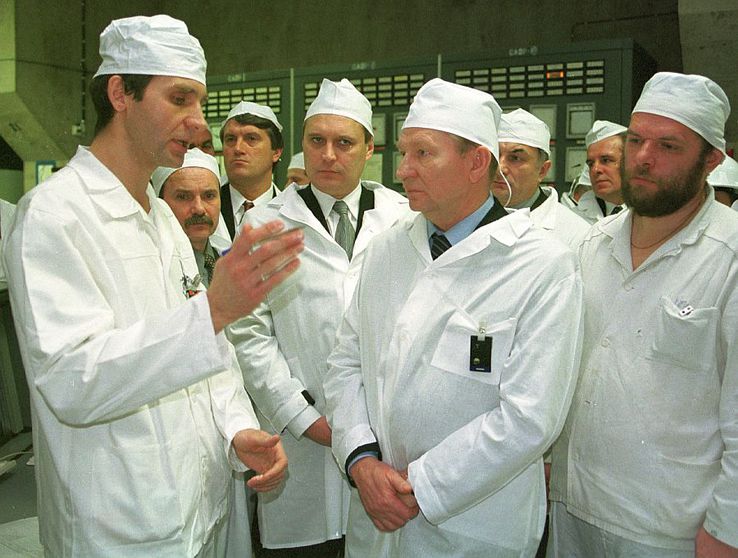
Data showing the magnitude of the disaster:
-
it took place on April 26, 1986, at 1:23 in the morning;
-
large areas of Ukraine, Belarus and Russia were heavily contaminated, with approximately 336,000 people being evacuated;
-
The 45,000 inhabitants of Pripiat, the city located only 1.5 kilometers from the Chernobyl plant, were evacuated only 36 hours after the accident, in the afternoon of April 27, 1986;
-
until May 5, all those who lived within a radius of 30 km around the damaged reactor had to abandon their homesand within 10 days, a total of 130,000 people from 76 localities were evacuated, and the respective territory was declared an exclusion zone;
-
the 2005 Chernobyl Forum report, led by the International Atomic Energy Agency and the World Health Organization, attributed 56 direct deaths (47 workers and 9 children with thyroid cancer) and estimated that more than 9,000 of the approximately 6.6 million highly exposed may die of some form of cancer;
-
Current Belarus was the country most seriously affected by the Chernobyl disaster, as up to 70% of the radioactive fallout fell on its territory, but in total more than 5.5 million people, Ukrainians, Belarusians and Russians, suffered as a result of the catastrophe, and a large part of them still live in the contaminated areas, according to the Ukrainian authorities;
-
it was declared the largest nuclear disaster in history, and estimates are that nearly 1.5 million people worldwide died from the radiation caused by the explosion.