In 1974, the regime of the black colonels was overthrown in Greece. A year later, Greece applied for membership. In 1976, the EU started accession negotiations. Greece officially joined the EU in 1981.
But the problem was that did not meet the membership criteria. In fact, the Greeks only formally fulfilled the political requirements and completely ignored the economic criteria. This led to a situation in which political institutions were very weak, and huge funds had to be injected into the economy to keep it afloat.
The EU made this decision politically because there was a risk of a return to dictatorship in Greece under the influence of the Soviet Union. Such a precedent has already occurred, so our situation can also be resolved by a political decision.
However, objectively speaking, the EU cannot accept a country that is at war. We must be realistic about this and not demand impossible things. Instead, we can demand to be admitted within the first year after the end of the war. This is healthy pragmatism and for us to obtain such a commitment would be a huge success.
As for us not meeting the criteria – the EU is a very flexible structure. There are thousands of transition periods and complicated conditions. We could fulfill them by formally being part of it.
Currently, the situation in the international arena is such that it is difficult to predict what the EU will look like when we actually get closer to membership. I am inclined to the opinion that The future of the Union is in serious doubtand we will learn more after the victory of the Alternative for Germany (AfD) in Germany. Therefore, we should not make any fetish out of EU membership. Same as with NATO.
France and Germany offer Ukraine “hidden EU membership”
France and Germany support granting Ukraine temporary status in the European Union, which would involve partial integration without the key rights of full membership. This would involve the so-called symbolic benefits in the pre-accession phase – without access to key EU financial programs and without the right to vote in the decision-making process.
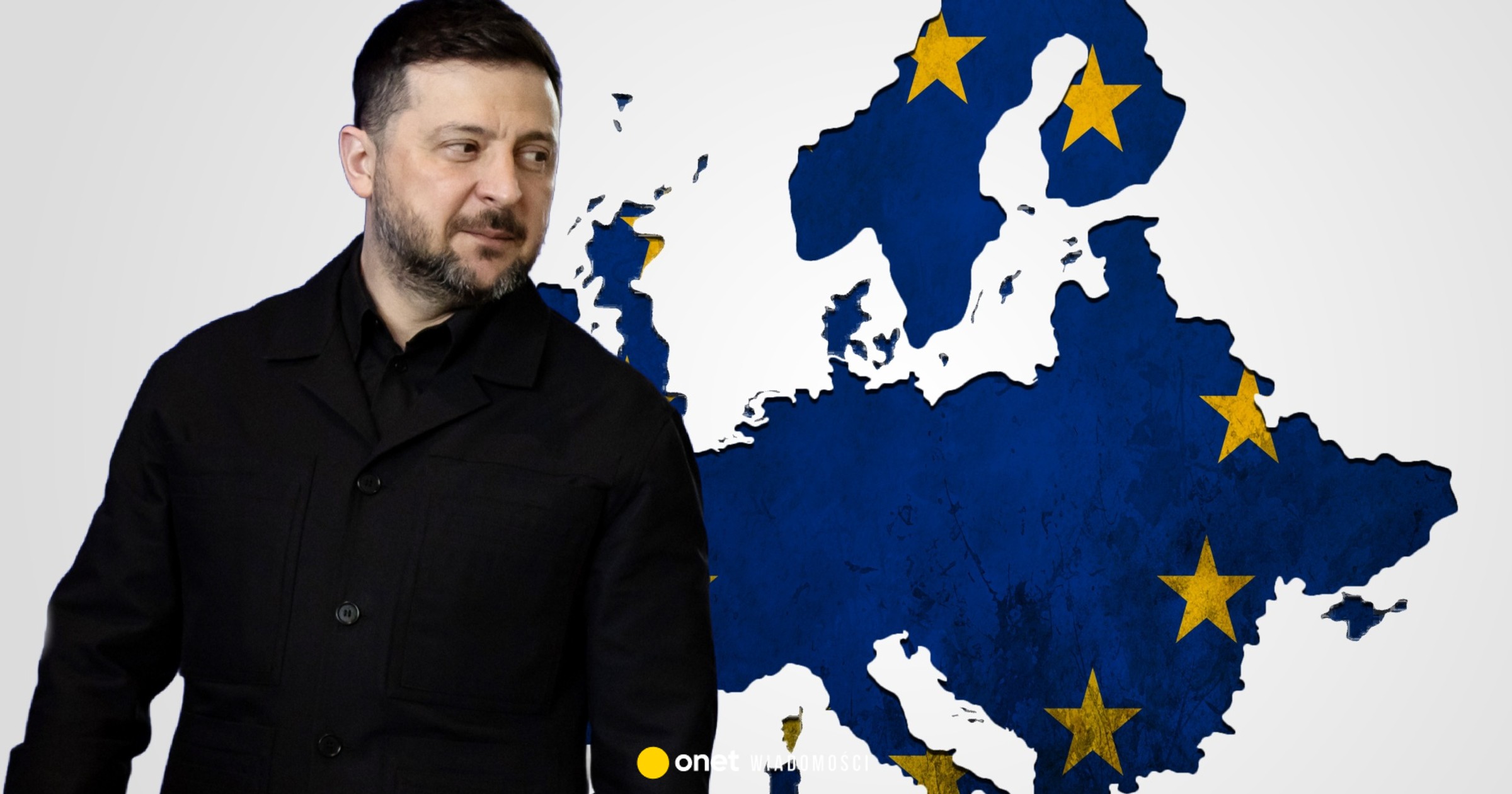
President Volodymyr Zelensky recently stated that Ukraine hopes to join the EU by 2027 and sees it as an important element of a future peace agreement.
Will Ukraine join the EU by 2027? We reveal Brussels' secret plan
The future of Kiev and the war at the European gates are invariably one of Brussels' greatest worries. As Russia intensifies its brutal attacks, negotiations are at a standstill, and Ukrainians are fighting for security guarantees, news comes from the heart of Europe that could upend the diplomatic table. According to 10 officials and diplomats, the EU is developing a plan that could provide Ukraine with partial membership in the European Union as early as next year.
Four years after it started full-scale invasion of Russia and with Kiev pushing to include EU membership in 2027 in the peace agreement with the Kremlin, this initial idea would mean a radical change in the way new countries are admitted to the bloc. The plan envisages Ukraine gaining a seat at the EU table before carrying out the reforms necessary to obtain full membership privileges.
European officials and the Ukrainian government say Kiev's application for membership is urgent. Russia will probably try to “stop our aspirations to join the EU,” as Ukrainian President Volodymyr Zelensky told reporters in Kiev on Friday. – That's why we say give a date. Why a specific date? Because this date will be signed by Ukraine, Europe, the USA and Russia, he added.
Meanwhile, as many as 68.9 percent Poles support Ukraine's accession to the European Union – according to the latest CBOS survey, the results of which are published by “Dziennik Gazeta Prawna”. However, the vast majority of respondents set specific conditions.
I’m Ashley Davis as an editor, I’m committed to upholding the highest standards of integrity and accuracy in every piece we publish. My work is driven by curiosity, a passion for truth, and a belief that journalism plays a crucial role in shaping public discourse. I strive to tell stories that not only inform but also inspire action and conversation.