The head of Saint George, brought to Romania from Mount Athos on Wednesday. Where the relics will be deposited

The head of the Holy Great Martyr George, the bearer of victory, will be brought to Romania from Mount Athos on Wednesdayon the occasion of the patron saint of the Pantocrator Monastery in Teleorman county.
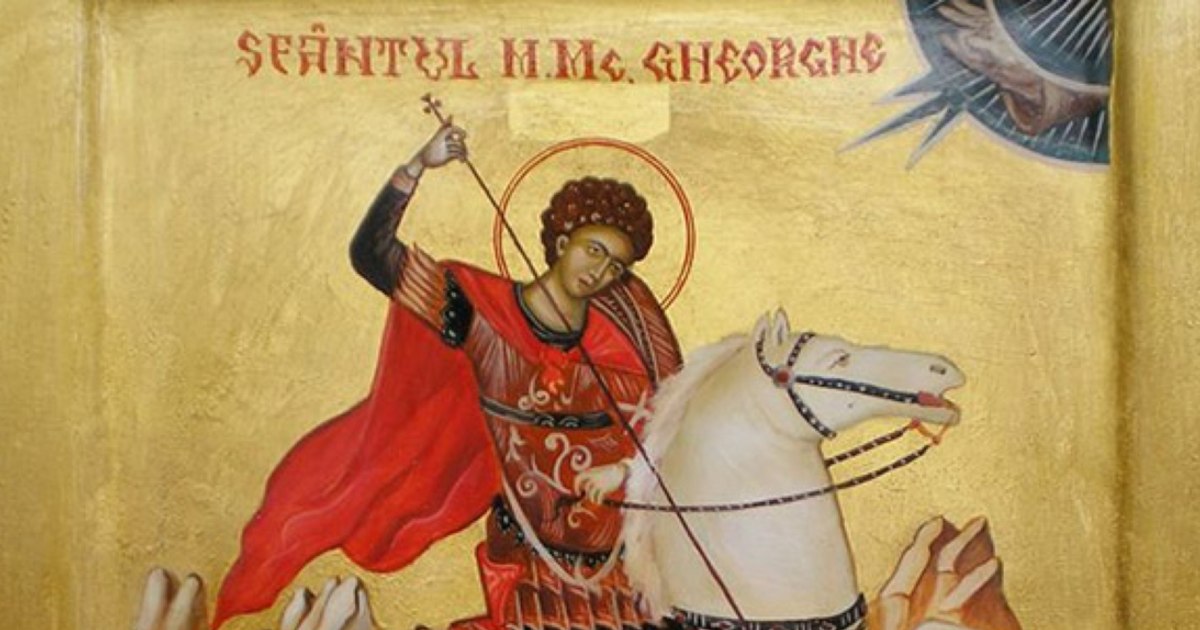
St. George, one of the most revered saints of Christianity PHOTO crestinortodox.ro
The Athonite delegation is led by Archimandrite Alexios, abbot of the Xenophon Monastery, a place under the patronage of Saint George, according to the Basilica Agency of the Romanian Patriarchate.
It is the first time that these holy relics arrive in our country. The crucifix will remain at the Pantocrator Monastery until April 28.
The event begins on Wednesday morning with the consecration of the “Magdala” Library and the opening of a symposium dedicated to Saint Mary Magdalene. The Athonite delegation is expected in Romania around 11:00 a.m., and at 2:30 p.m. the relics will be welcomed at the monastery by PS Galaction, the Bishop of Alexandria and Teleormanu.
The relics will be placed for veneration in the great church, and on the night of Wednesday to Thursday there will be a vigil service officiated by PS Nectarie, Bishop of Ireland and Iceland. On Thursday morning, the akathist and the Holy Liturgy will be performed.
Archimandrite Serafim Baciu, diocesan vicar, points out that the bringing of the relics of Saint George takes place near Myrrh Sunday, when the monastery traditionally honors Saint Mary Magdalene. The annual pilgrimage attracts thousands of believers from all over the country.
Last year, the Pantocrator Monastery brought to Romania the entire relics of the Holy Empress Elena, which very rarely leave the place where they are kept in Venice, according to Agerpres.
Saint George, one of the most revered martyrs
Saint George the Great Martyr, one of the most revered saints of Christianity, lived in the time of Emperor Diocletian and stood out for his courage to confess his faith in the midst of a campaign of persecution.
Originally from Cappadocia and later settled in Palestine, George became a commander in the Roman army, but, with the edicts against Christians in 303–305, he chose to distribute his wealth to the poor and publicly affirm his faith.
Before the emperor, George condemned the injustices committed against the Christians, declaring that “Truth is Christ”which brought him arrest and subjection to terrible tortures, from which, according to tradition, he emerged unscathed through the power of prayer.
The miracles that happened during his torments led to the conversion of several witnesses, including Empress Alexandra. He was executed on April 23, 303, becoming a symbol of steadfast faith and spiritual victory.