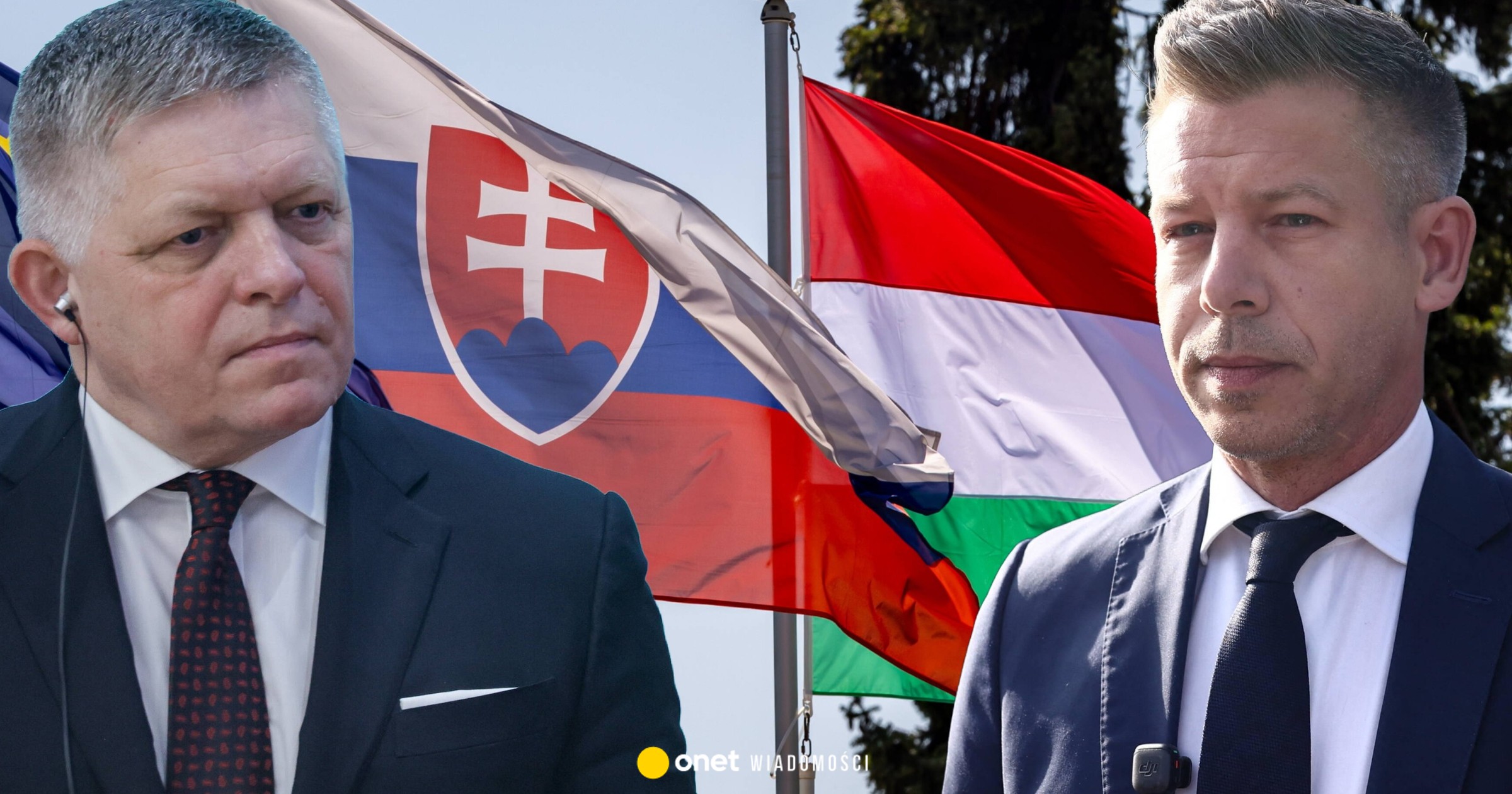
Slovak Prime Minister Robert Fico spoke by phone with the winner of the Hungarian elections, Peter Magyar, for the first time since the elections. They were immediately moved one of the most sensitive topics in the relations between Bratislava and Budapest – the so-called Benes decrees. They became the main thread of the conversation, which both sides described as constructive, although at the same time they confirmed the existence of fundamental differences in approach.
The future Prime Minister of Hungary reported the conversation on social media and suggested that the issue of Benes' decrees will be a priority for his government. This is a topic that he has long considered burning in Slovak-Hungarian relations and announced its solution during the election campaign.
The dispute also intensified after Robert Fico's government declared challenging the Benes decrees a crime. Already during Magyar's election campaign his relations with the Slovak government were not the best. Magyar made all cooperation with Slovakia conditional on Robert Fico's abolition of penalties for questioning the Benes decrees.
“Fundamentally different positions”
Fico currently emphasizes the practical dimension of cooperation within his position, declaring his willingness to continue cooperation with Hungary in the field of energy security. He also invited Magyar for an official visit to Slovakia. He admitted that the conversation clearly shows that Peter Magyar's priority are the Benes decrees, on which – as Fico says – they have “fundamentally different positions.”
The article continues below the video
This is the first direct contact between these politicians since the elections. Unlike Polish Prime Minister Donald Tusk or Czech Prime Minister Andrej Babisz, Fico was not among the leaders who immediately congratulated Hungary after their victory. From the beginning, Fico's relations with Hungary were burdened with disputes over historical issues.
Last week's telephone conversation was accompanied by an earlier accusation against the Prime Minister of Hungary, Viktor Orban, that at Fico's request he worsened the migration situation, transferring migrants to the Slovak-Hungarian border during the 2023 election campaign. — We will not transfer migrants to the Slovak border just because our socialist friend needs it during the election campaign, he said.
Fico dismissed these claims as false and announced that he would demand explanations during a personal meeting. However, former Prime Minister Ludovit Odor stated that during the term of the interim government, they had information from the secret services that the situation could have been organized. However, they had no evidence for this.
Controversial decrees from eight decades ago that cannot be forgotten
Peter Magyar announced the dispute over the Benes decrees already during the election campaign, and after the elections he intensified it even further. In an open letter to President Petro Pellegrini, he criticized not only the historical principle of collective responsibility, but also the current regulations, which, in his opinion, provide for penalties for undermining them. “Legislation based on collective guilt has no place in the 21st century,” he said, adding that neither Hungary nor Europe should accept possible confiscation of property based on these decrees.
Edvard Benesz, President of Czechoslovakia, signs a decree on changing the Czechoslovak citizenship of persons of German and Hungarian nationality. Prague, August 2, 1945PAP/CTK / PAP
An additional cause of tension was a verbal quarrel over the term “Felvidek”, as the former Upper Hungary, now part of Slovakia, was called. President Pellegrini found it offensive, while Magyar replied that it was a historical name that he has used since childhoodlike Bratislava, is traditionally called Pozsony. He also emphasized that the president of Slovakia has “an obligation to represent all citizens, including the Hungarian minority”, and he himself has “an obligation to defend all Hungarians, regardless of where they live.”
The Edvard Benes Decrees are a set of decisions of the Czechoslovak president issued after World War II, aimed at restoring the functioning of the state and dealing with the effects of the war. The most controversial part was the principle of collective guilt of Germans and Hungariansleading to loss of citizenship, confiscation of property and, in some cases, displacement. For many people, these are not just legal remedies – they are interventions that have touched generations.
The debate heated up when Progressive Slovakia presented a resolution that decrees should no longer be used in practice to issue new decisions, especially in property disputes.
This caused a violent political reaction – part of the political scene considers the decrees a closed chapter, while critics emphasize that their consequences are still felt. Historian Roman Holec previously warned on Aktuality.sk that “opening the case of the Benes decrees would be completely counterproductive and very dangerous“, as it could undermine the stability of the legal system and renew old conflicts.
I’m Ashley Davis as an editor, I’m committed to upholding the highest standards of integrity and accuracy in every piece we publish. My work is driven by curiosity, a passion for truth, and a belief that journalism plays a crucial role in shaping public discourse. I strive to tell stories that not only inform but also inspire action and conversation.