Late last week, the U.S. and Iran appeared to be close to reaching an agreement. Iranian authorities then announced opening of the Strait of Hormuz for merchant ships until Tuesday evening, which is related to the current truce in the conflict with the USA and Israel. A convoy of several tankers even passed through the Strait of Hormuz, using a route near the Iranian island of Larak.
Well, the peace didn't last until Tuesday. Already on Saturday, gunboats of the Iranian Revolutionary Guard fired at one of the tankers that was hit by a missile. In response, the US Navy opened fire on the Iranian cargo ship Touska in the Gulf of Oman on Sunday and took control of it. Iran announced “swift retaliation” on Monday. This is what the truce looks like, which will officially end on the night of April 21-22.
Similar events usually ended with declines in cryptocurrency prices. The mechanism was simple – capital flees to a safe haven, i.e. the dollar, investors buy American government bonds and wait for calmer times. This time, something went wrong in this pattern.
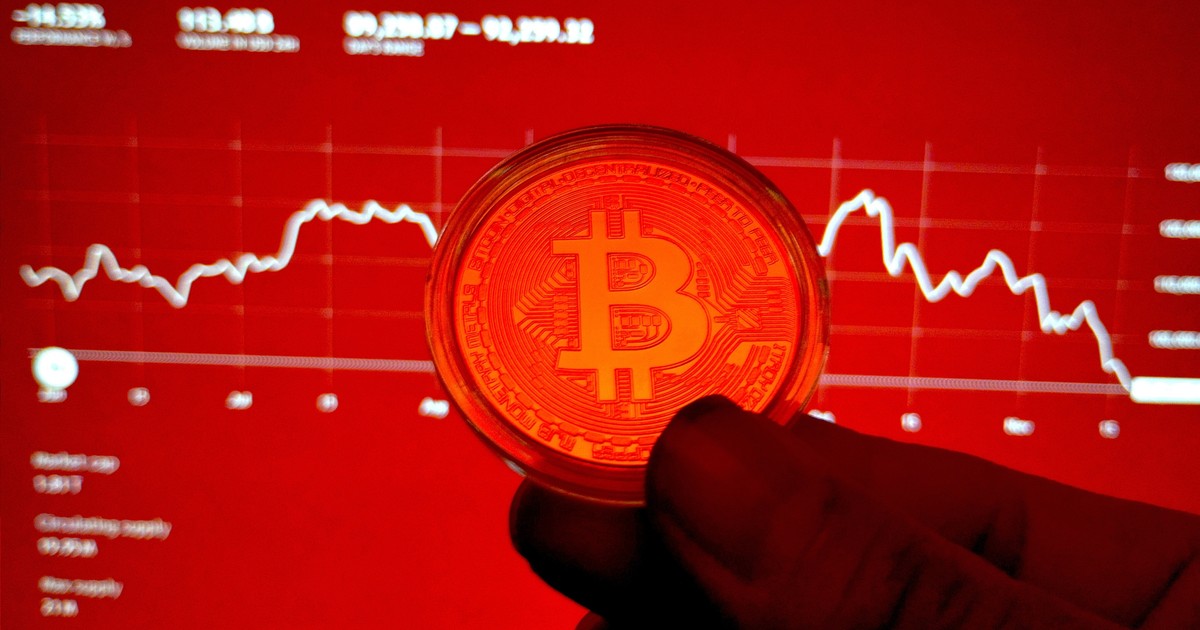
First of all, although there are declines in cryptocurrencies, they are relatively small. Before 3 p.m. on Monday Bitcoin loses 0.4% in 24 hours. and is quoted slightly above 75,000. hole. Ethereum falls a bit harder, but there are no symptoms of panic selling, as it is only -0.6%. in 24 hours to 2.3 thousand hole.
The entire cryptocurrency market is losing 0.5%. Only 0.5 percent The total capitalization of all cryptocurrencies in the world is currently $2.53 trillion.
“Bitcoin more resistant”
“Bitcoin has proven more resilient to the latest Iran-related conflict than oil and stocks, losing only slightly in value even as traditional markets re-price Middle East risks,” Coindesk comments.
“This is the fourth major Iran-related risk that cryptocurrencies have absorbed since the conflict began, and it is a trend declining sales continue. Previous escalations have led to larger declines in bitcoin's value than this one.
The site's analysts conclude that cryptocurrencies have largely finished pricing in geopolitical stress risk, that holders who were going to sell after the Iran headlines have already done so, and that the ETF spot price has become a more reliable basis than the weekend futures-driven price gaps that defined earlier cycles.
What's next? Forks from the options market
The Bitcoin options market says a lot about what will happen next. According to Glassnode, at a level close to 75 thousand. Most call options trades are currently taking place, which represent bullish (upward) bets.
On the other hand, the largest concentration of open sales positions, i.e. those oriented towards further declines, is 62,000. hole. This information creates a range of 62-75 thousand. USD, exceeding which may trigger greater changes in one of the directions.
Moreover, cryptocurrency volatility is likely to increase in the near future. This is evidenced by the negative gamma exposure on options, which shows how sensitive the entire portfolio (or market) is on changes in the price of the second-order underlying instrument, i.e. how the change in the price of bitcoin affects the delta, i.e. the volatility of the option depending on the change in bitcoin.