
What are the four basic qualities of a hero in real life. Most are not capable of heroic acts

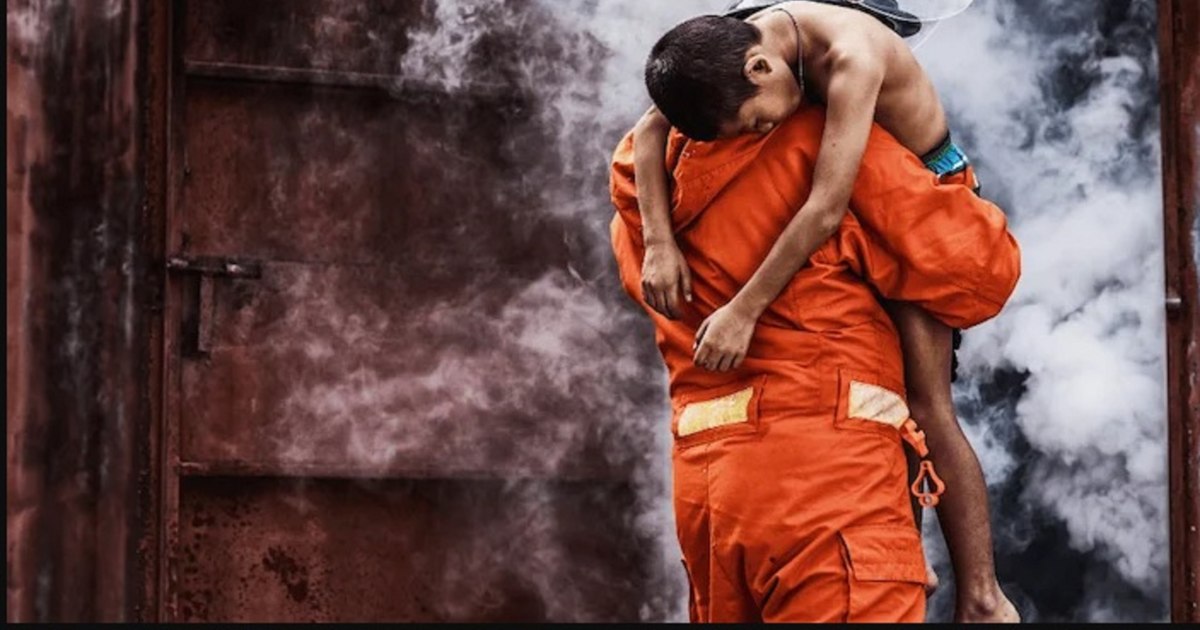
It is said that all men are capable of acts of heroism, especially in borderline situations. However, studies show the opposite. Most cannot overcome their survival instinct and prefer self-preservation to risking their lives for someone else. Instead there is a hero gene.
There are certain features of the liveboldandbloom.com PHOTO hero
“Anyone can wear a mask. Anyone can be a hero”said Spider-Man, one of the most beloved fictional characters in the world of Marvel superheroes. And this idea is often expressed in society, emphasizing the fact that there is no hero gene and that each of us can do extraordinary things in borderline situations. Well, several international studies show that this conception is totally unfounded. That is, in short, most people are not capable of heroic acts, and in borderline situations they let themselves be guided by the survival instinct. And this is not a defect, but perfectly normal behavior throughout the animal kingdom.
A small category of people are capable, however, of suppressing their instinct of self-preservation and performing heroic acts. That is, either they rescue people or animals from extreme situations, or engage in highly risky activities in the name of an ideal, to save the nation, and more. Even specialists have identified a number of characteristics that indicate that a man is capable of heroic actions.
Cultivated heroism and its four pillars
Ari Kohen, a political scientist at the University of Nebraska–Lincoln, has done extensive work studying heroism and heroic acts in humans. Based on studies, he concluded that those who act heroically have cultivated a number of qualities and character traits. In other words, heroism is not genetic, but can be cultivated, it can be developed in people who have certain character traits. This hypothesis was issued by Kohen in a special issue of the “Journal of Humanistic Psychology”.
In that study, the American specialist suggests that heroes share four acquired attributes that set them apart from the rest of people. These attributes are: expansive empathy, heroic imagination, special training, and a habit of helping. All this is learned and developed over time, often unconsciously. Which means that a culture of heroism can be built. But still, it is also based on some specific character traits. “Every person believes that in an emergency situation they will be the one to step in and do the right thing, but the literature in psychology, especially the bystander effect, says that we are sorely mistaken about that.” Kohen stated for the University publication.
The bystander effect is a well-documented psychological phenomenon that shows that most people have little chance of helping a victim, especially if other people are present. At the same time, most people are dominated, as is natural everywhere in the animal kingdom, by the instinct of self-preservation, which causes them to stand aside rather than risk their lives to save someone in an extremely dangerous situation. For example, a man who prefers to run away when a very brutal person corners his victim, precisely for fear of being attacked himself. There is, however, a human minority, called by Kohen “upstanders”, who manage to involuntarily annihilate that instinct of self-preservation and take action. There are those people who take a stand regardless of the risks.
Empathy and the “Heroic Imagination”
One of the most important attributes of a hero is empathy. Everything starts from there, experts say. Almost all of us possess empathy, or the ability to understand the feelings of others. Well, heroes have an increased ability. Their empathy doesn't take into account their social circle or comfort zone. Most people are more empathetic with those in their inner circle, in their professional category, or in their geographic and racial area, precisely because they understand them more easily. Heroes have an extended empathy that doesn't account for all of these characteristics.
From the Soviet hell, to the hell at home: the broken destiny of the Muscelian officer whom the country called an enemy
“Heroes have a wider empathic circle. They recognize that people who seem very different from them are, in fact, just like them. Most people empathize more with those who are like them,” Kohen adds to Nebraska Today. Specialists say that the expansion of empathy beyond professional, racial or regional circles can be achieved with the help of reading. Fiction is an excellent starting point, primarily because reading introduces people to protagonists who are very different from themselves.
In addition to empathy, heroes have another particularly interesting attribute that seems straight out of the Matrix movies: they think about how they would act in a borderline situation before it happens. They are clearly aware of what they have to do in serious situations, including the possible repercussions. In short, they answer themselves the question “what would you do in a certain situation”. Interestingly, even though they are aware that they may lose their lives or that, most likely, their intervention in that situation will be fatal, they will still act, as a predestination. For example, Christopher Norman, a Briton who stopped an armed attacker on a train in Europe, said after the incident that he had discussed that exact situation with a policeman friend just weeks before.
Psychologists say that “heroic imagination,” as the phenomenon is called, is actually mental training. When you visualize yourself intervening, you reduce your reaction time and the “shock” of novelty in the moment of crisis. Your brain already has a script to follow, which counteracts the “freeze” caused by fear. At the same time, the heroes are aware of the risk of death and accept the risk in exchange for their moral integrity.
A constant education of goodness and helpfulness
Another characteristic of the hero that can be educated is the habit of helping. Specialists like Ari Kohen say that the habit of helping can be trained, ideally from early childhood, through small, everyday gestures. For example: helping an elderly person with shopping nets, holding the door of the block for someone with busy hands, offering a seat on the bus or helping a mother who is struggling with a small child. All of this works as a workout. The brain learns to identify the needs of others, and it also learns how to act quickly when it does.
“You have to form the habit of doing things for others, you have to form the habit of noticing what others need from you”says Cohen. Of all the common attributes of heroes, the habit of helping is the easiest for any person to learn and practice. It is the most accessible.
The incredible story of the smallest soldier in history who became a hero of the American special forces
The fourth attribute common to heroes and, at the same time, essential to heroism is the preparation of specialty. Heroes usually have some special training or have qualities that help them be able to save someone's life. They are usually good swimmers, they have a well-trained body, they have a strong psyche, they know how to give first aid, they know how to fight or manage a tense situation. The fact that they have more skills also increases these people's self-confidence, which helps them to intervene faster and more effectively.
Studies have also shown that the bystander effect is weaker among those with a specific form of training. For example, in the case of an armed attack in a means of transport, which happened a few years ago, the assailant was put to the ground by four passengers; two of them had military training. Psychological studies show that when you feel you have the skills to solve a problem, the mental barrier of fear drops significantly. Training turns the panic reaction into procedural action. Instead of asking yourself, “What should I do?”, your body automatically goes to “Step 1, Step 2.”
Impulsivity, a strong point of heroes
Other specialists, such as Punit Shah from the Department of Psychology at the University of Bath, add to this list a certain type of innate impulsivity. There are those people who like adrenaline, adventurous types. “People who act quickly and are more impulsive are more likely to engage in acts of heroism. There isn't a heroic personality trait per se, but I think one of the elements that contributes to it is adventurousness or risk-taking.”he states for the BBC.


