Massive floods in the Republic of Russia. Residents furious. “Stop stealing”

Dagestan is one of the few regions of Russia whose name is known to many people around the world. All this thanks to the words of the Russian MMA fighter Islam Makhachev, who once said what to do to become a tough fighter: “send him to Dagestan for two or three years and forget about it.”
This phrase has become shorthand for the North Caucasus republic's image as a Spartan training ground – a place characterized by a grueling, hyper-masculine wrestling culture that turns boys into world-class competitors. Currently, the conditions there are also very difficult, but for a different reason.
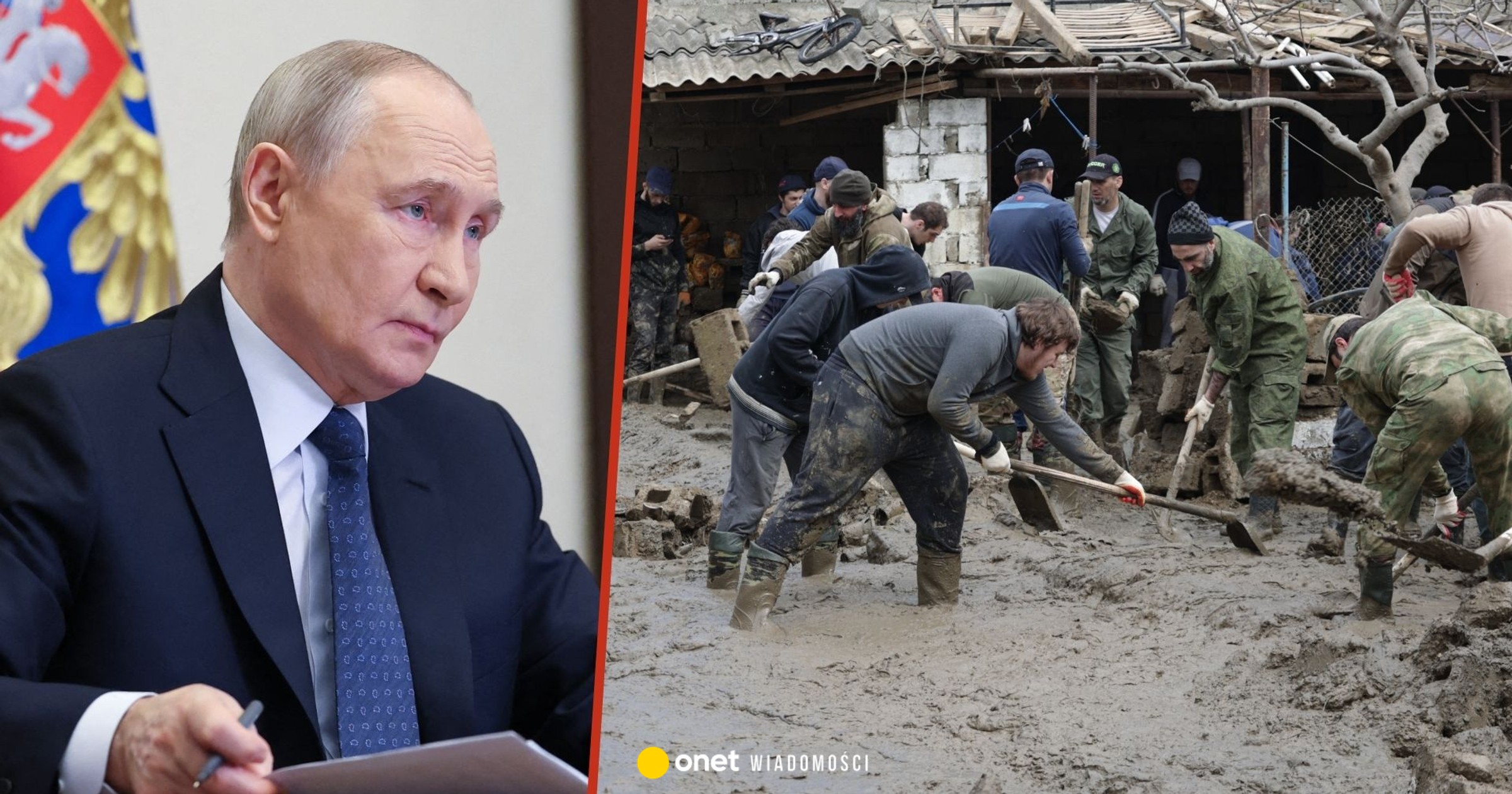
Dagestan is struggling with the disastrous effects of the worst flood in over a century. Two weeks of heavy rain led to landslides, bridge collapses and a catastrophic rupture of a dam. In some parts of Dagestan, water levels rose so quickly that homes were flooded in just a few hours. At least five people have been confirmed dead and thousands have been displaced, according to volunteers helping residents.
— Bloggers who so actively invoked the slogan “two, three years in Dagestan” did not devote even a fraction of their attention to the current disaster. But this is nothing new, says Zarema Gasanova, a researcher from Dagestan.
This subdued reaction to the situation in the republic is reminiscent of the events following the earthquake that struck the region in 1999 and led to the displacement of over 1,500 people.
— Do you think anyone knew or talked about this? – he asks in an interview for The Moscow Times. — We should all understand the place we live in. It never makes it to the media.
Dagestan is a kaleidoscope of more than 100 ethnic groups, mostly Sunni Muslims, crammed into a territory about the size of Slovakia. It is a land of extremes, including geographical ones – jagged peaks rising to 4,400 m in the south contrast with cascades falling to the shores of the Caspian Sea in the east. This breathtaking geography has become a heavy burden in the current crisis. Some residents say the damage could have been less if not for years of systemic neglect.
— There have been cracks in the Gejukh dam for a long time. There were also some overcrowded places. But they didn't pay attention to it, says a resident of one of the most affected parts of Dagestan in an interview with the independent website From the Republics [Z republik]referring to the rupture of the tank.
When they say “they”, the inhabitants of Dagestan mean the Russian authorities. For many of them, they are as distant as the colonial administration.
Years of neglect
The current leader of the republic, Sergei Melikov, is an ethnic Lezgin, a member of a Caucasian ethnic group living mainly in southeastern Dagestan. However, he was born and made his career in Moscow. He had no ties to Dagestan or local elites — until 2021, when Vladimir Putin appointed him head of the republic.
Melikov is what Russian political analysts call “Varangians” – in the Middle Ages, it was a group of Scandinavian Vikings, originating mainly from what is now Sweden, who operated in what is now Ukraine, Belarus and Russia, later creating Kievan Rus there. Today, Russian political scientists refer to this as outsiders appointed by the Kremlin, whose main task is to dismantle local patronage networks.
His rule is characterized by sweeping changes in local government and the emergence of federal management companies in Dagestan. In particular, Melikov paved the way to Dagestan for Russian state energy monopoly Rosseti, helping it gain control of the republic's power grid.
He did not carry out the necessary reforms – Dagestan is famous for its crumbling infrastructure. Paved roads are rare there, power outages occur every day, and safety rules are rarely observed in residential construction.
— During Melikov's rule, the infrastructure situation deteriorated significantly, says a local political scientist, speaking anonymously for fear of repression. — The federal authorities decided to forget about the need to modernize the regional energy infrastructure.
Delayed reaction and indignation of residents
During the current floods, Melikov is very discreet. When he finally made his public appearance, arriving at the places hardest hit by the floods, they looked more like a war zone than a rescue operation. Surrounded by masked and armed security guards, he drove up to a collapsed building in Makhachkala. And he quickly found the cause of the destruction – “reckless” development. These words caused a storm on social media.
“Why didn't they react in time after the recent rains? Why is this happening again?” – asks one of the Internet users under the video published on Instagram. “It was necessary to organize a proper rebellion – what kind of situation is this? All this time, only now has the comrade deigned to appear in public and speak out,” writes another. Yet another expresses outrage: “Stop stealing money and create a comfortable, safe life for the residents.”
This week, pro-Kremlin media cited anonymous sources claiming that Melikov may be forced to resign. However, experts say that its possible cancellation is unlikely to happen soon.
— Due to its strategic location in southern Russia and its fragmented ethnic landscape and local elite, Dagestan is a potentially problematic region where the appointment of a new leader would require careful planning, says Andras Toth-Chifra, an expert on Russia's domestic politics and political economy.
— Even though it is obvious that Melikov did not solve the fundamental problems of the republic during his term of office, the Kremlin will probably dismiss him only when it can guarantee that the change of power will be smooth and will not destabilize the region, he adds.
He also notes that the Kremlin rarely dismisses governors immediately after a disaster. He prefers to wait a few months to avoid the impression that he is giving in to public opinion pressure.
Rage covered with fear
Putin also acted slowly – he held the first public meeting on the crisis in Dagestan only on Tuesday. On Thursday, authorities in Moscow finally declared a state of emergency at the federal level for Dagestan, as well as the neighboring republic of Chechnya, which is also struggling with severe flooding.
Concerned about the inaction of the authorities, the residents decided to take matters into their own hands.
— Local companies, from small entrepreneurs to large corporations, got involved in helping the victims. Car repair shops provided free repairs, restaurants delivered food, and large companies sent money, says an anonymous resident of Dagestan. — When it comes to external aid, it comes mainly from predominantly Muslim regions, he adds.
While the Dagestan authorities offered modest one-time payments of PLN 16,000 to flood victims. rubles (PLN 754), the local charity organization Nadezhda collected over 500 million rubles (PLN 24 million). Popular personalities from Dagestan also came to the rescue.
The celebrity Hasbulla Magomedov, better known as Hasbik, went to the village of Mamedkala to help volunteers and – according to his account – donated 1.2 million rubles (PLN 56.6 thousand) to a fundraiser organized by Nadezhda. According to some reports, Dagestani MMA fighter Khabib Nurmagomedov also made a donation.
— Muslims are taught to do good in secret, which means Khabib will not publicly say how much he has donated, Gasanova says.
The Russian state meteorological service has issued a warning about a possible third wave of flooding caused by forecast heavy rainfall. But that's where it ended. The inhabitants of the republic feel that they have been abandoned.
— Melikov claims that everything is under control in the republic, he did not even declare a state of emergency when the first floods began in March. The only thing that saves people is community, says Gasanova.
— The inhabitants of Dagestan have always been distrustful of the authorities, but the ongoing repression has created an atmosphere of fear in the republic. They pour out their fury in the comments under Instagram videos.