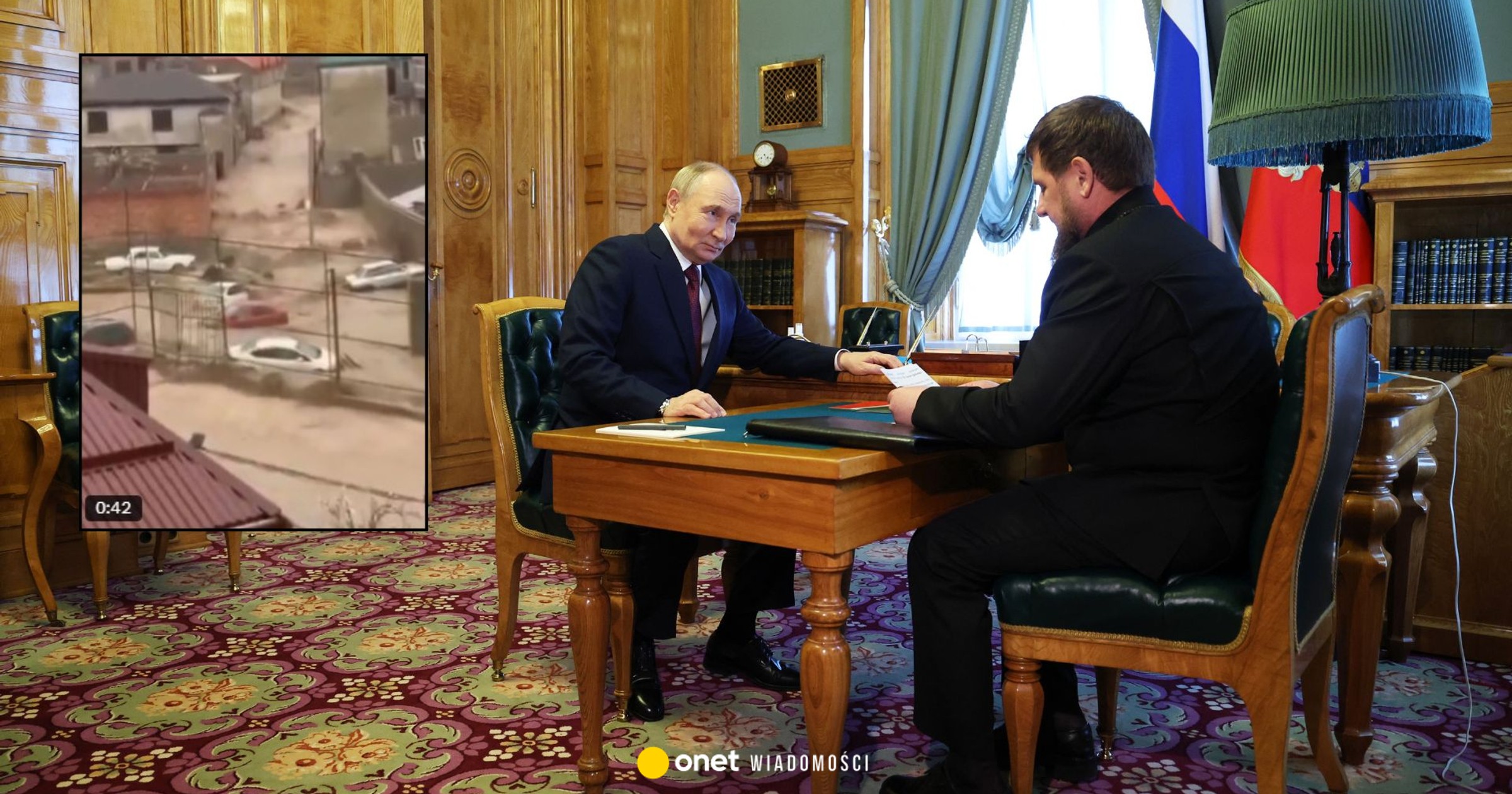
According to the Ministry of Emergency Situations, floods of varying severity were reported in at least 32 regions of Russia. Despite early warnings from the state meteorological agency Rosgidromet, many regions were either unprepared for this situation or were slow to cope with its effects.
The Republics of the North Caucasus – Dagestan and Chechnya – have experienced some of the the worst floods in over 100 years. In Dagestan, a republic located on the shores of the Caspian Sea and inhabited by over 3 million people, the authorities declared a state of emergency in three districts and five main cities, including the capital of the republic, Makhachkala.
Floods caused by record rainfall led to landslides, rockslides and the collapse of at least one large bridge in the mountainous region.
According to the Ministry of Emergency Situations, more than 3,300 people were forced to evacuate. On Wednesday, four days after the floods began, as many as 800 homes across the region were flooded.
Water and electricity problems
Residents of Makhachkala reported long-term power outages, water shortages and disruptions to the mobile network.
— There has been no electricity since Saturday morning. My elderly parents have an electric stove, so we cannot cook. Our relatives bring us food, says Zemfira, a resident of Makhachkala, to the independent news service Kaukaski Knot.
The situation is similar in neighboring Chechnya – the flood damaged over 1,800 houses there and partially destroyed a dam in the eastern part of the republic. As a result, the authorities declared a state of emergency in the region.
Residents of both republics complain to independent media that the authorities were too slow to help them. Volunteers had to step in – they were mainly the ones who helped evacuate people and found them shelter.
— People were transported to the central square in Grozny. There, residents were already waiting in their cars to take the victims to their homes. There was no one left on the streets that night, says Usman, a resident of the Chechen capital, in an interview with Kaukaz. Realia, the local affiliate of the US-funded Radio Free Europe/Radio Liberty news service.
— I admire our people. They don't sit idly by waiting for emergency services to arrive or authorities to take action, he adds.
Inept actions of the authorities
Although Chechen leader Ramzan Kadyrov stated that construction of new housing for flood victims was already underway, many people affected by the disaster, both in Dagestan and Chechnya, said they intended to rely primarily on their own resources and community support.
— We will have to get back on our feet on our own and with the help of our relatives. It's good that at least people here are normal, ordinary, says one of Makhachkala's residents in an interview with Kaukaz.Realia.
The article continues below the video
Nadezhda, a local charity in Dagestan, announced on Tuesday that it had collected over 50 million rubles (PLN 2.3 million) to help affected families. Meanwhile local authorities announced that they would limit one-off payments to victims to PLN 16,000. rubles (PLN 739) — that's less than the regional monthly minimum wage. Families who lost all their property as a result of the flood are to receive PLN 157,000. rubles (PLN 7,256).
This year, the federal authorities allocated over 9 billion rubles (PLN 415 million) for flood prevention. But environmental experts and activists say significantly greater investment would be required to significantly mitigate the effects.
Experts note that a long-term solution to this issue requires more stringent urban planning regulations – to limit the chaotic construction of houses and entire districts in areas at risk of flooding.
– We have problems [z powodziami] since the colonization of Siberia and [późniejszej] local population's loss of ability to adapt to the environment, says environmental expert Yevgeny Simonov.
— Our ancestors either did not build houses in flood plains or were willing to sacrifice them to have access to water. People love living by the water. With the colonization and urbanization of territories, they understand less and less what consequences this entails, Simonov tells the independent Weter news website.
“Creative” approach of the authorities
With spring floods already underway and limited government resources, some officials call on residents to surrender to the forces of nature instead of fighting.
One official who has taken a creative approach is Pavel Romanenko, mayor of Olokminsk, a city in Yakutia. As soon as the snow begins to melt in May after a seven-month-long winter, the city of Olokminsk, located in a valley on the banks of the Lena River, is at risk of flooding.
— In previous years we transported snow [z miasta]but it didn't bring any results. I think the best solution would be to allocate these funds to clean and repair drainage ditches in the summer, said Romanenko, quoted by the local news website Olekma Info.
“We need to negotiate with water, not fight it,” he added.
I’m Ashley Davis as an editor, I’m committed to upholding the highest standards of integrity and accuracy in every piece we publish. My work is driven by curiosity, a passion for truth, and a belief that journalism plays a crucial role in shaping public discourse. I strive to tell stories that not only inform but also inspire action and conversation.