The Czech Prime Minister wants to keep an eye on Fico and Orban, autocrats and Putin's cronies

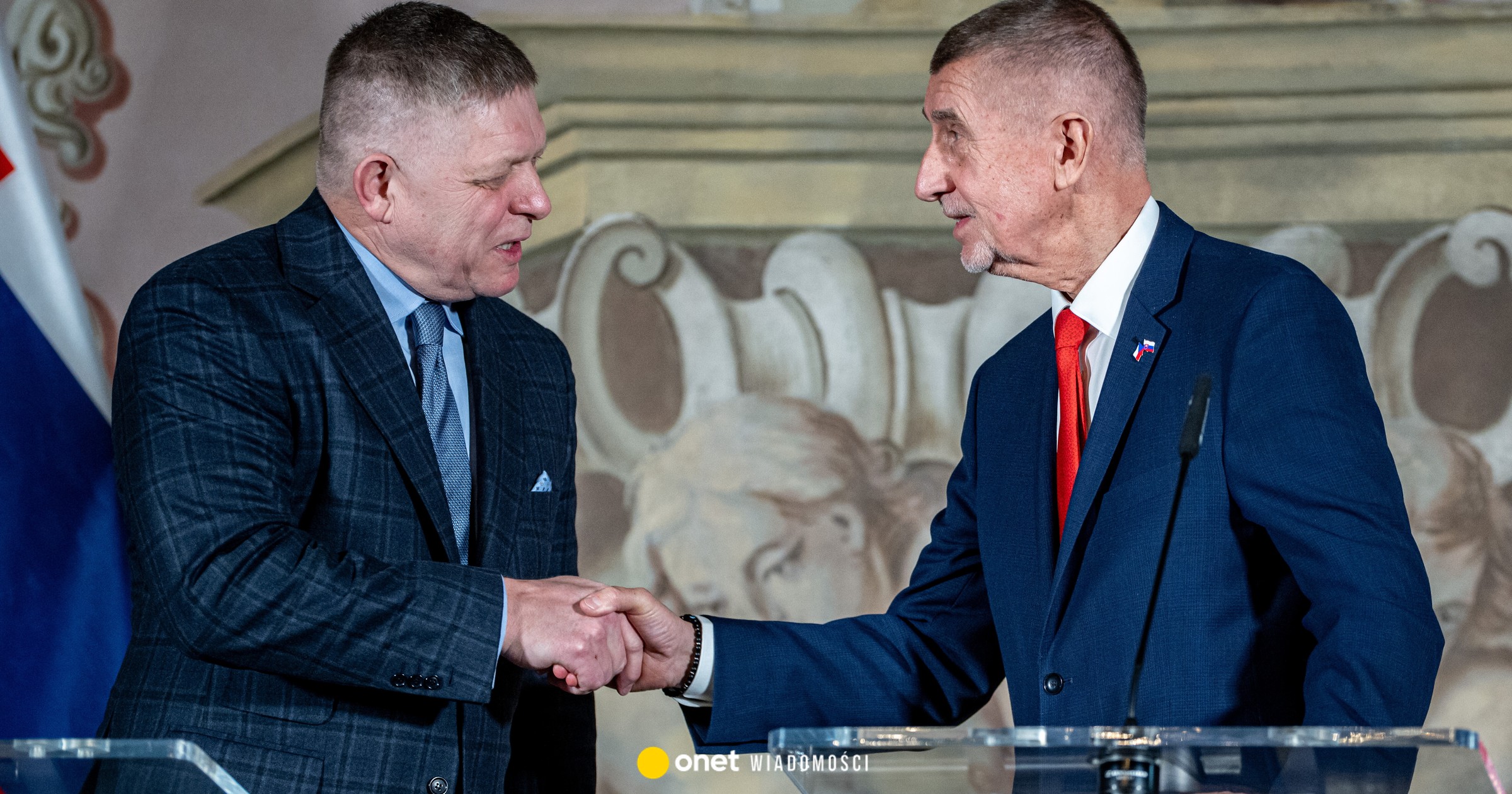
It is telling that the first meeting after the break takes place on the day when representatives of Slovak culture from all over the country come to Bratislava to protest against the government.
Robert Fico and his lawless state
In recent weeks, there has been panic in Robert Fico's government. There will be elections next year, and the coalition parties are afraid of losing, so they are increasing their rhetoric on all fronts. They decided again arrest police officers who investigated their corruption cases years ago. However, part of the justice system remains independent, so not everything goes according to politicians' wishes.
Almost every week, journalists reveal new cases involving politicians of the ruling parties or their associates they steal state money or use EU funds to enrich themselves. For example, guesthouses were supposed to be renovated with European funds, but ultimately it turned out that these were private facilities where people could not stay.
In turn, Maria Benedikovicova, an investigative journalist of the Dennik N website, determined that the former candidate of Robert Fico's Smer party for the chairman of the Banská Bystrica region, Adrian Polony, as part of unclear transactions, he buys valuable castles throughout Slovakia. When the journalist asked the Prime Minister about this, he became furious as usual and ran out, shouting: – Thank your friend's stupidity for ruining the entire press conference!
At the same time, the government began to cut already low spending on culture. The reductions were so serious that they threatened the functioning of most cultural institutions in the country, because the Art Support Fund Council liquidated several years of grants worth over EUR 2 million (approx. PLN 8.5 million). The projects had already been started, so this could have led to their failure.
Then the board chairman, Matus Oha, tried to deny his own decision, even though it was issued in writing. Instead of explaining, he started telling a fairy tale: — There was a class once, and there was chalk in that class. This chalk was white and there was quite a lot of it. Miśko Muszka came, chop, chalk in his pocket. Durko Hrushka came, chop, chalk in his pocket. Sanko Suszka came, chop, chalk in his pocket.
The government is introducing a law that will abolish postal voting from abroad, which SNS MP Roman Michelko commented bluntly: – I will not insult the intelligence of the listeners and I will tell it like it is. When we saw the election results, it turned out that [głosowanie korespondencyjne] Is extremely beneficial for the opposition.
Civil society does not intend to give up
At the same time, another wave of layoffs began in the STVR public media. Dozens of people were forced to leave, others left on their own. Sona Gyarfasova, who was responsible for documenting political prisoners from the previous regime and heroes of the Slovak National Uprising, was recently terminated immediately. Virtually anyone who even slightly criticizes the government is dismissed.
STVR also introduced open censorship by removing the coverage of the Radio_Head Awards, during which many artists criticized the destruction of culture and public media. The director of STVR, Martina Flasikova, wrote a letter in which she bluntly told artists critical of the government that she wishes them “many creative successes in further audiovisual activities outside our institution”. If there was ever any question as to whether something similar to the normalization that took place in Czechoslovakia after 1968 was taking place in Slovakia, there is no doubt today.
However, we must immediately add something that is very rarely heard in the Czech debate. Yes, Robert Fic's government is destroying Slovak freedom, taking away people's jobs, slandering them, censoring them, but civil society continues to resist. Only a handful of prominent cultural and social figures agree to cooperate with the authorities. More and more people are speaking out critically – for example, during the live broadcast of the program, the popular actor Jan Kolenik said that we need to be in solidarity with people of culture whom certain groups are trying to destroy.
Babisz will be inspired by them
Viktor Orban, Prime Minister of Hungary, and Robert Fico, Prime Minister of Slovakia, sign a Memorandum of Understanding after their meeting in Bratislava, April 28, 2025.Robert Nemeti / Anadolu/ABACAPRESS.COM / PAP
Meanwhile, in Slovakia and Hungary, people's lives are much worse than in other EU member states, because their politicians primarily they care about their own power and profit, not the good of citizens.
We should not underestimate the fact that the Czech Prime Minister considers his closest allies two opponents of a free and democratic society. The only question is when Andrej Babisz will decide to convince his voters, like Orban and Fico, that what should be most important to them is not the quality of life, but fear and fueled hatred towards others.