The Kremlin on the line, services on the move. Despite this, Viktor Orban still hopes to win

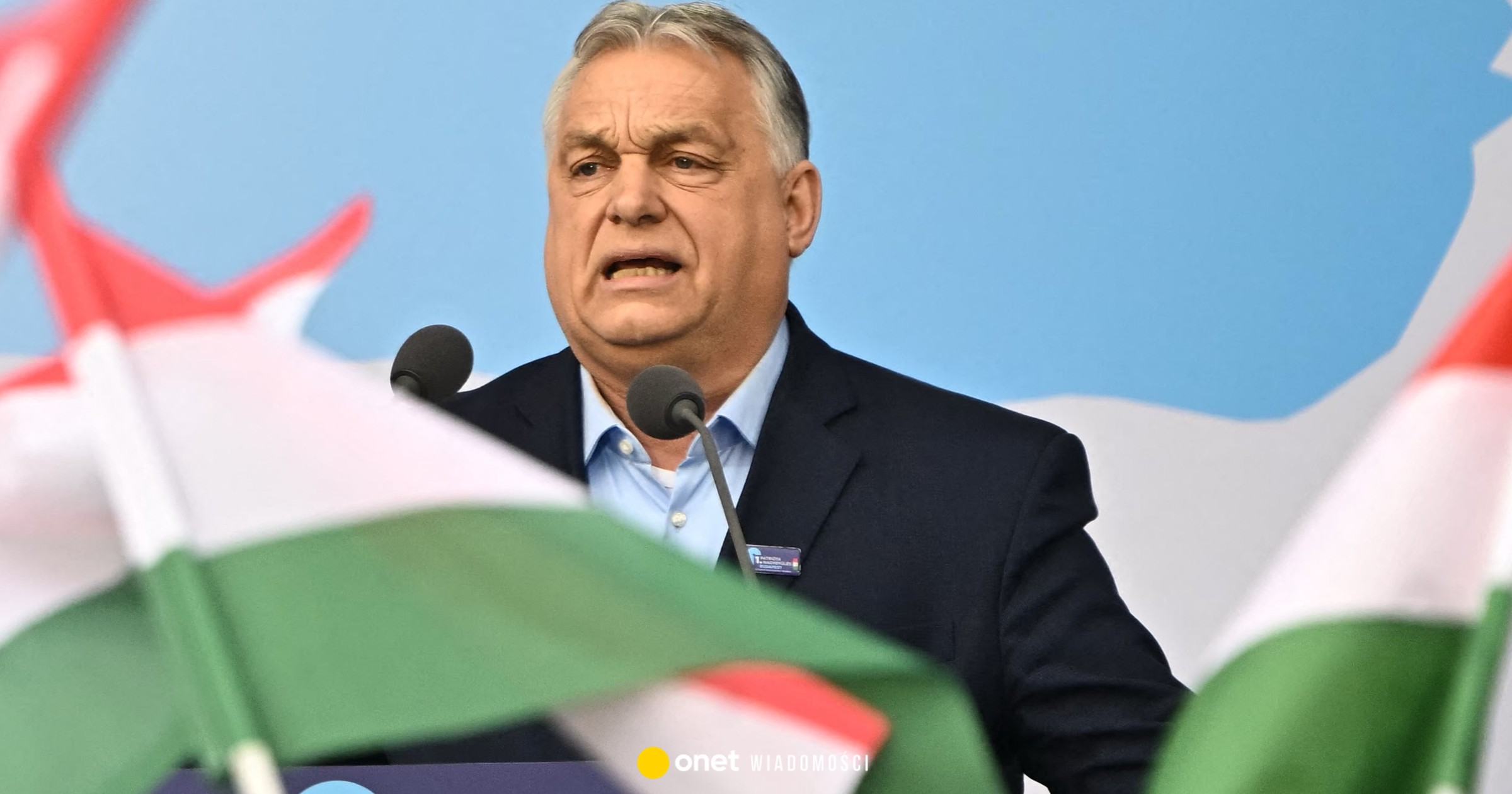
The past week in pre-election Hungary was exceptionally stormy.
And Viktor Orban, although under pressure, still behaves as if the final was to be his.
Szijjarto, one of the key people in Orban's government and the Fidesz party, also talked to Lavrov about other issues. For example, in 2020, he was asked to help organize a meeting with the Russian prime minister in Moscow for the then prime minister of Slovakia (now president) Peter Pellegrini, as this was to help Robert Fico's Smer party maintain power in the upcoming elections. Prime Minister Mikhail Mishustin did receive Pellegrini, but it did not help Smer.
Hungarian Minister of Foreign Affairs Peter SzijjartoThierry Monasse / Contributor / Getty Images
Government propaganda, which tries to present Viktor Orban as the only guarantee of security and considers Ukraine as the real enemy, describes the minister's talks as responsible cooperation with partners around the world.
However, the very fact that someone eavesdropped on his conversations with Russia was called a scandal.
“That doesn't sound good”
The government weekly Mandiner quickly published recordings of one of the most famous Hungarian investigative journalists, Szabolcs Panyi, who has been exposing Russian influence in the country for years.
In the probably illegally obtained recording, Panyi talks to one of his sources connected with foreign intelligence services, confirms Szijjarto's telephone number and boasts that he has good contacts with a leading politician of the opposition TISZA party and that after the elections he could have access to the highest circles of Hungarian diplomacy.
It was a mistake, of course. And it doesn't sound good. I tried to get the source to share some information with me
— he now told a Respekt reporter.
The government presents this conversation as evidence that independent media are cooperating with foreign intelligence services and the TISHA party to overthrow Orban's government. The authorities also filed a criminal complaint against Panyi, accusing him of espionage. The journalist himself – despite facing a sentence of up to eight years in prison – does not take it too seriously.
It's just a game. Of course, they can't prove any espionage on me, and they know it. It's just a distraction
– says.
Spies, of course
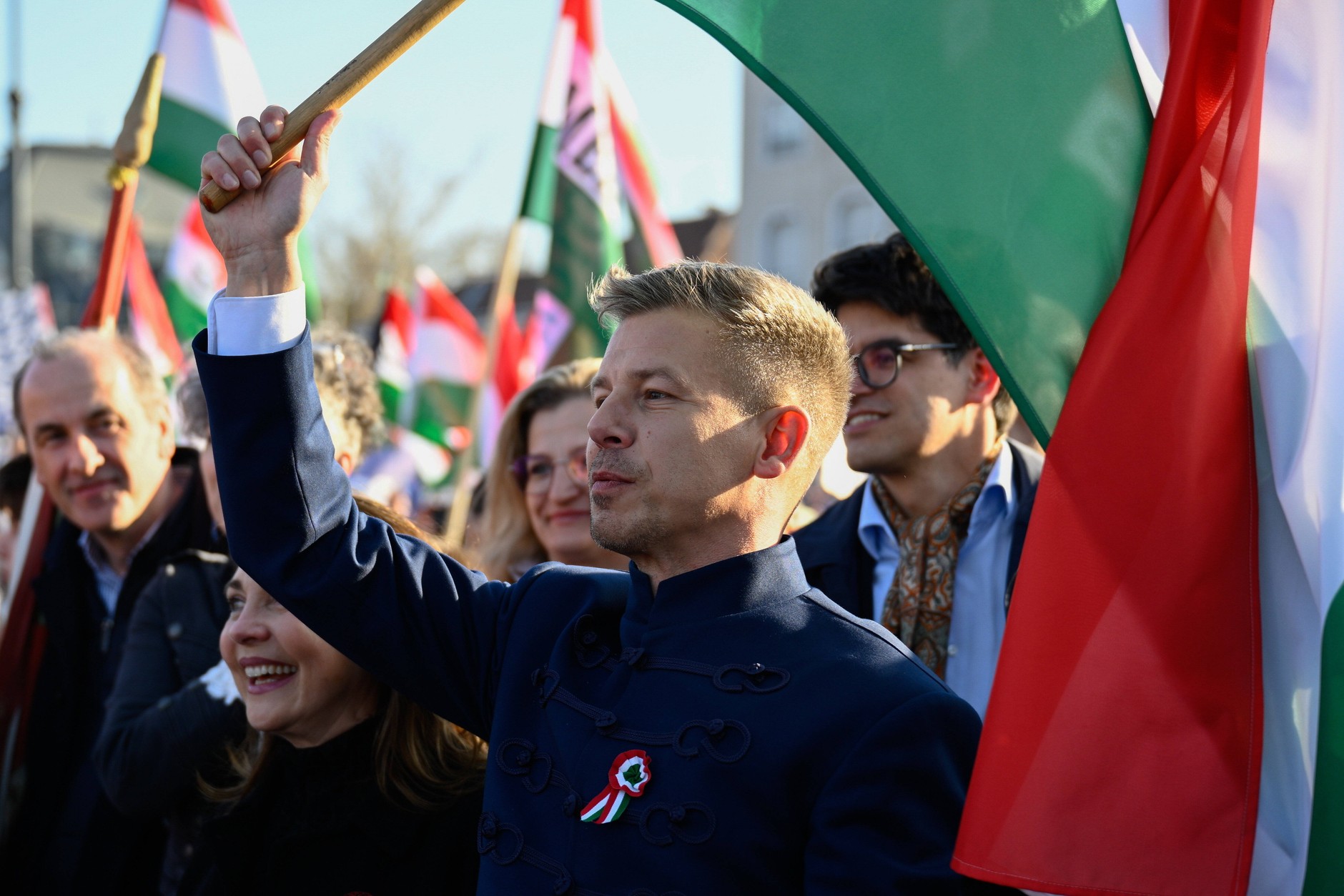
The chairman of the opposition Tisza Party, Peter Magyar, at the National March during the celebration of the national day commemorating the 178th anniversary of the outbreak of the Revolution and the War of Independence, Budapest, Hungary, March 15, 2026.BOGLARKA BODNAR / PAP
A nineteen-year-old computer scientist, going by the pseudonym “Gundalf”, who, as a former collaborator, still had access to the internal systems of the TISHA party, was first persuaded to cooperate by an unknown person using the name “Henry”. It was most likely an officer or collaborator of the Hungarian services. When he refused to cooperate and planned to record a meeting with “Henry” to expose him, a raid took place – the police seized his equipment. At the same time, the officers carried out a similar operation at his friend nicknamed “Buddha”, with whom “Gundalf” coordinated the activities.
The police had previously received information from the services that they should act quickly and look for materials related to child pornography. However, no such thing was found. Over time, the officers were surprised to discover that they were searching the houses of people associated with the opposition. This made some investigators suspect that they were being used in political games.
Thanks to their information, Hungarian investigative journalists revealed a possible attempt by Orban's government to abuse the secret services and police in order to gain access to the TISZA party's IT systems, extract useful data from them and possibly paralyze them at the right moment.
“It exceeded all limits”
Although Hungary is accustomed to pushing the boundaries of what is acceptable in politics, these findings – publicly confirmed by one policeman who paid for it with the loss of his job and an immediate search of his home – shocked at least half of the population.
It's no longer about what it looks like or different points of view. This crossed all limits
— said renowned political analyst Gabor Torok.
However, the government presents a completely different version of events. According to him, the special services detected Ukrainian spies in the structures of the TISHA party – hence the decisive intervention. However, this narrative seems illogical: the government has long claimed that the entire TISHA is a Ukrainian influence operation and that Peter Magyar is an agent of Ukraine. In such a situation, Kiev would have no reason to place its people in lower positions, such as network administrators.
For a long time I thought that Orban's government outsourced this type of operations to private companies. The fact that he was trying to use state services and the police for this purpose was a bit of a surprise to me, although maybe I was just naive.
– says journalist Panyi.
If all the allegations and serious suspicions turn out to be true – and many indications seem to be the case – it means that the Hungarian government and the Fidesz party are fighting for political survival with all available means.
A few weeks ago, there was also information that a small operational group of Russian intelligence had arrived in Budapest, specializing in influencing elections and sowing social chaos.