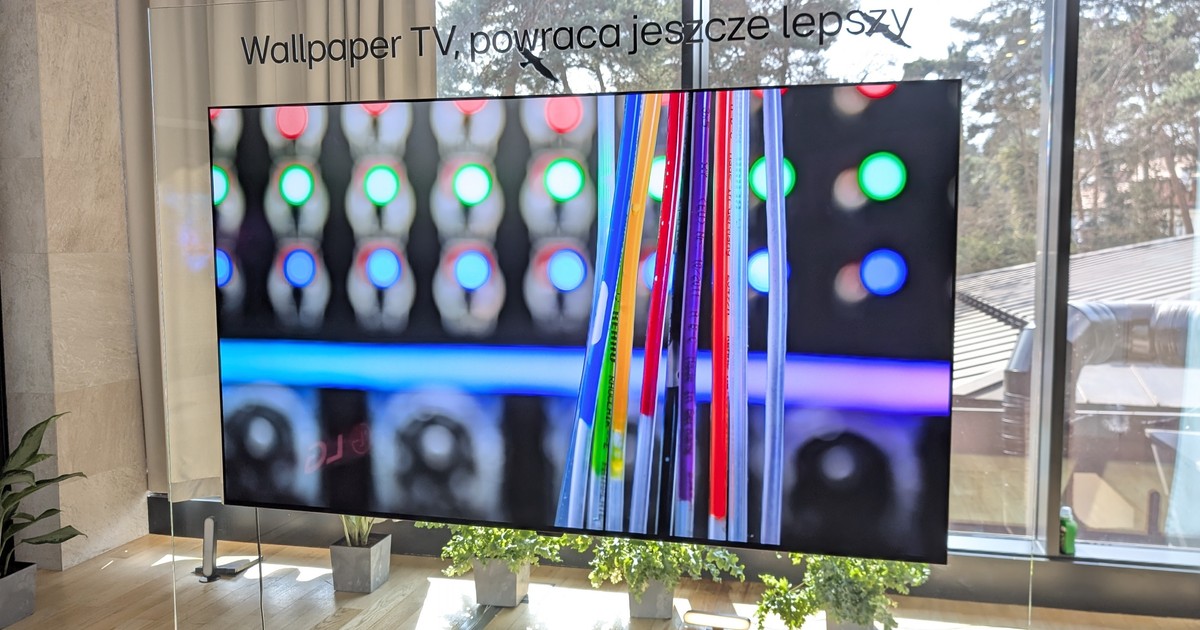
LG organized a show of its new TVs for 2026. As every year, the Korean giant paid the most attention to OLEDs, and in particular to the designer, ultra-thin LG OLED W6 (Wallpaper TV).
At the same time, a surprising amount of space was also given to the new MRGB Evo TVs, which are also supposed to offer a top image, but use technology that is contrary to the OLED philosophy. LG, wanting to reconcile market expectations and its own interests, must wage war not only with its competitors, but also with itself.
OLED as thin as a sheet of paper
Some older readers or those who follow the market probably remember that LG already had a similar TV. The Wallpaper Design concept, first presented in 2017, was to create an ultra-thin, slim screen to be hung on the wall, which was supposed to be not only a TV, but above all a designer complement to the interior. This idea did not catch on at the time, but now it is back in a slightly changed form.
LG OLED W6
|
World computer
LG decided to combine the Wallpaper Design concept with the idea of a wireless TV known from LG OLED M. Only the screen is mounted on the wall, and the image is sent via Wi-Fi from the Zero Connect module, which LG OLED W6 has been significantly slimmed down. All external devices such as decoders, consoles or audio sets are also connected to this “box” via HDMI.
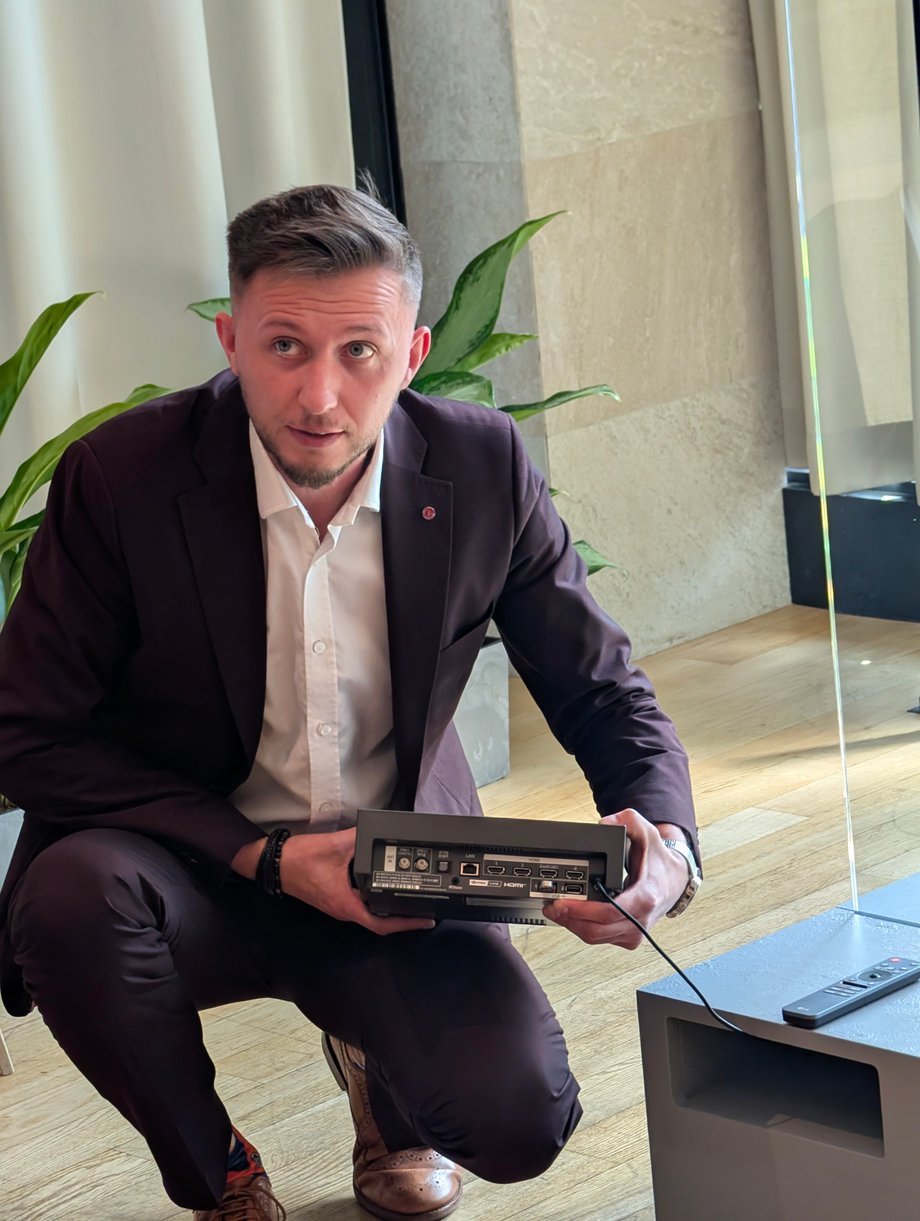
LG OLED W6 module
|
World computer
As a result, the new OLED is incredibly thin over its entire surface (only 0.9 cm thick), and there is no characteristic protruding electronics module, which on other TVs made using this technology looks like it is glued to a thin screen. Combined with a very bright Tandem OLED 2.0 matrix and the most powerful LG image processor in 2026 (Alfa 11 Gen. 3, supported by AI, of course), we get a screen for demanding users, which is also a gadget and will look great in the living room, also in the one where there is a lot of sunlight.
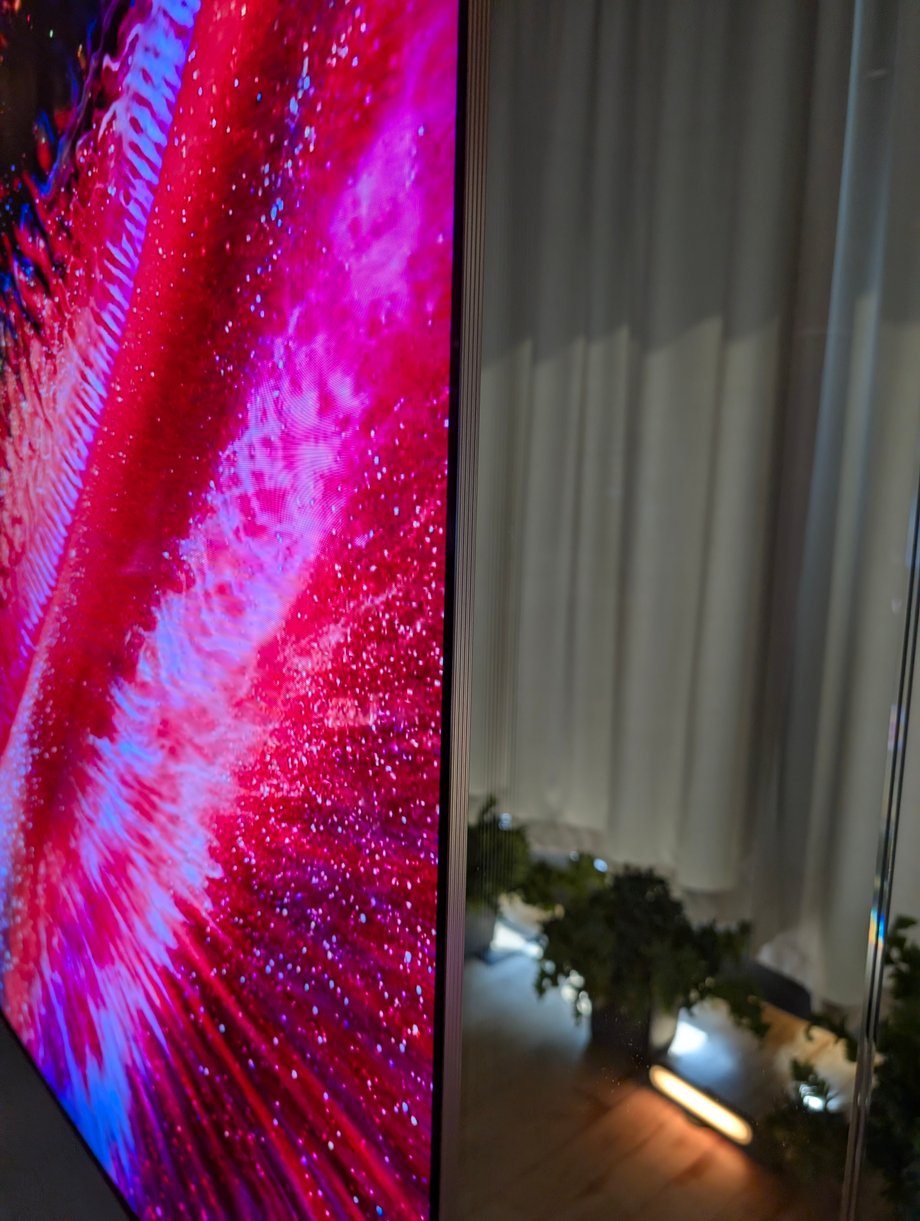
LG OLED W6 is very slim
|
World computer
At the same time, we get all the advantages known from other OLED TVs – highly saturated colors, deep, pitch black, excellent contrast, very wide viewing angles and lightning fast response timewhich causes dynamic scenes to be displayed without artifacts (so-called smearing), which is especially appreciated by video game lovers.
LG is not only about OLED TVs. The Korean giant follows trends
During the same show, LG emphasized the importance of the new MRGB Evo series made with a completely different technology. It's about LCD TVs, but with RGB LED backlight, which returned to screens from 2025 – first Hisense, but then Samsung, TCL and Sony had their plans and presentations with such TVs. In 2026, Philips and LG will join this group.
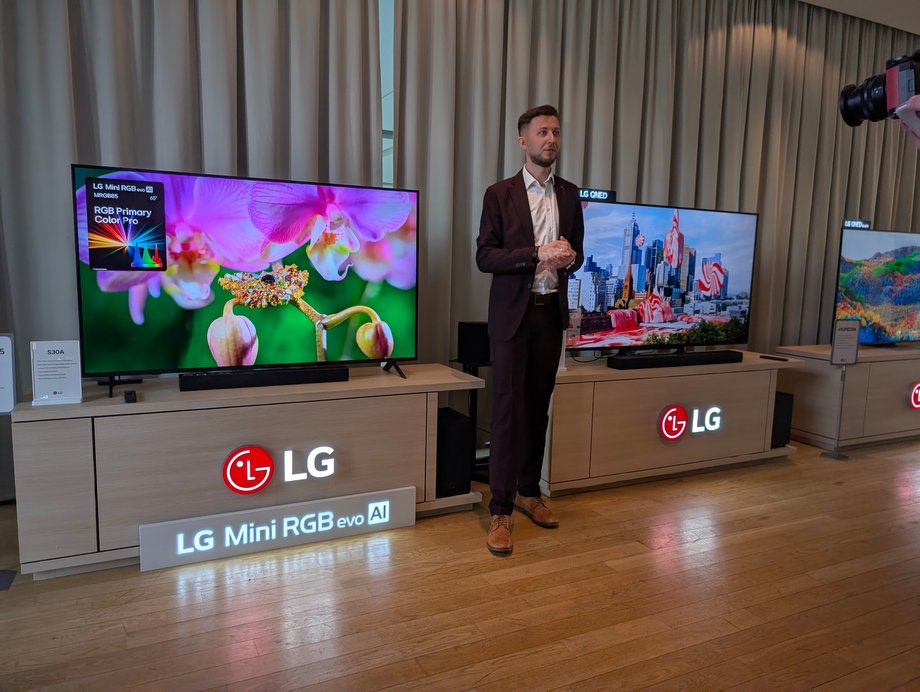
LG MRGB Evo
|
World computer
We deliberately don't write about it as completely new, because Sony introduced the model back in 2008 KDL-55XBR8 on such backlight. This concept involves replacing blue diodes (or white diodes in regular LCD screens without quantum dot filters) with backlight cells in which there are three different colored diodes – red, green and blue.
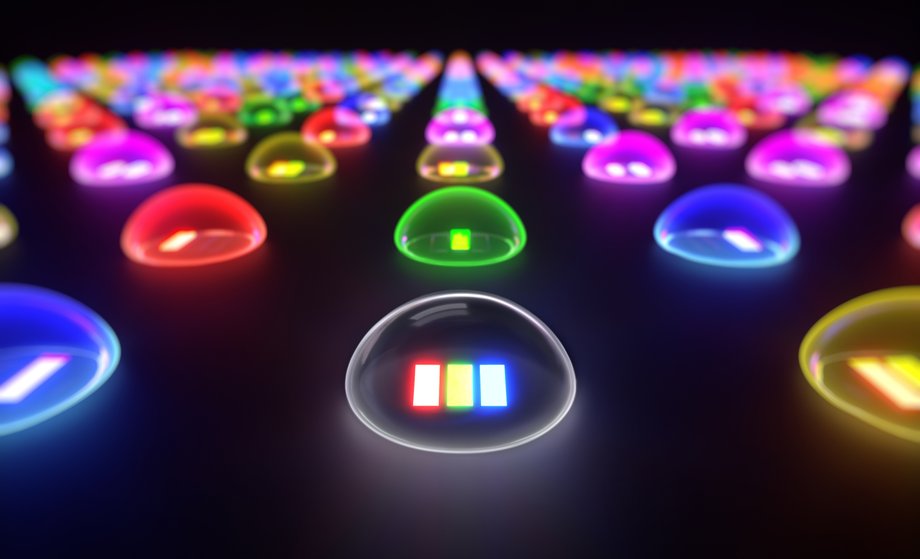
RGB LED backlight in Sony TVs
|
Sony Bravia
Appropriate control of the light emitted by LEDs transmitted through the matrix's liquid crystal layer allows you to obtain very saturated colors without the support of quantum dots known from QLED TVs or cheaper phosphors (PFS) that give a similar effect.
Manufacturers use the term 100 percent in their marketing materials. BT.2020, which means full coverage of the ultra-wide color palette used in nature films in HDR. In other words, the TV will be able to display more shades of the same color, offering a vivid, juicy image previously associated with OLEDs.
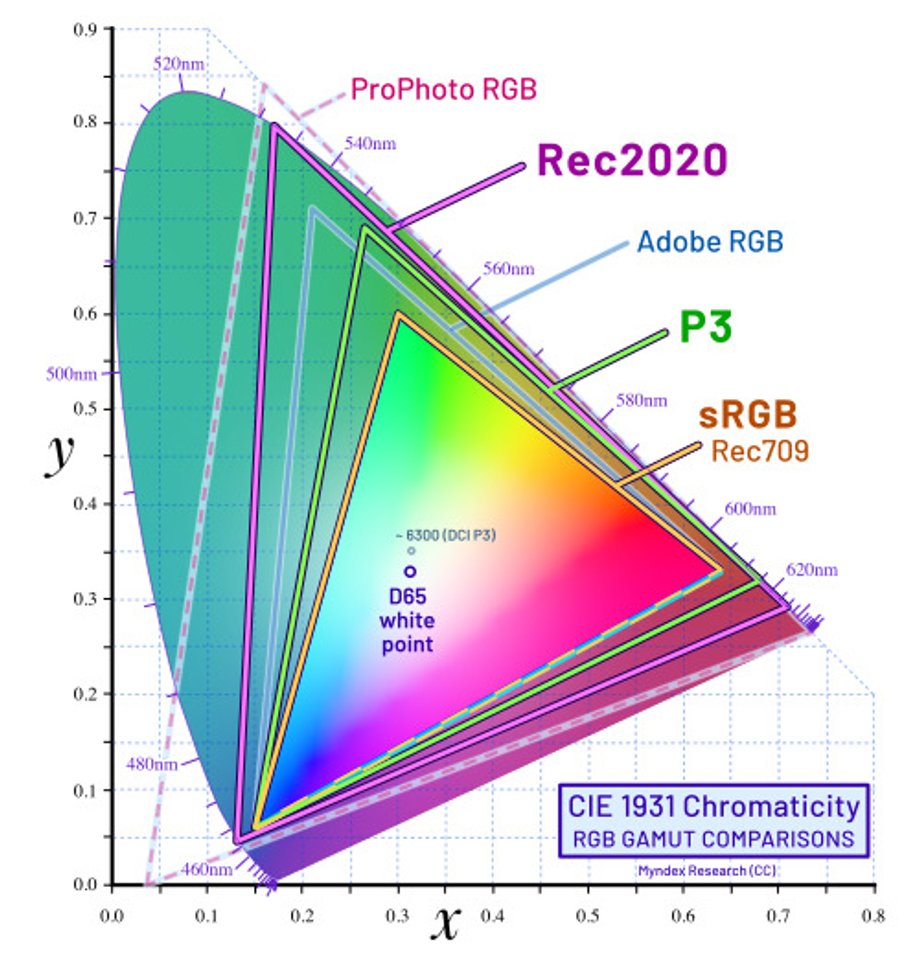
Different color spaces
|
Myndex / Wikimedia Commons, CC BY-SA 4.0
LG vs. LG, or how to eat your cake and have it too
Well, this is where the dog lies buried, because Self-emissive display technology such as OLED means not only highly saturated colors and great HDR imageswhich has been emphasized by LG itself in marketing materials for several months. Specifically – it is done by LG Display, a subsidiary of LG Electronics, which is one of the largest producers of OLED panels for TVs in the world, and the majority of the company's revenues come from the sale of matrices to other TV manufacturers such as Samsung, Sony, Philips and Panasonic.
In turn, LG Electronics, a company selling ready-made TVs, must respond to market trends and news, such as interest in very large diagonals or LCD TVs with RGB LED backlighting. One of LG Display's promotional materials directly refers to this technology as “just another LCD”, which is partly true (more on that in a moment). In turn, MRGB Evo series TVs are described by LG Electronics as a new image standard press releases emphasize the presence of the manufacturer's top OLED image processor – Alpha 11 Gen. 3.
Vincent Teoh from the YouTube channel HDTVTest drew attention to these two completely contradictory narratives built by two theoretically related branches of the same company during CES 2026. At the LG stand and on-site workshops, LG Display and LG Electronics had two completely different ideas about what the future of the television market was.
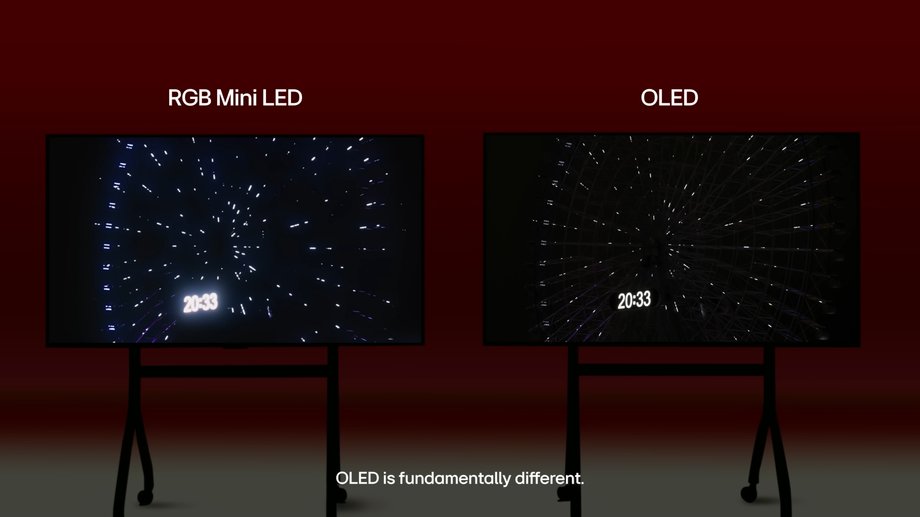
Comparison of OLED and LCD TV with RGB mini-LED backlight
|
YouTube/OLED SPACE by LG Display
In the marketing of Samsung and Hisense, Micro RGB and RGB mini-LED TVs, respectively, are presented as a revolution, in fact, it is an evolution of the well-known mini-LED backlight. And this means the same problems that we know from current TVs, such as possible backlight problems, which translates into shortcomings when displaying dark scenes with small, point light sources. Of course, it can be fought – or through increasing the number of local blanking zones (TCL and Hisense are masters of this), or refining the algorithms responsible for controlling the light falling on the matrices (Sony has been the king here for years).
And in fact, in many premium or mid-high-end mini-LED TVs black quality and contrast are at a very high levelovercoming the limitations of the liquid crystal matrix. However, they are still inferior to OLEDs in terms of response time not every TV marked mini-LED will offer the same experiencebecause a lot depends on refining the above-mentioned elements.
We wrote about this extensively in Komputer Świat and RGB LED technology will not solve it, which LG Display emphasizes in its narrative.
LG vs. LG vs. rest of the world
Of course, this does not mean that LCD technology and its further development make no sense. After all, it is these screens in sizes from 75 inches and above that are the most affordable (large OLEDs are extremely expensive), and if someone is looking for a 98-, 100- or 115-inch TV, they will choose a mini-LED TV, because currently there are no OLEDs that large.
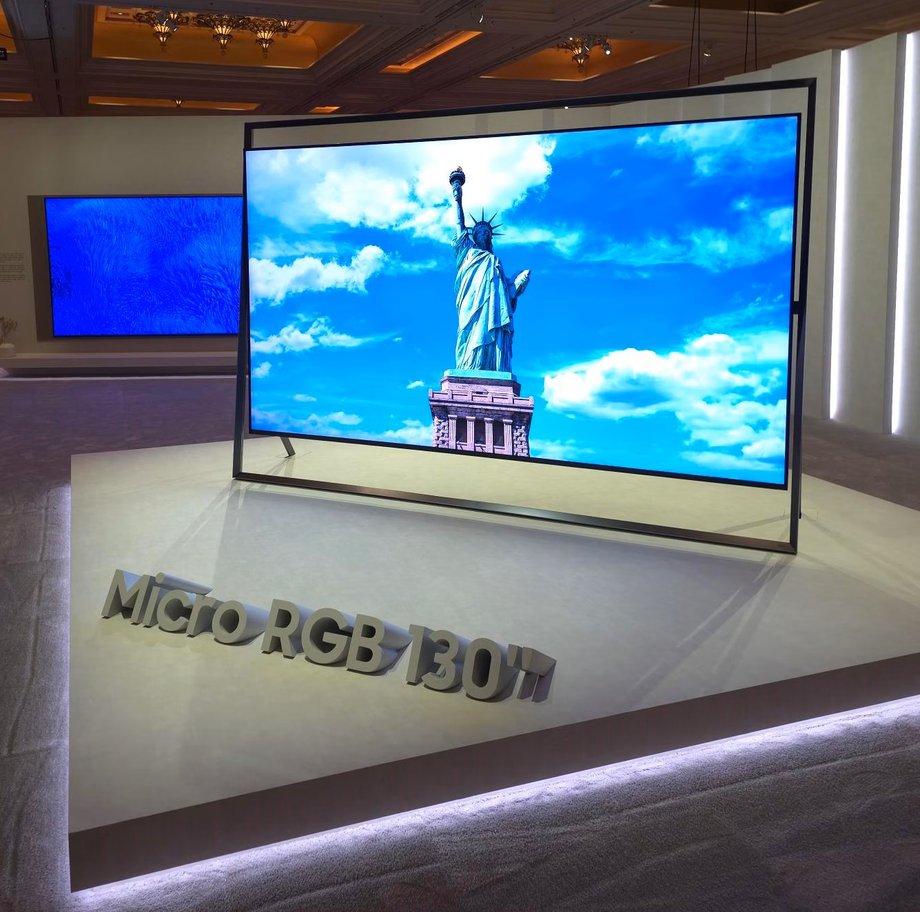
Samsung's 130-inch Micro RGB TV will be the largest screen in the consumer TV market in 2026.
|
Samsung.com
LG Electronics also responds to these market needs, introducing the 115-inch QNED for the first time (QNED90B) with mini-LED backlight, which will be the largest TV from this manufacturer. In turn, MRGB Evo TVs are also primarily large in size:
- MRGB95B with zoned RGB mini-LED backlight in 75, 86 and 100 inch versions;
- MRGB85B with edge RGB mini-LED backlighting (no local dimming with faint black) in sizes 65, 75 and 86 inches.
Time will tell whether LG's RGB LED TVs will actually pass the tests – both in independent tests and as a product on the market. It is no secret that Chinese manufacturers such as TCL, Hisense and Xiaomi currently have the most to say on the LCD market, offering affordable and good-quality mini-LED TVs in large and very large sizes.
The competition in 2026 will be fierce, and a LG must wage war on two, if not three, fronts: :
- LG Display vs. LG Electronics;
- LG and Samsung as big tech companies from Korea – as a duo that ruled the TV market a few years ago – versus the rapidly growing competition from China, which collectively (TCL, Hisense, Xioami) has already overtaken the Koreans in global shares;
- LG versus the rest of the TV market.