Ivo Daalder – former US ambassador to NATO, currently a senior research fellow at the Belfer Center at Harvard University and host of the weekly podcast “World Review with Ivo Daalder”.
Like many people, I once believed that former U.S. President George W. Bush's decision to invade Iraq in 2003 was the greatest strategic mistake the United States had made, at least since the Vietnam War.
And indeed it has been so – until now.
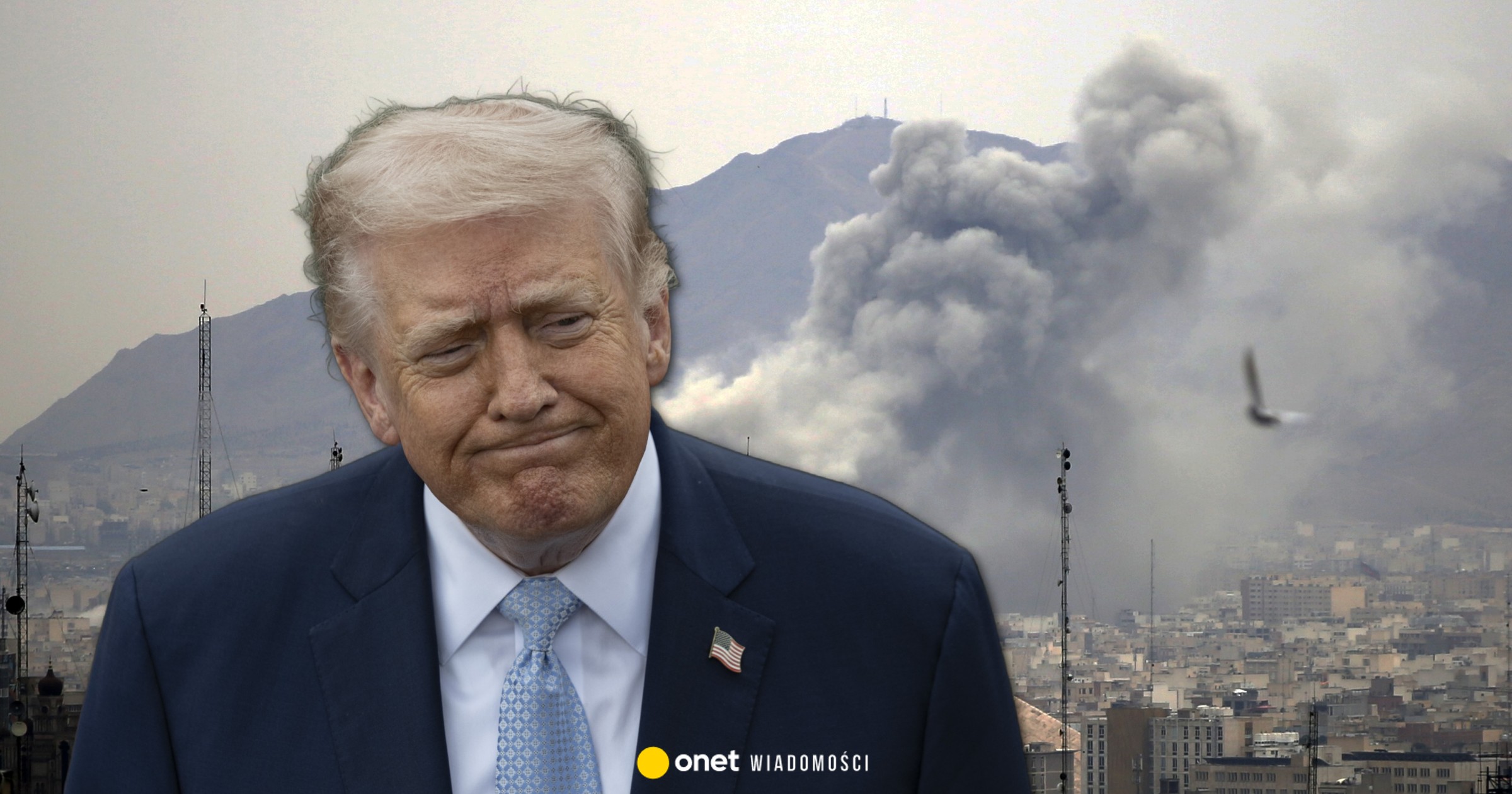
US President Donald Trump's decision to join Israel in the war against Iran is a much bigger strategic mistake – and will have much more serious consequences. The reasons for this are many, from the immediate impact on the region and global economy to the long-term effects on Russia and China, as well as the repercussions on U.S. alliances and its global standing.
It's only been three weeks since the attack on Iran, and its effects are already visible – in full force.
An underestimated opponent
Let's start with the similarities. As in the case of the war in Iraq, the aggression against Iran was based on the assumption that the regime ruling that country would quickly fall and be replaced by a new, more moderate and less hostile one. In both cases, the aim was to remove the greatest destabilizing threat in the Middle East – in the first case the regime of Saddam Hussein, in the second case the theocratic dictatorship in Tehran – through the rapid and decisive use of military force.
But while Bush understood that defeating the regime would require ground forces, Trump appears to have hoped that air power alone would be enough. As a result, Hussein's regime fell quickly – although Bush clearly failed to understand what it would take to rebuild a stable, much less democratic, Iraq. The Iranian government, however, by US intelligence officials' own admission, “appears intact” even though Israel has killed many of its key political and security leaders in targeted attacks.
Bush's misjudgment ultimately led to a large-scale armed insurgency that strengthened Iran's influence in Iraq and throughout the Middle East. Trump's miscalculation, in turn, has left a regime that, beyond ensuring its own survival, is now solely focused on inflicting as much damage as possible on the United States and its allies.
Oil tank fire in Salalah, Oman, photo taken on March 13, 2026.Gallo Images/Contributor/Getty Images
Iranian drones and missiles have already attacked Israel and the Persian Gulf states, hit key energy facilities and effectively closed the Strait of Hormuz, through which one fifth of the world's oil and gas exports flow.
Not even a month has passed, and We are witnessing the largest disruption of oil and gas supplies in history. And as fighting continues to escalate to include gas and oil infrastructure, the global economic consequences will be felt by every country for months, if not years, to come – even if the conflict were to end soon.
The damage this war has already done to the global economy is far greater than the economic consequences of the entire Iraq war. But that's not all. Also from a geopolitical point of view, the US and Israel's war on Iran will have far greater repercussions than the war in Iraq ever had.
Similar error, different reality
The Bush administration devoted much time and effort to convincing allies to participate in and support the war. And it still didn't fully succeed – key allies like Germany and France opposed the war. But at least the Americans tried.
Trump did not even try to gain the support of key US allies for an attack on Iran. What's more, he didn't even inform them about his decision. And yet, when Iran responded as expected by blocking the Strait of Hormuz, the US president demanded that allies send navies to escort the tankers – even though the US Navy has so far refused to do so.
The article continues below the video
And while it is true that the Iraq war has left deep scars on many U.S. allies, it was Iran that convinced them that they can no longer rely on Washington. And that it currently poses a real threat to their economic security. This, too, will have lasting significance, well beyond the effects of the Iraq war.
Finally, the fact remains that when Bush decided to invade Iraq, Russia and China were still minor world powers. Russian President Vladimir Putin was just beginning his efforts to stabilize the economy and rebuild Russia's military power, while China had only just joined the World Trade Organization and was still at least a decade away from becoming an economic superpower. In other words, the US made a mistake in Iraq at a time when its strategic consequences for the global balance of power were still to be managed.
Trump's defeat in Iran comes at a time when China is effectively competing with the United States for global power and influence, and Russia is engaged in the largest military action in Europe since the end of World War II.
Both of these countries stand to gain significantly from Trump's mistake.
Big winners and big losers
In the short term, the winner is undeniably Russia. Oil prices are rising, generating over $150 million. (PLN 557.5 million) a day of additional income for Moscow, which it can use to power its war machine. The United States is easing sanctions on Russia in a futile attempt to stem soaring fuel prices. Meanwhile, Ukraine remains alone in the fight against Russian missile and drone attacks, deprived of the advanced defense weapons that currently serve to protect Israel and the Persian Gulf countries.
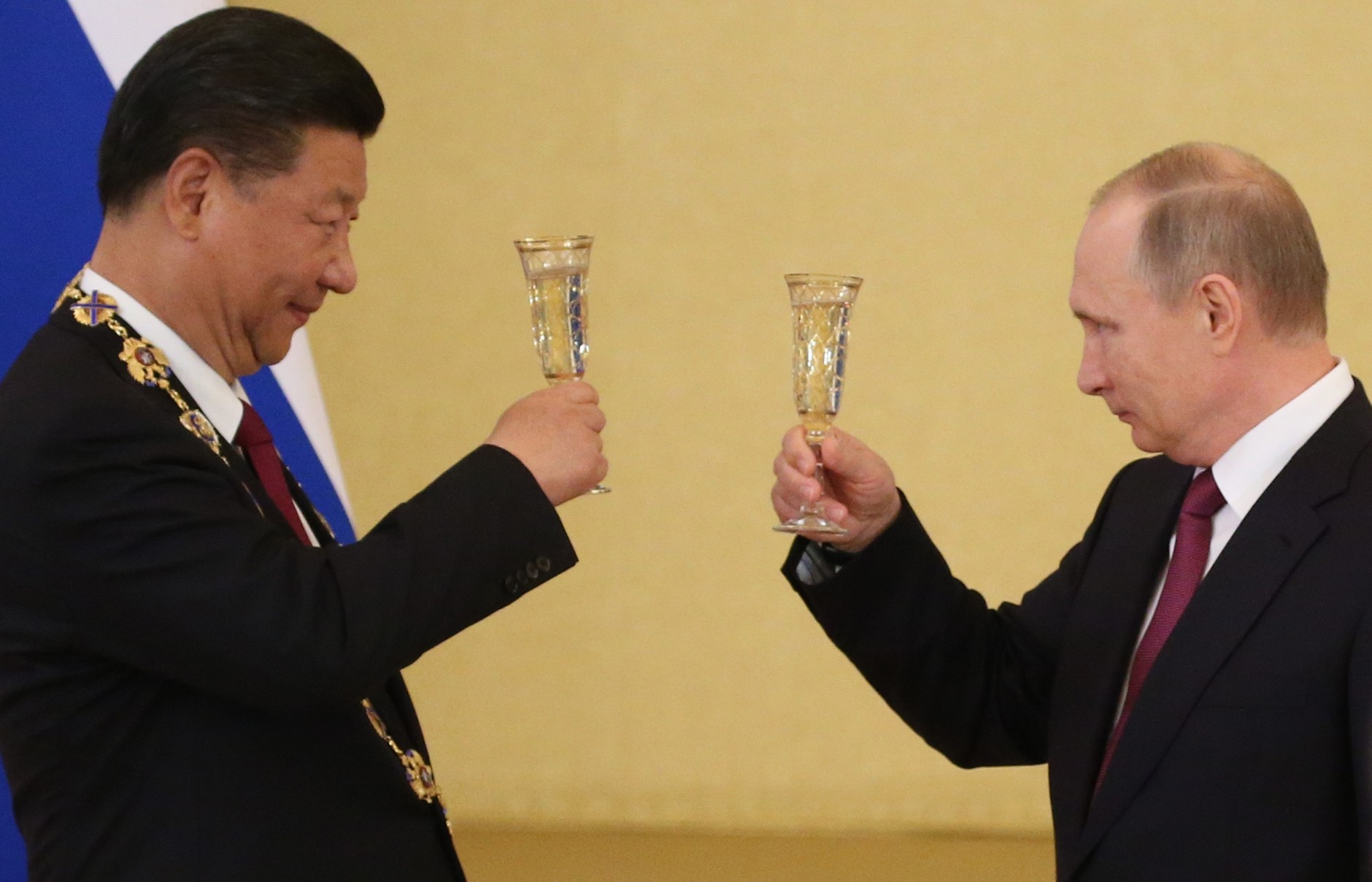
Xi Jinping and Vladimir Putin, Moscow, 2017Mikhail Svetlov / Contributor / Getty Images
Meanwhile, China is watching the United States shift its military forces from the Indo-Pacific region to the Middle East, where they will likely remain for months, if not years. These forces include the Carrier Strike Group, the Terminal High Altitude Area Defense Missile System from South Korea, and the Marine Expeditionary Force from Japan. And while disruptions to oil and gas supplies will also be a short-term problem for Beijing, its rapid shift to renewable energy sources and close cooperation with energy-rich Russia will put it in a good position to face the future with confidence.
Both Bush and Trump entered office determined to avoid the misguided wars of their predecessors. Nevertheless, the two began military-driven operations arrogant belief in the power of the US.
But while the United States was strong enough—and its adversaries still weak enough—to offset most of the damage done by Bush's war, the effects of the war in Iran will be much more severe. The US will lose a significant part of its global power, position and influence — and they will be doomed to confront their increasingly powerful opponents on their own.
I’m Ashley Davis as an editor, I’m committed to upholding the highest standards of integrity and accuracy in every piece we publish. My work is driven by curiosity, a passion for truth, and a belief that journalism plays a crucial role in shaping public discourse. I strive to tell stories that not only inform but also inspire action and conversation.