March 23: 179 years since the fire that destroyed “the most populated and richest part of Bucharest”

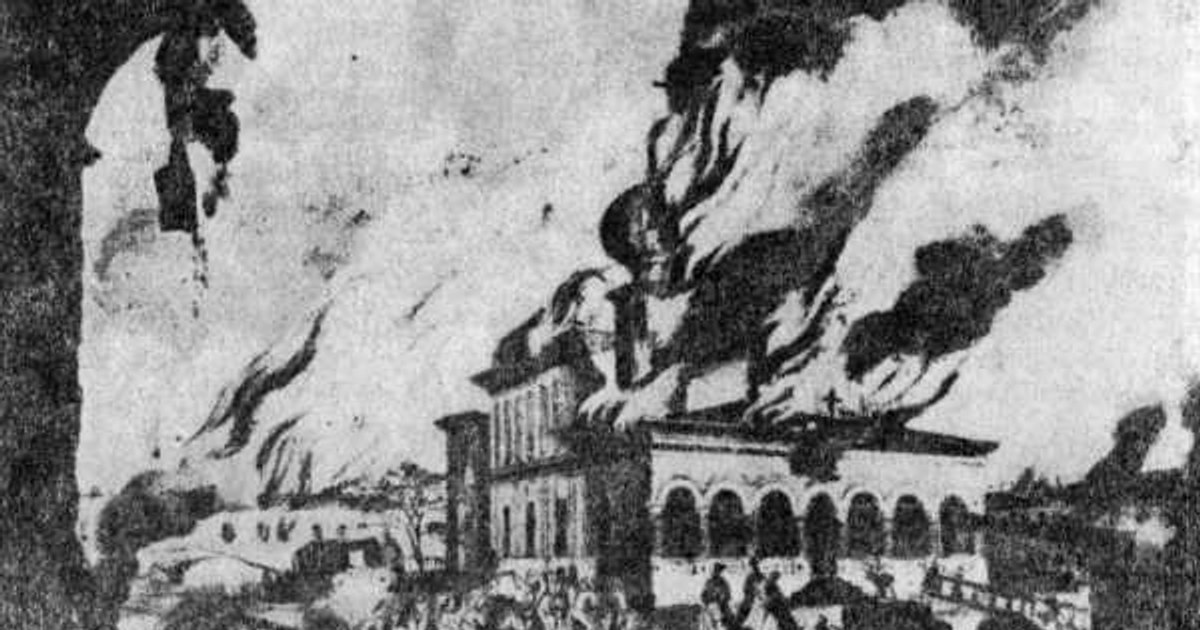
On March 23, 1847, Bucharest was devastated by the “Great Fire”. In 1945 the agrarian reform was legislated in Romania, and in 1949 Mircea Vintilă was born. March 23 is also the day the famous actress Liz Taylor died. World Meteorological Day is officially marked on March 23.
The fire started from a building near the “St. Dimitrie” Church
1821: In the context of the Revolution of 1821, an agreement is reached between Tudor Vladimirescu and the boyars remaining in Bucharest, confirmed by a mutual oath of allegiance
Based on this agreement, Tudor Vladimirescu accepts the “temporary rule” of the country, formed by the boyars considered patriots, and will rule alongside them. For their part, the boyars state that “the start of the Tudor servant is not bad”, which amounts to a legitimization of his actions by the political class.
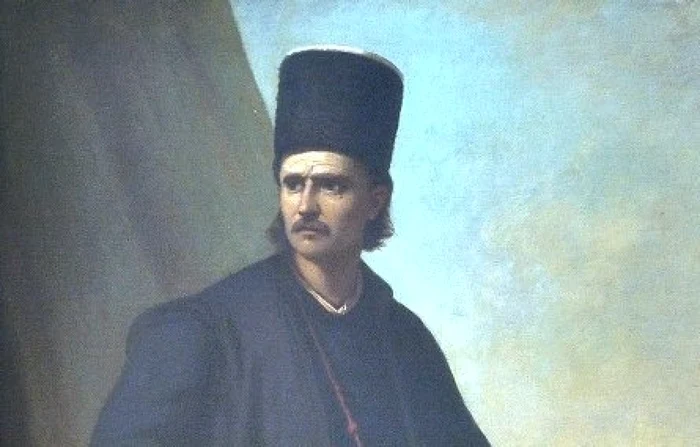
Tudor Vladimirescu. PHOTO: MNIR
Although for a long time it was interpreted as a social revolt directed against boyar abuses, the movement led by Tudor Vladimirescu also had a strong political dimension. According to some historians, the social component would have been used as a pretext to support the struggle to liberate the Greeks from Ottoman rule, while the real support came from some boyars.
1847: Alexandru D. Xenopol, historian, philosopher and literary critic, member of the Romanian Academy, was born
Alexandru Dimitrie Xenopol (1847–1920) was one of the outstanding figures of Romanian culture, standing out as a historian, economist, philosopher and writer. Through his studies dedicated to history and the philosophy of history, he had a significant impact on the formation of historical thought in Romania. He is known especially for his theory on historical evolution and for his extensive work “History of the Romanians from Traian Dacia”.
He was born on March 23, 1847, in Iasi, in a family of Greek origin. His father was a civil servant and his mother came from a background with a tradition in education. From childhood he showed a strong inclination towards reading and the study of history. He studied at the Mihailean Academy and the University of Iași, where he stood out for his intellectual abilities. Later, he continued his studies in Germany, obtaining doctorates in both philosophy and law, during which time he came into contact with the ideas of the great European thinkers, who deeply influenced his vision.
After returning to the country, he held several administrative and academic positions. He was a professor at the University of Iasi, and later became rector of the institution. He was also a member of the Romanian Academy and actively contributed to the development of Romanian higher education.
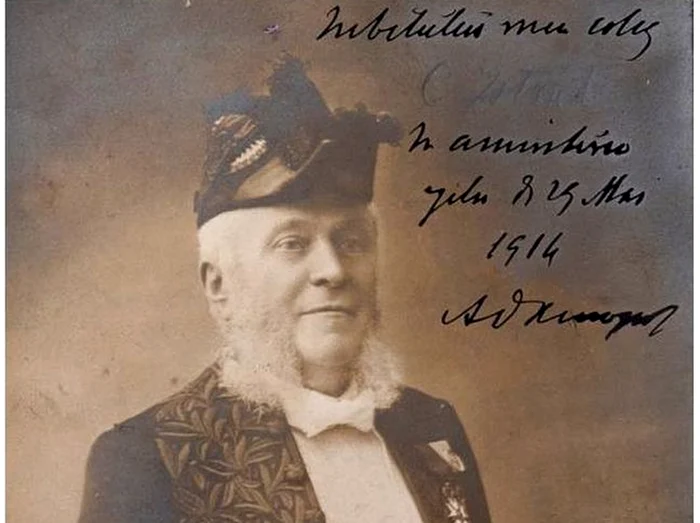
Alexandru D Xenopol. PHOTO: Wikimedia Commons
His most important work remains “History of Romanians from Dacia Traiana”, published in six volumes between 1888 and 1893, one of the first solid academic syntheses dedicated to the history of Romanians, based on a rigorous methodology and relevant documentary sources.
At the same time, Xenopol was the first historian to formulate a coherent theory regarding the continuity of the Romanians on the territory of the former Dacia after the Roman withdrawal. He rejected the hypotheses according to which the formation of the Romanian people took place south of the Danube, supporting instead an autochthonous evolution.
1847: A huge fire devastated Bucharest
The great fire in Bucharest, also known as “The Great Fire”, was the worst catastrophe that ever affected Bucharest, then the capital of the Principality of Wallachia. Breaking out on March 23, 1847, the fire destroyed more than 1,850 buildings, i.e. about a third of the city, including – as noted by ruler Gheorghe Bibescu – “the most populated and richest part of Bucharest”.
The fire especially consumed the commercial area in the center of the city, made up of small, crowded buildings made mostly of wood. After the disaster, they were gradually replaced by solid, two-story stone buildings inspired by Austrian architecture, in which shops or workshops operated on the ground floor, and the upper floor was intended for living.
1949: Mircea Vintilă, folk music performer, was born
Mircea Vintilă is part of the first generation of Romanian folk artists, established in the 70s. Born on March 23, 1949, in Bucharest, he had a passion for music since childhood. He attended the Music School, then graduated from the “Gheorghe Lazăr” High School and, later, the Construction Institute, in 1974.
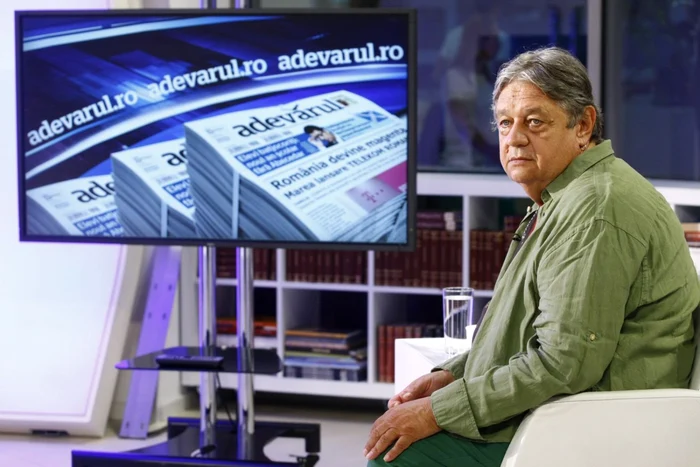
Mircea Vintilă. PHOTO: The truth/David Muntean
His artistic debut took place alongside important names of Romanian folk, such as Mircea Florian, Marcela Saftiuc and Doru Stănculescu, at the first student folk festival in 1971, organized at the “303” club of the Bucharest Polytechnic. He continued to sing in established spaces such as the “Universitas” club, the “Grigore Preoteasa” Students' Cultural Center and in the Flacăra Cenacle.
March 17: Florin Răducioiu was born, the only Romanian footballer who played in all five major European championships
At the second edition of the “Spring Ballads” festival, he won the Grand Prize with the song “Lord John”. Later, he won the “Teletop” award of the Romanian Television with the song “Bade Ioane”, and the song “Făt Frumos” brought him the distinction of the Union of Composers and Musicologists from Romania.
In 1992, together with Mircea Baniciu, Florian Pittiş and Vlady Cnejevici, he founded the band Pasărea Colibri, with which he supported numerous tours in the country and abroad (USA, Canada, Germany) and released several discographic materials. In 2003, he broke up with the band, after the release of the albums “Incă 2000 de ani” (2001) and “10 ani” (2003).
1983: The first passenger plane produced in Romania, the RomBac 1-11, made its first international flight, on the Bucharest-London route
After 1970, the Socialist Republic of Romania decided to join the ranks of countries capable of producing jet passenger aircraft, a field reserved until then for a limited number of states.
Lacking the necessary financial resources and experience, there were two options: creating a joint venture with a foreign partner to produce an aircraft designed in the West or purchasing a license, a method already successfully applied in the helicopter industry.
In the fall of 1972, Romania initiated negotiations with Fokker, later reaching an agreement in principle for the VFW-614 model. The plan called for the establishment of a joint Romanian-West German company, which should have started production no later than 1975. The authorities in Bucharest wanted the project to be financed by the foreign partner or the government in Bonn, possibly through an advantageous loan. But due to lack of market demand, the project stagnated and was eventually abandoned.
However, the goal of producing a jet passenger aircraft remained a priority. Thus, the Romanian government decided to acquire the license of an already established model.

The first passenger plane produced in Romania, RomBac 1-11. PHOTO: archive
Negotiations were held with the British Aircraft Corporation for the BAC 1-11 model, with Boeing for the 727 model and with McDonnell Douglas for the DC-9 model.
In the end, the BAC 1-11 model was chosen, for several reasons: the aircraft was already in use by TAROM, relations with the British manufacturer were very good, structural components for this type of aircraft were already being produced in Romania (approximately 8% of each aircraft), and the financial institutions in Great Britain offered advantageous credit conditions.
2011: Elizabeth Taylor, American actress, died
Elizabeth Taylor was born on February 27, 1932, in London, in a family of Americans settled in Great Britain. In 1942, the family moved to the United States, and at just 10 years old, she made her film debut with “Lassie Come Home”, thus paving the way for an impressive film career.

Elizabeth Taylor. PHOTO: Profimedia
March 18: The day Traian Vuia conquered the sky with “The Bat” and changed the history of aviation forever
By 1958, at the age of 26, she had already appeared in 28 films and had been nominated three times for the Academy Awards. Considered one of the most pampered stars in Hollywood, but also one of the highest paid, Taylor made history in 1962 when she received over a million dollars for her role in “Cleopatra.”
The actress has appeared on the cover of People magazine 14 times, surpassed only by Princess Diana. In 1995, she was included in the list of the 100 sexiest actresses in the history of cinema and ranked 11th in the hierarchy of the greatest actresses of all time. A street in the state of Iowa is named after him.
Throughout her career, Elizabeth Taylor starred in more than 50 films and won many important awards. He won an Academy Award in 1960 for his role in “Butterfield 8” and again in 1966 for “Who's Afraid of Virginia Woolf?”, a role that also won him a British Academy Award. She was also honored at the Berlin International Film Festival and received the Academy Award for Lifetime Achievement in 1993.
Beyond the film, the actress was actively involved in charitable actions, becoming, since the 80s, an important voice in the fight against AIDS. In 1991, she founded the Elizabeth Taylor AIDS Foundation, dedicated to supporting people affected by this disease.
His personal life was as intense as his career. The relationship with Richard Burton became one of the most famous love stories in Hollywood. The two met on the set of the movie “Cleopatra”, began a relationship despite being married to other people, and then married in 1964 in South Africa. After ten years they divorced, only to remarry briefly in 1975. Their story became iconic, and Taylor later published the love letters she received from Burton.
World Meteorological Day is officially marked on March 23
Ever since 1961, the World Meteorological Day ('World Meteorological Day') has been marked on March 23, every year, this date representing in 1950 the day on which the Convention of the United Nations Organization (UN) entered into force, which transformed the old International Meteorological Organization into an intergovernmental organization, known as the World Meteorological Organization ('World Meteorological Organization – WMO).