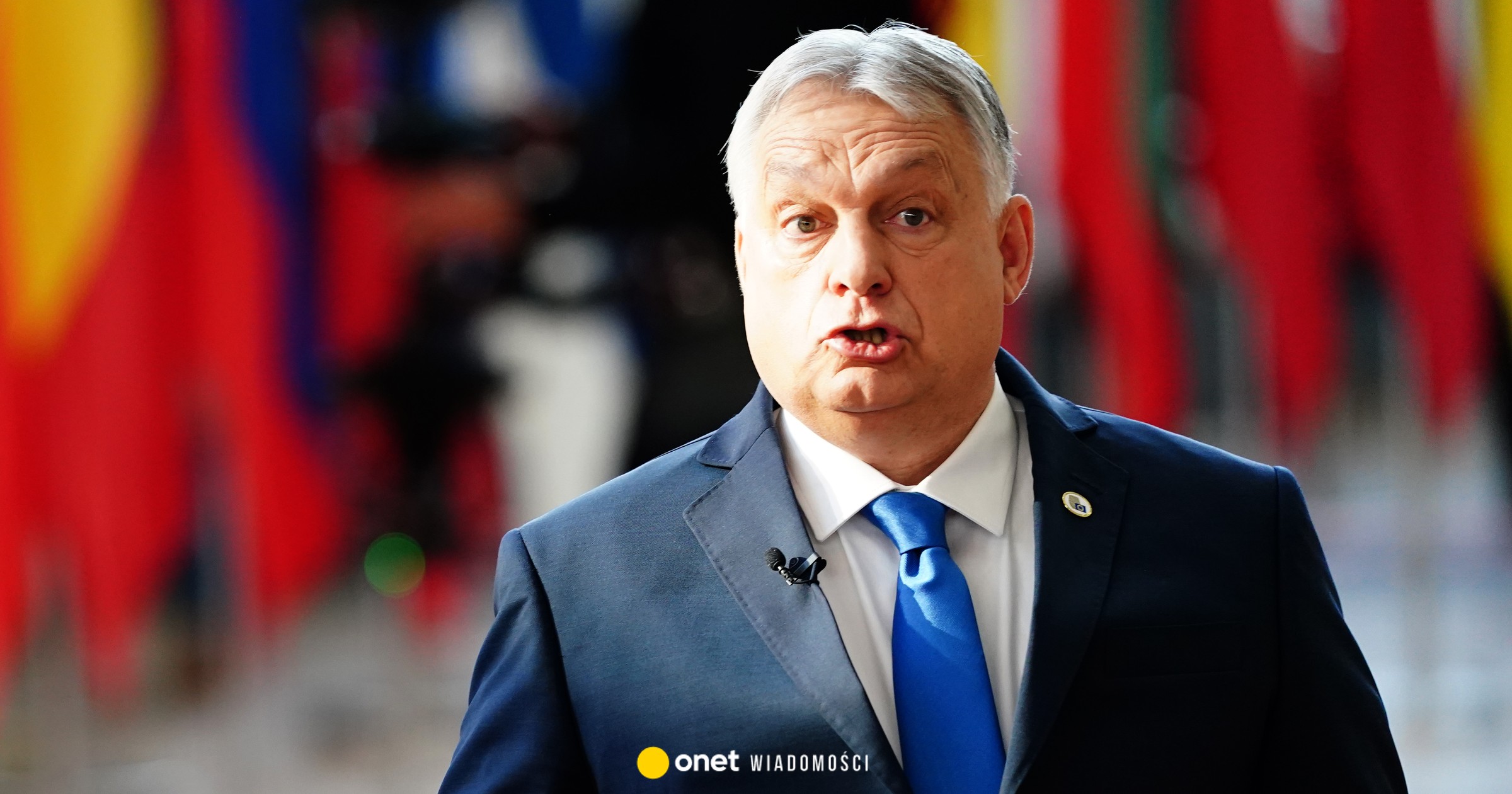
April 12 may be the last hour of Viktor Orban's political career. In almost all polls he ranks behind his rival, Peter Magyar.
Viktor Orban, however, has powerful friends. He has long been courting Donald Trump, as well as Vladimir Putin. However, in just three weeks it will become clear whether the possible support of Americans – and also Russians – will help Orban maintain power.
Orban is therefore fighting with all means to avoid the end of his 16 years of rule. He blames Ukraine for oil shortages, migration pressure and the rising cost of living in Hungary. However, after almost two decades of Orban's rule, the country is in a bad situation. The Hungarian Prime Minister's election tactics may prove insufficient for one key reason – the weakening Hungarian economy.
Inflation in Hungary is high and corruption is common. The country is regularly rocked by corruption scandals. Despite this, still 80 percent the media is currently controlled by Orban's party, Fidesz. Budapest's violation of the rule of law has led to a sharp dispute with the EU. From 2022, the European Union has blocked funds amounting to almost EUR 19 billion to Hungary (over PLN 81 billion at the current exchange rate).
Orban, not without connection with the current election campaign, blocked an EU loan of EUR 90 billion (over PLN 385 billion) for Ukraine. This money was supposed to keep Kyiv afloat for the next two years. Since decisions of this importance in the EU must always be made unanimously, Orbán can independently influence the direction of foreign policy in Europe.
“Zelensky shouldn't have the last laugh”
Orban decided to enter into a conflict with Kiev for tactical reasons related to the election campaign. He accuses Ukraine of deliberately blocking Russian oil that was transported via the Druzhba pipeline to Hungary. According to Kiev, the infrastructure was damaged as a result of the Russian attack. Ukraine invited international observers to analyze the damage and see the repair work.
Budapest depends on Russian energy supplies. In February alone, the Hungarian government ordered oil and gas from Moscow for EUR 234 million (over PLN 1 billion).
Zelensky recently said, turning to Orban (without mentioning the Hungarian prime minister by name), that he was considering giving “his boys” the address of the head of government so that they could talk to Orban in his language.
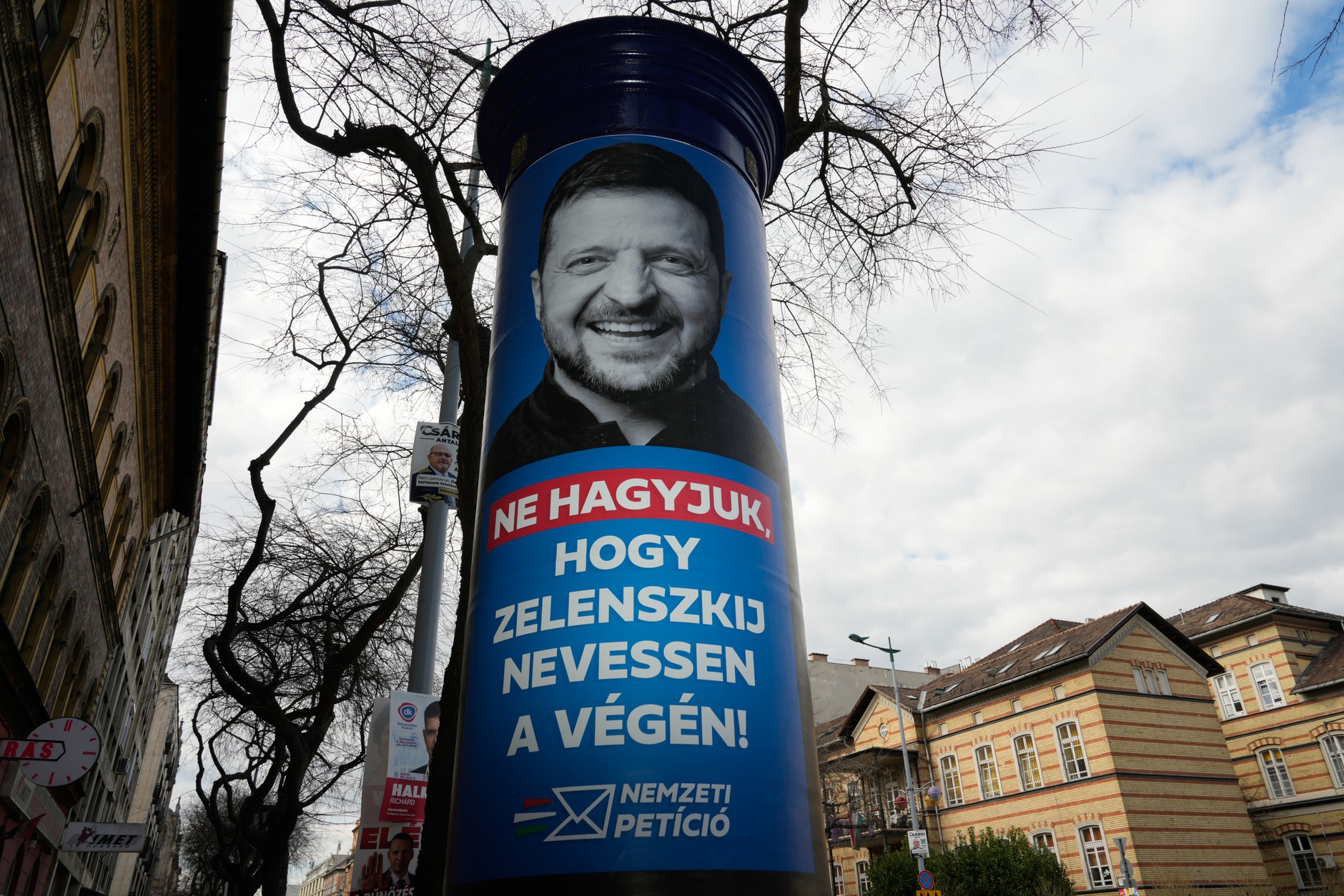
This comment from the President of Ukraine now provides Orban with ammunition at the end of the election campaign. Budapest is full of anti-Ukrainian posters. “Zelensky should not have the last laugh,” says one of them.
Poster with Volodymyr Zelensky in BudapestJaap Arriens/NurPhoto via Getty Images / Contributor / Getty Images
Fidesz presents the elections as a choice between peace and war. According to the party ruling the country, whoever votes for the oppositionist Magyar risks having Hungarians sent to the front.
The right meets in Budapest
Peter Magyar is by no means a staunch supporter of Ukraine. He is also aware of the negative attitude of the majority of society towards its neighbors who found themselves at war against their will. Almost two-thirds of Hungarians are against Ukraine's accession to the EU. Many of them want, above all, better living conditions, not better relations with Kiev.
In the coming days, Orban can count on the support of his allies. US Vice President JD Vance intends to visit Hungary and help his “good friend”. The CPAC conference is currently taking place in Budapest. Representatives of right-wing groups from all over Europe go to these cyclical events.
This Monday, March 23, a group of prominent European right-wing politicians will also come to Budapest to support Orban during a big rally.
Guests will include far-right Italian politician Matteo Salvini, French right-wing politician Marine Le Pen and Dutch anti-EU politician Geert Wilders.
Orban knows that if he loses, he could quickly lose his powerful friends. Trump doesn't have much respect for losers.