Resounding failure for Russia in the start of the spring offensive: 900 soldiers lost in 36 hours

Russia launched what can be assumed to be the opening phase of its spring offensive on March 17, launching attacks in several sectors of the Donetsk and Zaporizhia regions, Euromaidan Press reports.
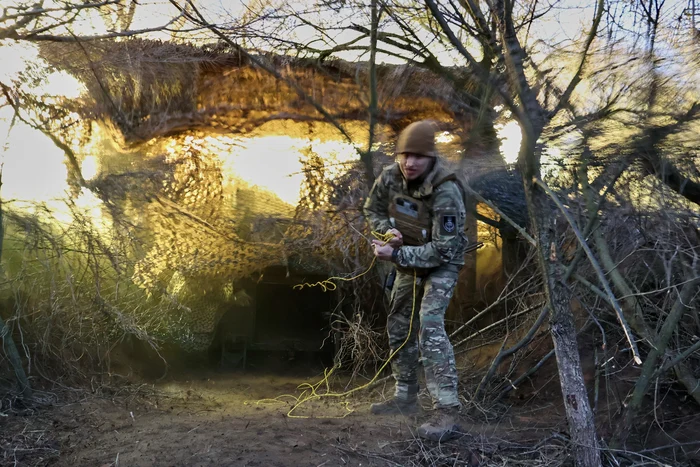
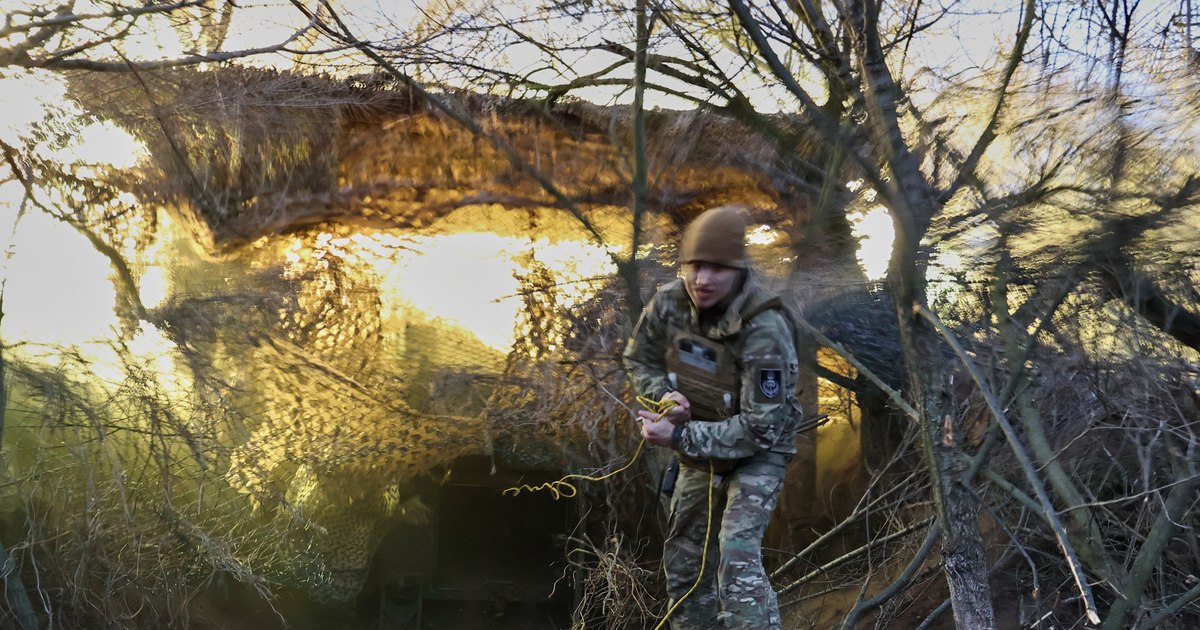
Ukrainian soldier wields a Paladin howitzer on the front PHOTO Profimedia
According to Robert “Magyar” Brovdi, commander of the Unmanned Systems Forces of Ukraine (SBS), the Russian units had been waiting for favorable weather conditions before launching the operation.
A sudden change in the weather in the Dobropillia, Pokrovsk and Huliaipole sectors created fog and drizzle, the weather conditions expected by Russia to launch the assault. Brovdi said previously infiltrated Russian groups had been positioned in advanced areas ahead of time and were activated shortly before midnight on March 17.
They were immediately met with intense fire from the drones.
The units struck back quickly, killing over 100 Russian soldiers before midnight.
At sunrise, the assault expanded.
Infantry, motorcycles, armored vehicles and even mounted units advanced simultaneously at several points along the front in what Brovdi described as “a dozen sectors”. Ukrainian forces responded with a coordinated defense involving infantry and drone operators from multiple units.
No breakouts in 36 hours
Despite the scale and intensity of the attack, Russian forces failed to achieve any breakthrough along the Rodynske–Huliaipole axis.
Ukrainian defensive positions held out throughout the attacks, with Brovdi crediting the result to integrated operations between frontline infantry and drone teams.
“The fog trap, or the irony of war,” Brovdi wrote, referring to Russia's reliance on low-visibility conditions that have been countered by drone surveillance and strike capabilities.
He added that drone units played a decisive role in repelling the offensive, supported by operators from adjacent brigades and ground forces who acted in a coordinated manner.
Major losses for Russia
Brovdi reported that only SBS drone units inflicted significant losses on Russian forces during the initial phase of the assault. By the end of the day on 17 March, these units would have killed 292 Russian soldiers and wounded another 221. By noon on 18 March, another 277 casualties had been recorded, including 141 dead and 136 wounded.
Over the course of 36 hours, Brovdi estimated total Russian losses at around 900 troops, describing the figure as “some kind of new threshold”. He said the area-wide total, including contributions from other drone units and ground forces, is likely higher.
He warned that the pressure would continue: “the rest of March will be marked by intense and prolonged fighting.”
Increasing losses across the front
Data from the Ukrainian General Staff indicates a general increase in Russian losses on all fronts during the same period.
Daily reported losses rose from 760 on March 16 to 930 on March 17, then climbed to 1,710 on March 18.
These figures include all combat losses in all theaters of operations in Ukraine, not just the Rodynske–Huliaipole sector.
Ukrainian officials have previously indicated expectations of increased Russian offensive activity. Ukrainian President Volodymyr Zelensky warned after a visit to the front line on March 6 that Russia appeared to be preparing a new offensive in the Donetsk region.
In parallel, Ukrainian forces carried out preventive operations on the Oleksandrivka axis, recapturing over 400 square kilometers. Analysts at the Institute for the Study of War estimated that these actions had the role of disrupting the concentration and training of Russian forces.
“We advance with colossal price.” Russian Senator Dmitri Rogozin admits that Ukraine dominates the drone war, and the front has reached a stalemate
The first assault has already taken place and failed
According to military expert Andriy Kramarov, reserve officer of the Air Force of Ukraine, Russia has already entered the active phase of its spring-summer offensive, unn.ua reports.
“They have already made an offensive attempt on the section from Pokrovsk to Huliaipole, about 100 kilometers from the front. There were several breakthrough points – small sectors of 3-4 kilometers, where they tried to penetrate our operational-tactical rear,” Kramarov said.
He pointed out that the offensive did not produce results, taking heavy losses in a short interval.
“In 24 hours they lost about 900 men and over 100 pieces of equipment. These are very heavy losses even for such an extensive sector of the front. Fortunately, we were able to prepare well and repel these attacks.”
However, the expert stated that the Russian plans were not thwarted, but only disrupted.
“We didn't completely foil their offensive. We upset their plans. They couldn't prepare as well as before – we hit their logistics, equipment, carried out sabotage raids. This disrupted their training,” explained Kramarov.
Where could Russia move forward next?
Despite the initial setback, Russia continues to prepare offensive actions in several directions.
“It creates tension in the Sumi region – not so much for a breakthrough, but to force us to retreat 5-10 kilometers from the border,” the expert said.
Military activity is also observed in the east:
“There are preparations in the direction of Kupiansk. In the direction of Liman there are already initial assault attempts – the objective is to enter Sloviansk from the northeast.”
At the same time, he explained, “active attempts to advance to Kostiantinivka have begun. Previously they were hitting logistics, and now they are trying to advance.”
The expert explained that the current war differs significantly from the previous stages of the conflict.
“If someone thinks that tanks will disappear – no, they will remain. Only their role and how they are used will change.”
Currently, the focus is on small infiltration groups:
“Now they try to infiltrate small groups – of 2-4 people – behind us, at distances of 5-20 kilometers. They hide there and become active during the assault, destabilizing the defenses inside.”
Russia is preparing for a new mobilization: thousands of reservists called up under arms. Where will they be sent by Putin?
Operations are preceded by systematic preparations:
“First they hit the logistics, then the artillery and aviation come in – KABs – and only after that the assault groups come in.”
“Light Cavalry” and “Heavy Cavalry”
Kramarov described the offensive pattern as consisting of two stages.
“First come the so-called 'light cavalry'—motorcycles, buggies. They break through quickly and are harder to intercept.”
Then comes the heavy equipment:
“If the light wave succeeds, the 'heavy cavalry' come in — armored vehicles that consolidate the result.”
The expert also commented on Russia's plans to mobilize more than 409,000 soldiers.
“Last year they were mobilizing about 25-30 thousand per month. That is around 360 thousand per year. Now the numbers are higher, but not in a critical way.”
At the same time, the intensity of the fighting is increasing:
“If before there were 120-130 confrontations per day, now they reach more than 200 – in one day, there were also 237. Consequently, the losses are also increasing.”
Kramarov emphasized the difference between quantity and quality:
“I can recruit people, but turning them into soldiers is another matter. It's a burden on the system. You can bring in as many people as you want, but you can't train them enough. Yes, they can send 'cannon fodder', but the more they send, the more we destroy it.”
Russia's full-scale invasion of Ukraine, now in its fifth year, has generated significant cumulative casualties. The Ukrainian General Staff estimates more than 1.28 million casualties among Russian forces since the beginning of the conflict, as Moscow continues attrition operations on the eastern front with no clear signs of slowing down.