What will happen to 'communist blocs' in a few decades: 'Some think they will last forever'


Millions of Romanians live in “communist blocks”, many more than half a century old, and their future is causing more and more debate. Some Romanians think they will stand the test of time, others predict a dramatic fate.
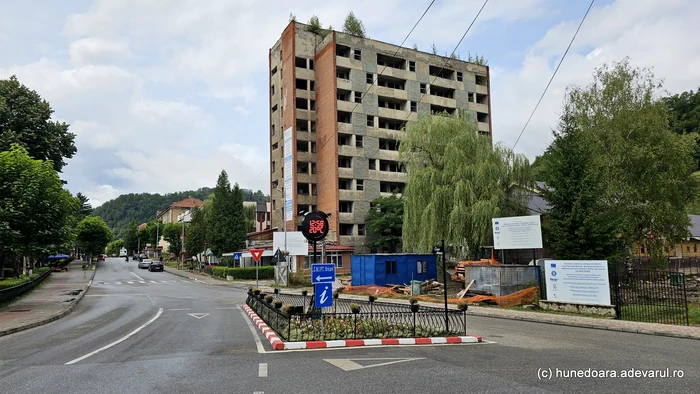
Tower block from the 70s, abandoned in Uricani, Hunedoara. Photo: Daniel Guță. TRUTH
Despite their age, the price of houses in “communist blocks”, built in Romania between 1945 and 1989, has been continuously increasing in recent years.
In the Capital, most often, apartments are offered for at least 100,000 euros, sometimes the selling price approaches 200,000 euros. In Cluj-Napoca, Iasi and Constanța, the cost of such homes is somewhat lower, but increasing compared to previous years.
In many smaller cities, the market for “communist blocks” kept prices high because, after 1990, investment in the construction of new blocks stagnated, amid the decline of local industries, population decline and migration, but also because many Romanians preferred other housing options.
How Romanians see the future of the “communist blocs”
At least three and a half decades after the construction of the “communist blocs”, many Romanians foresee an uncertain future for them for the next decades. Such a debate has sparked numerous comments on social media.
“Communist blocks of flats (especially prefabs) seem to have been built with a lifespan of around 70-100 years. By 2050, many of them will reach their end of life and need to be re-consolidated or rebuilt. Given that only a fraction of the tenants could afford to invest money in rebuilding or strengthening, I doubt that a consensus will be reached and the problem of these blocks will be ignored until they starts to fall down or they will remain in disrepair (such as some non-family homes in more deprived areas)”, writes a Romanian on the Reddit platform.
Another Romanian claims that in some big cities in India, old blocks of flats are demolished and rebuilt higher, and the owners get new, bigger apartments, while the developers sell the rest of the homes.
“Now, will the same thing happen in the case of big cities in Romania? Who knows…”, he asks.
Earthquakes, linked to the fate of many buildings
Other Romanians believe that the earthquakes will decide the fate of many blocks in the capital. Some argue that demolishing old blocks of flats is not cost-effective for real estate developers to rebuild other buildings, and will face difficulties from tenants.
“Rehabilitation is much more cost effective and easier to do than demolish and rebuild”says a netizen.
A Romanian observes that, in many situations, apartments in old buildings are sold at high prices.
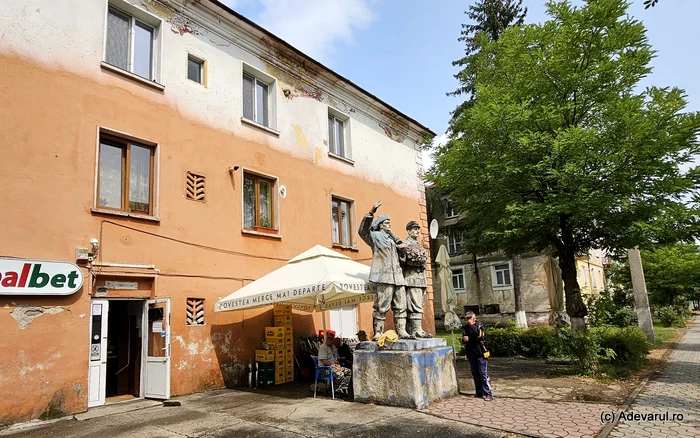
Block from the '50s, in Uricani. Photo: Daniel Guță. TRUTH
“There are people who say that blocks of flats will last longer than they do and that even new buildings can have problems in a strong earthquake, even if they don't collapse“, he adds.
Someone else says that the lifespan of a block depends a lot on maintenance as well.
“There are derelict buildings with leaks and exposed rebar, but also well-maintained, rehabilitated and modernized blocks that can last much longer than originally thought.” he states.
Some Romanians look at them with confidence
A netizen says he has lived in a flat in Edinburgh for about 100 years, still in use and in good condition.
“Then what will happen to the communist blocks of reinforced concrete? Even if they remain unused, the structure would still last at least another 100 years”complete it.
Someone else adds that the lifespan of buildings is relative, and one of 50–70 years does not mean that the block might fall down after that period, but can be seen as a warranty period.
The decline of the working-class towns that the Ceausescu regime wanted transformed into huge urban centers VIDEO
“Some believe that communist blocks are the best and will last forever. In reality, many of them have reached the end of their design life, and the next big earthquake will clear things up. They usually wait without serious action, and the idea of demolishing and rebuilding is rarely discussed.” says another Romanian.
Someone else believes that blocks that are maintained will last a long time.
“We have buildings that are hundreds of years old that are still standing very well,” add this one.
The blocks from the 80s, 70 years from now, will be inhabited by other generations, with higher incomes and other mentalities, believes another netizen.
“They're going to double their price, that's what's going to happen. And now, 50 years after they were built, they're prohibitively expensive.” concludes someone else.
The blocs that changed Romania's demographics
During the more than four decades of communism, Romania tripled its urban population, with the number of city dwellers increasing from approximately four million people in 1948 to over 12 million in 1990.
Built at a rapid pace since the 1950s, for Romanians who left their impoverished collectivization villages to start a new life in the expanding cities, most of the “communist blocks” are now more than half a century old.
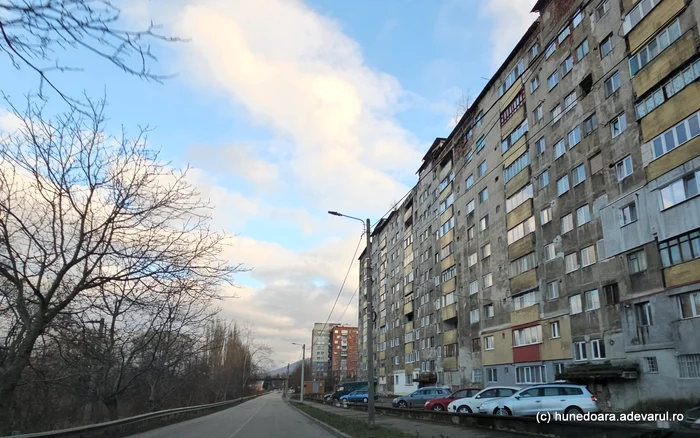
Tower blocks from Lupeni. Photo: Daniel Guță. TRUTH
The first such buildings from the communist era were built in Romania in the late 1940s and early 1950s, shortly after the establishment of the then Soviet-controlled regime. Most were built of brick, generally two storeys and tiled roofs, with usable bridges. In many cities they formed “neighbourhoods”, composed of blocks, green areas and alleys, alongside old commercial spaces and public buildings (schools, kindergartens).
They have now reached an 'age' of almost eight decades, and many have suffered in terms of the condition of the water pipes, plumbing and other utilities, joinery and tiling, as well as the appearance of the facades, interiors and basements.
Why many Romanians run away from the communist blocs: “Zero initiatives and zero possibilities. But they believe in them on the estate”
Blocks of reduced comfort for the “working people”
In the 60s, many Romanians moved to the blocks known in the socialist space as “Khrushciovka”, after the name of the former Soviet leader Nikita Khrushchev, also inspired by the Soviet model. The quality of their materials and workmanship was gradually reduced, with precast and thin concrete walls taking the place of bricks, and tile roofs being replaced by pitch insulated terraces. The cellars and utility spaces were designed economically, and the decorative elements, present in the blocks of the 50s, disappeared.
Blocks in the 1960s and 1970s were generally up to four storeys high, so as not to require a lift, and apartments were small, 30–40 square meters, with one or two rooms. Kitchens were only a few square meters, bathrooms were very narrow and space was calculated to the limit, which is why the dwellings were often compared to “matchboxes”.
The neighborhoods built then, called microdistricts, were given a uniform appearance, with blocks built simultaneously, very close to each other. In the 1970s and 1980s, tower blocks, designed by specialists who did not emphasize comfort, appeared for the first time in many cities in Romania.
Water pressure was weak on the upper floors, seepage was frequent, and the summer heat made living on the upper levels difficult. Non-familist dormitories, built around the same time for workers brought to the cities, offered even less comfort, with cramped rooms, shared bathrooms and kitchens, and often poor living conditions. Many hostels built by local enterprises were abandoned after 1990 or were occupied without legal forms by homeless families.