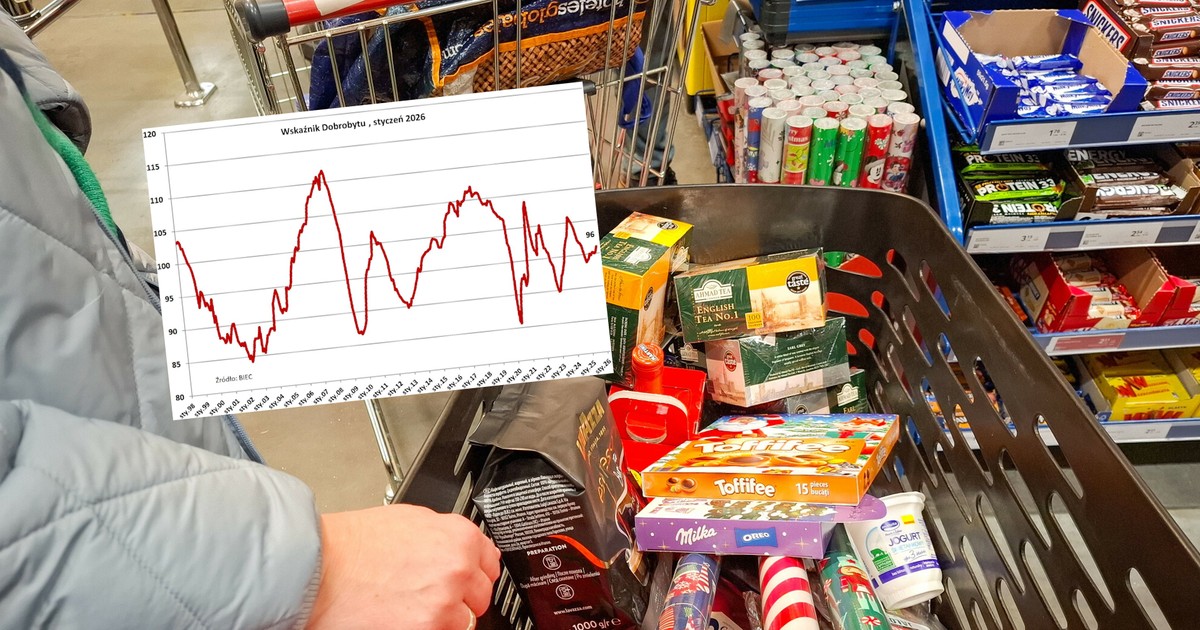
Inflation in Poland has not been this low for a long time. New data from the Central Statistical Office on prices


Prices are rising at a rate that is considered optimal for the development of the economy. The inflation rate has been falling steadily and is now at its lowest level in almost two years. When publishing the data, the Central Statistical Office showed what the new composition of the inflation basket looks like.
The rest of the article is below the video
Inflation is an undesirable phenomenon from the point of view of consumers because it causes a decrease in the purchasing power of money. This is a very important indicator because it shows how the cost of living is changing and helps assess the condition of the economy and the decisions of the central bank. What do the latest statistics show?
Inflation in February 2026. New data from the Central Statistical Office
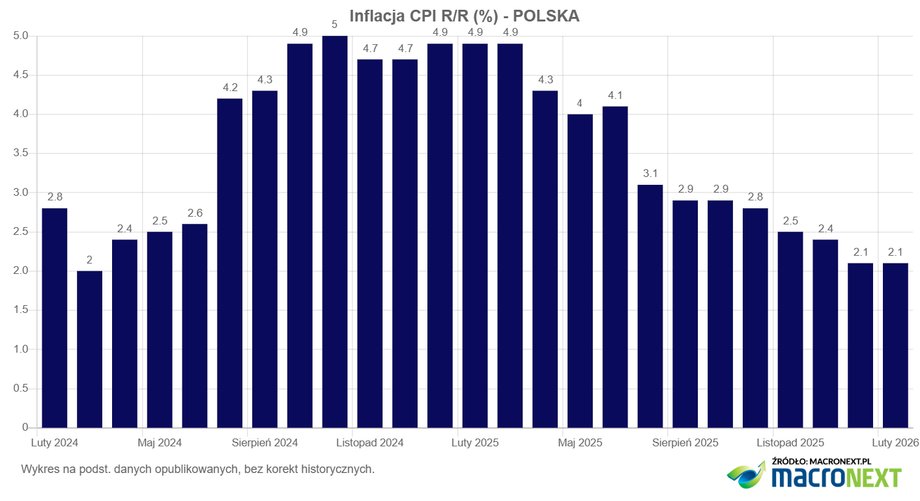
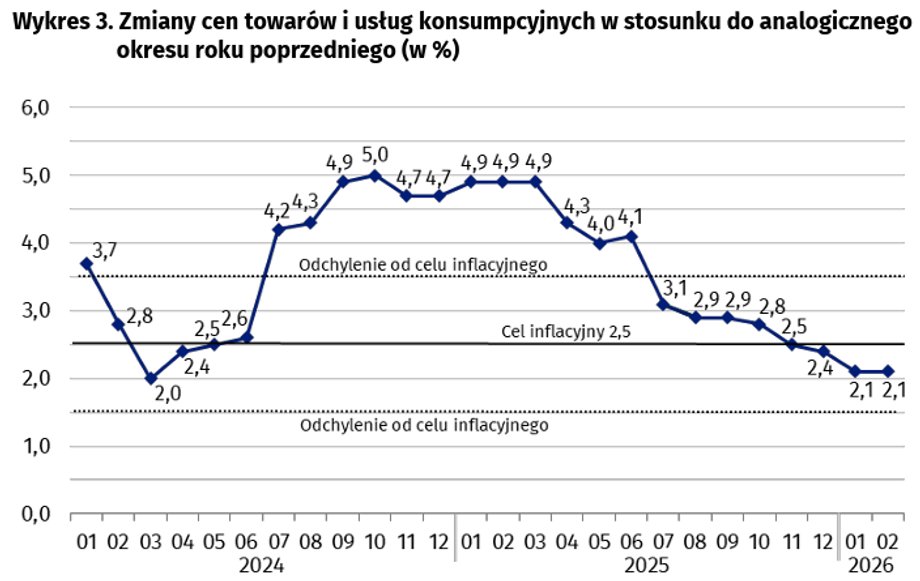
Inflation (CPI) in February 2026 was 2.1%. The price level of consumer goods and services increased on average by this amount compared to February 2025. This means maintaining the level of the index from January this year, after the Central Statistical Office revised its previous calculations, suggesting that we entered 2026 with inflation at 2.2%.
|
Macronext
At the same time, it is worth noting that between January and February 2026, the average price level increased slightly – by 0.3%.
How do the new data compare to forecasts? Everything is as planned. The average of economists' estimates suggested a minimal decline in inflation to 2.1%. (from 2.2% previously recorded in January, before the revision).
See also: Inflation forecast and Poland's GDP. The big three agencies released the numbers
Why this revision of data for January? “Starting from data for 2026, the CPI is calculated in accordance with the international classification COICOP 2018. The data presented in this note take into account the annual change of the weighting system” – reported the Central Statistical Office. We write more about this later in the article.
The recent price increase in Poland is much lower than what consumers faced a year ago. Back then, the inflation rate was 4.9%. The current result is the lowest since March 2024.
Inflation is within the range of deviations accepted by the National Bank of Poland, which protects price stability in Poland. It is assumed that the bank fulfills its role if the indicator is in the long-term range from 1.5 to 3.5 percent.
|
Central Statistical Office, own calculations
Inflation in Poland. How have prices changed?
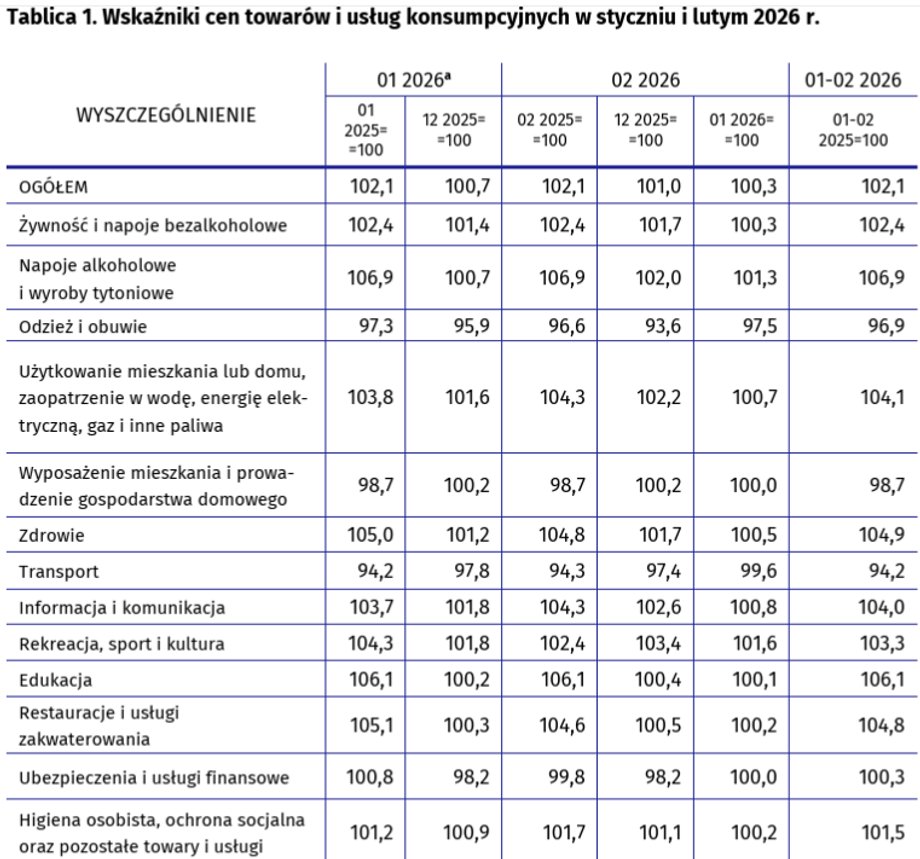
In February 2026, compared to the same month of the previous year, higher prices were, among others: in terms of:
- use of an apartment or house, water supply, electricity, gas and other fuels (by 4.3%)
- food and non-alcoholic beverages (by 2.4%)
- alcoholic beverages and tobacco products (by 6.9%)
- health (by 4.8%)
- restaurants and accommodation services (by 4.6%)
- information and communication (by 4.3%)
- recreation, sport and culture (by 2.4%)
The Central Statistical Office records lower prices in the following areas:
- transport (by 5.7%)
- clothing and footwear (by 3.4%)
- home furnishings and household maintenance (by 1.3%)
|
Central Statistical Office, own calculations
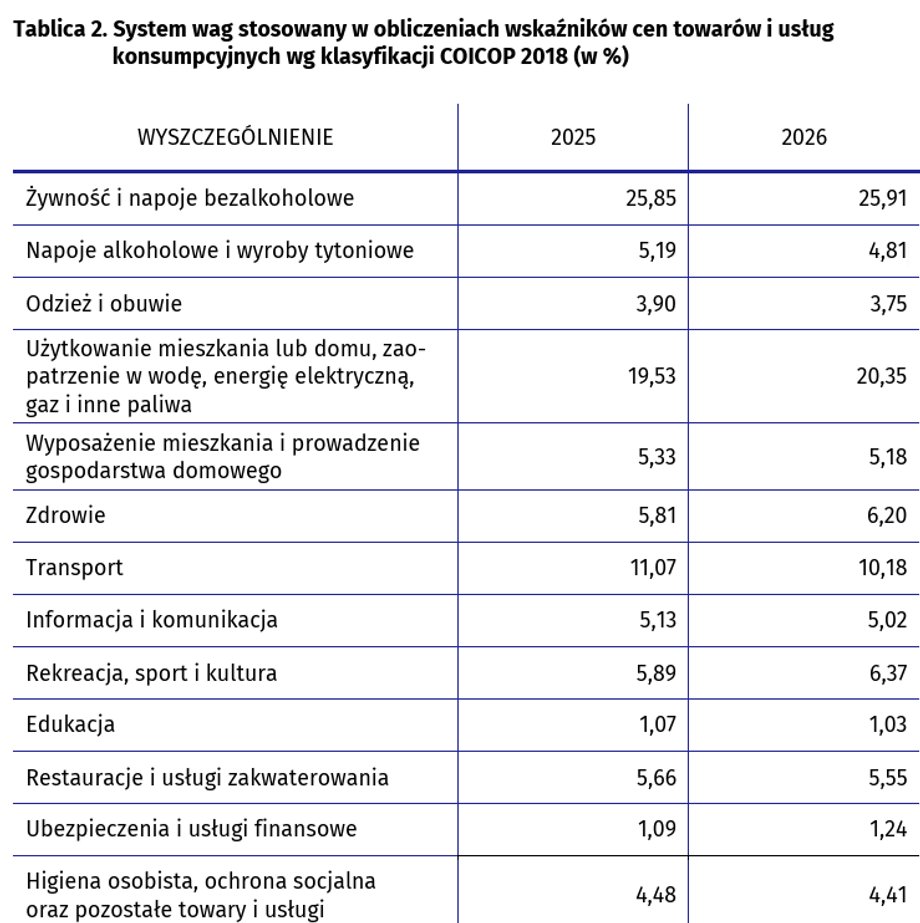
New inflation basket. Annual change of the weighting system
In February, the Central Statistical Office, similarly to previous years, updated the weighting system used in the calculation of the consumer price index. The weighting system is based on the structure of household expenditure on the purchase of consumer goods and services from the year preceding the year under review (currently 2025), obtained from the household budget survey.
See also: From mild to extreme. Here are the scenarios for Poland after the fuel shock
“In the structure of household expenditure, the share in the following areas increased: the use of an apartment or house, supply of water, electricity, gas and other fuels, recreation, sports and culture, health, insurance and financial services, and food and non-alcoholic beverages. The share of expenditure in the following areas decreased: transport, alcoholic beverages and tobacco products, home furnishings and running a household, clothing and footwear, information and communication, restaurants and accommodation services, personal hygiene, social protection and other goods and services, and education,” explains the Central Statistical Office.
|
Central Statistical Office, own calculations