Romania responds to the US request. How have the other European countries positioned themselves in relation to the war in Iran?

Romania approved today Washington's request to temporarily deploy refueling planes, equipment and troops in Romania, in the context of the war in Iran. Nicușor Dan emphasized that these equipments are strictly defensive and will be deployed based on the strategic partnership. But how have the other European states acted so far?
The war has revealed differences over how closely European states should align with the United States, Politico and Anadolu Agency report.
Leaders in Europe have generally called for restraint and diplomatic solutions, warning that widening the conflict could destabilize the Middle East, further disrupt energy markets and drag Europe into a wider crisis, Anadolu wrote.
For many governments, the challenge is to find a balance between long-standing security ties with the US and fears that the conflict could spiral out of control, the Turkish news agency noted.
Scott Lucas, an expert at the Clinton Institute at University College Dublin, emphasized in statements made to Anadolu that Europe has few levers of influence on the conflict. He says Israel is pursuing its military goals with US support, while Tehran shows no signs of capitulation.
“Europe cannot, in reality, shape this dynamic,” says Lucas, adding that Gulf states, particularly Qatar, have tried to broker a ceasefire, but so far without success.
How the EU has positioned itself towards the war in Iran and the Middle East
EU officials moved quickly to define the continent's response, calling for “maximum restraint” and a resumption of diplomatic efforts. The leaders avoided endorsing US-Israeli strikes, emphasizing international law and the protection of civilians. Diplomats say the priority is to prevent the conflict from expanding.
Pieter Cleppe, editor of BrusselsReport.eu, told Anadolu that most European countries do not participate directly in the fighting, but allow the US to use military infrastructure, and that Spain is the notable exception. Cleppe added that divergences between European democracies were to be expected, but that the countries remained united in defending each other.
Elisabeth Braw, a researcher at the Atlantic Council, says instead that the wide range of reactions in Europe reflects the fact that foreign and security policy remains ultimately in the hands of national governments, not EU institutions.
“There are different views in Europe about this war … and it's not surprising that there are differences,” Braw said.
Britain drew Trump's ire with its initially cautious approach
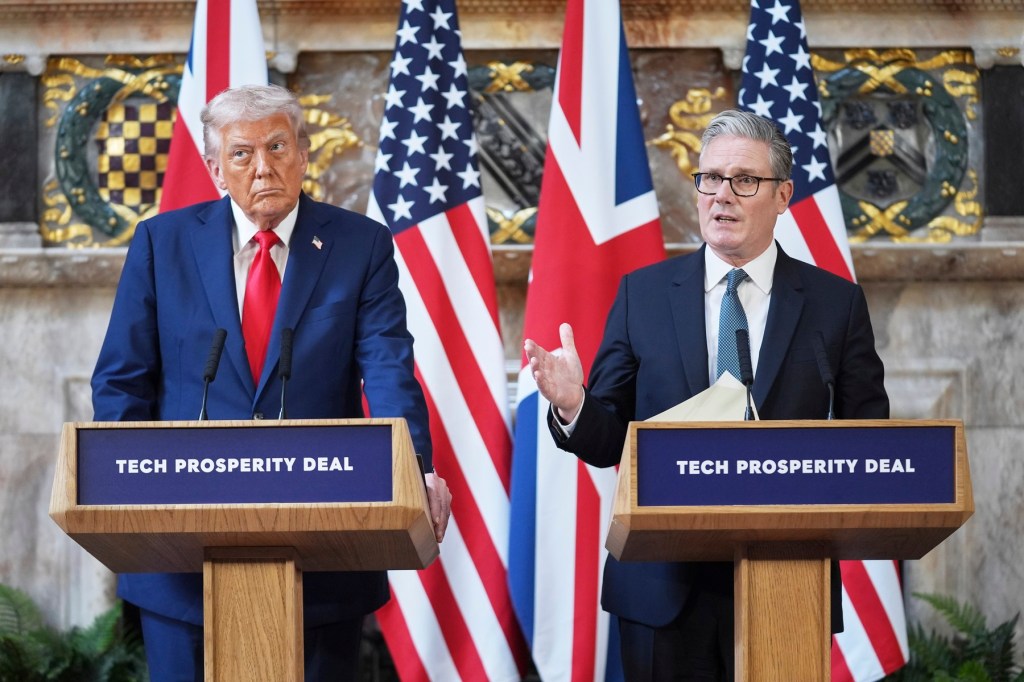
Outside the EU, Britain has tried to maintain a delicate balance. Prime Minister Keir Starmer has ruled out direct participation in military strikes, while stressing the importance of regional security and protecting sea routes. The UK has deployed naval and air assets and is coordinating evacuation and defense plans with allies.
Starmer's cautious approach has drawn harsh and repeated criticism from US President Donald Trump. In one of his messages, Trump mocked the British prime minister, saying he was “not Winston Churchill”. British officials have tried to play down the scale of the disagreements, emphasizing the importance of the transatlantic alliance, while continuing to call for a de-escalation of the conflict.
Britain is walking a thin diplomatic tightrope as it manages its relationship with an aggressive US administration while devising domestic safeguards to mitigate the economic effects of the ongoing war. Starmer acknowledged that the US-Israel war would “probably” affect the population of his country because of the economic impact on energy markets.
Spain has adopted an unequivocal position
Spain has become the most vocal European critic of the war waged by the US and Israel. Prime Minister Pedro Sánchez condemned the military strikes as a unilateral action that risks fueling a wider conflict.
Madrid has rejected US requests to use Spanish bases for operations, arguing that such involvement requires a clear legal mandate.
Pieter Cleppe points out that Madrid's position illustrates how states can have different views on participating in conflict, but remain united on defense. He recalls that Spain, Italy and France pledged support to Cyprus after the Iranian drone attacks.
The Trump administration has threatened severe economic retaliation against Madrid, heightening already existing tensions over the socialist government's refusal to increase military spending to meet the new target agreed by NATO last year.
France sent warships to the Middle East to defend the Allies
President Emmanuel Macron condemned what he called Iran's “disproportionate” response to the US-Israeli attack and said Paris was “ready to deploy resources to protect its closest partners” in the Middle East, while warning that the conflict “has serious consequences” for international peace. “The Iranian people must also be able to freely build their future,” he said.
France, along with partners in the so-called E3 group, Germany and Britain, said it had no involvement in the attacks on Iran. Later, the three countries expressed their willingness to support, to a certain extent, the action of the United States and Israel against the regime in Tehran, “possibly by facilitating necessary and proportionate defensive actions to destroy Iran's ability to launch missiles and drones from the source.”
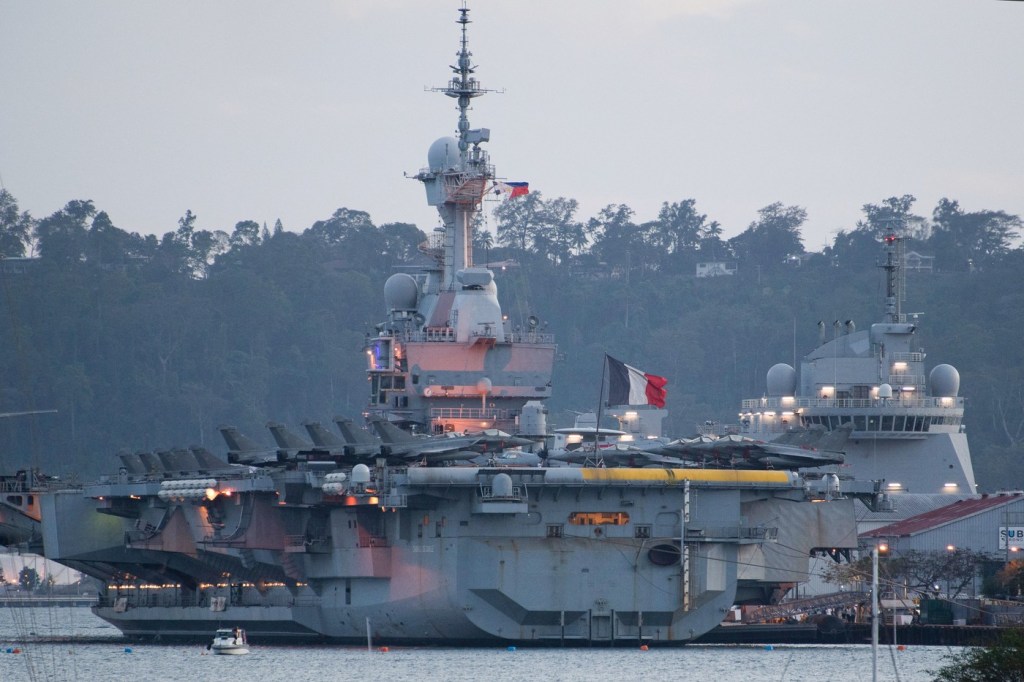
France announced this Monday that it was sending about a dozen warships, including its aircraft carrier group, to the Mediterranean, Red Sea and possibly the Strait of Hormuz as part of defensive support for allies threatened by the Middle East conflict.
Germany, worried about a new Iraq-type scenario
German Chancellor Friedrich Merz warned immediately after the conflict began that US-Israeli strikes on Iran risked leading to a new stalemate like the one that emerged after the US invasion of Iraq, but said Berlin would not lecture Washington as it sought US help to end the war in Ukraine.
This Tuesday, he warned that “a dangerous escalation” is taking place in the US-Israeli war against Iran and that “there is clearly no common plan” to end the war “quickly and convincingly”.
“We are extremely concerned that there is clearly no common plan to end this war quickly and convincingly,” Merz told a news conference in Berlin.
“Many of the goals set by the Americans and the Israelis are ours as well, but every day of war raises more questions,” Merz emphasized in Berlin, where he received Czech Prime Minister Andrej Babis.
“We have no interest in an endless war. We have no interest in a challenge to the territorial integrity or economic viability” of Iran, he added, expressing concern about “a possible scenario like what we saw in Libya, in Iraq or other states in the region.”
Italy announced assistance to Gulf states
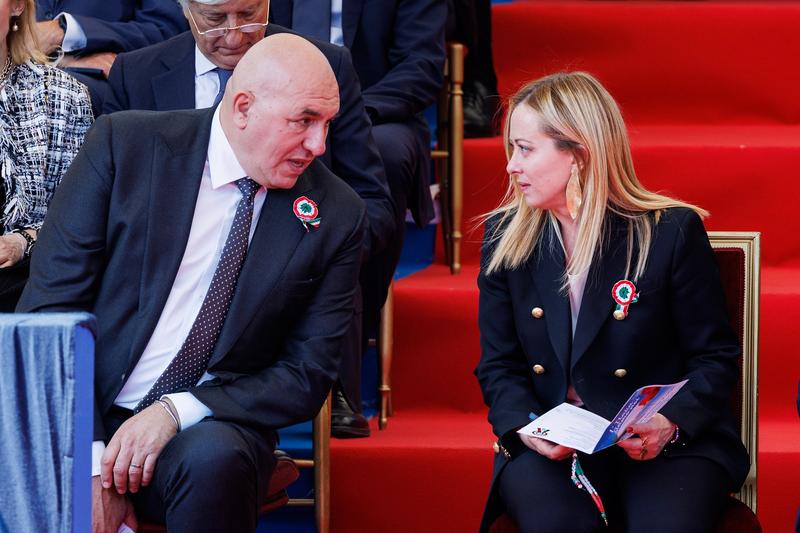
Prime Minister Giorgia Meloni and her government have been hesitant to condemn or welcome the attack on Iran, or Tehran's counterattacks, focusing instead on operational measures such as organizing a task force for the Persian Gulf area and holding talks with Oman and Qatar.
Last week Meloni announced that Italy plans to send air defense aid to the Gulf countries in the context of Iranian airstrikes.
“Like the United Kingdom, France and Germany, Italy intends to send assistance to the Gulf countries, especially in the field of defense and especially air defense,” Meloni told radio station RTL 102.5.
“This is not only because they are friendly nations, but above all because tens of thousands of Italians live in the region and about 2,000 Italian soldiers are deployed there – people we want and must protect,” the Italian prime minister added.
Greece has emphasized that it is only participating in defensive operations
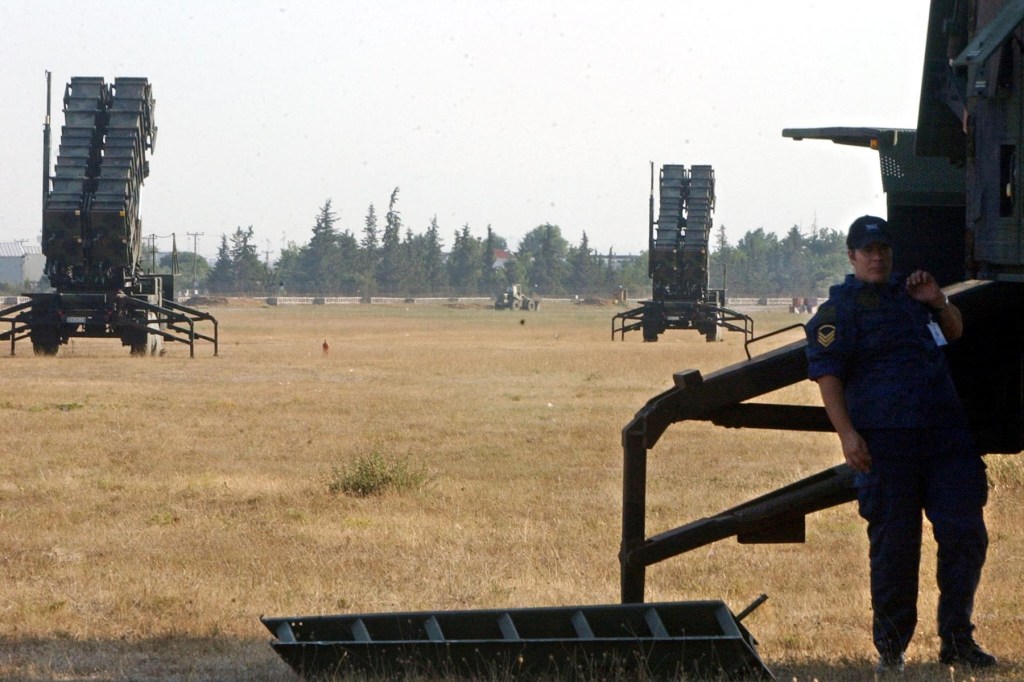
The government in Athens has given assurances that Greece is not participating in operations against Iran and stressed that the military mission it has sent to Cyprus, with Patriot batteries and F-16 jets, is purely defensive and peaceful.
“Our mission is defensive and peaceful. It is carried out on the basis of both bilateral and European solidarity, and has one goal: to deter threatening actions against the independent state of Cyprus,” Prime Minister Kyriakos Mitsotakis said in parliament, as quoted by local media.
Last week, Greece's defense ministry announced it would deploy a Patriot air defense system and F-16 fighter jets to help Bulgaria, its northern neighbor, counter potential Iranian attacks.
Defense Minister Nikos Dendias said that Greece would provide “resources and personnel for the protection of Bulgaria” after receiving a request from the government in Sofia.
Turkey condemned the attack on Iran, but also issued a stern warning to Tehran
In comments earlier this month, Turkish President Recep Erdogan unequivocally criticized the US and Israeli attacks on Iran, calling them a “clear violation” of international law and adding that Turkey shares the “pain of the Iranian people” as the war escalates.
Turkey had for weeks urged the United States and Iran to reach an agreement in their rounds of negotiations, warning that the region could no longer afford further destabilization.
“As their neighbor and brother, we share the pain of the Iranian people,” Erdogan was quoted as saying by Reuters, adding that the dispute between the United States and Iran turned into a war after “provocations” by Israel.
But Ankara also sent a strong message to the new leadership in Tehran after NATO forces intercepted and destroyed an Iranian missile headed for Turkey on March 4. “We are not a country that can be easily provoked,” Foreign Minister Hakan Fidan told reporters in Istanbul, according to AFP.
“We talked to our friends in Iran and told them that if it was a missile that lost its trajectory, that's one thing. But if these kinds of situations continue … our advice is: be careful, don't let anyone in Iran go on such an adventure.”
Turkey shot down a second Iranian missile on March 9 after it violated its airspace.
“Turkey attaches great importance to good neighborly relations and regional stability. However, we emphasize once again that all necessary measures will be taken decisively and without hesitation against any threat directed at our country's territory and airspace,” the Turkish ministry said after the new incident.