Another war. What is the conflict between Pakistan and Afghanistan about?


On the evening of February 21, the Pakistan Air Force bombed the Afghan border provinces of Nangarhar, Paktika and Khost. The Pakistani authorities stated that the targets of the attacks were camps of terrorist groups operating in the region, Tehrik-i-Taliban Pakistan and the Islamic State of Khorasan. The airstrikes were in response to February attacks in Pakistan's capital Islamabad, as well as in Bajaur district and the city of Bannu in northwestern Pakistan.
The Afghan side said that at least 18 Afghans, including women and children, were killed during the February 21 bombings. Since then, hostilities have continued along the border.
On the night of February 26-27, a Taliban representative announced that in response to the actions of the Islamabad air force, the Afghan armed forces would attack Pakistani posts along the border. Al-Jazeera, citing a source in the Afghan leadership, reported that 10 Pakistani soldiers were killed in the clashes, and the Taliban had probably captured 13 outposts.
“This is not a government,” Pakistan's army chief for public relations, Gen. Ahmed Sharif Chaudhry, said about the Afghan authorities. — They are militarist dictators. Afghanistan is ruled by illegal bandits.
“I was terrified”
As always in the conflict between the two countries, the opposing official agencies have different assessments of the number and status of the death toll.
According to the Afghan Taliban Ministry of Defense, 28 Afghan and 150 Pakistani soldiers had died as a result of the conflict as of March 3. The Pakistani authorities agree that their losses amounted to approximately 150 people, but claim that the enemy lost over 450.
The Taliban accuses their opponents of shelling of densely populated villages and claim that by March 4, 110 civilians had already been killed as a result of enemy attacks. Pakistan denies it, emphasizing that it only attacks military facilities. However, the conclusions of the UN mission in Afghanistan indicate that the conflict has already affected the civilian population.
According to data from an international organization, by March 6, 56 Afghan civilians had fallen victim to hostilities, including 24 children and six women.
“I was terrified,” the Kabul woman who came under fire told CNN correspondents and asked not to be named for security reasons. “We heard shots. When we looked out the apartment window, we saw bright lights in the sky. After the first explosion, lights came on in all the houses in the area. I think There is no one in Kabul anymore who is not afraid that a bomb will fall on them“.
A long history of conflict
Relations between Pakistan and Afghanistan have remained tense since the creation of Pakistan in 1947. Afghan leaders then refused to recognize the so-called Durand line — a border that was created during the wars when Britain tried to expand its possessions in Asia. The position of the Afghan authorities was that since their country now borders another country, negotiations regarding the territory should be conducted anew.
Another argument is this: by drawing the Durand Line, the British essentially arbitrarily divided the territory of a historical region Pashtunistanturning the inhabitants of neighboring villages into geopolitical opponents.
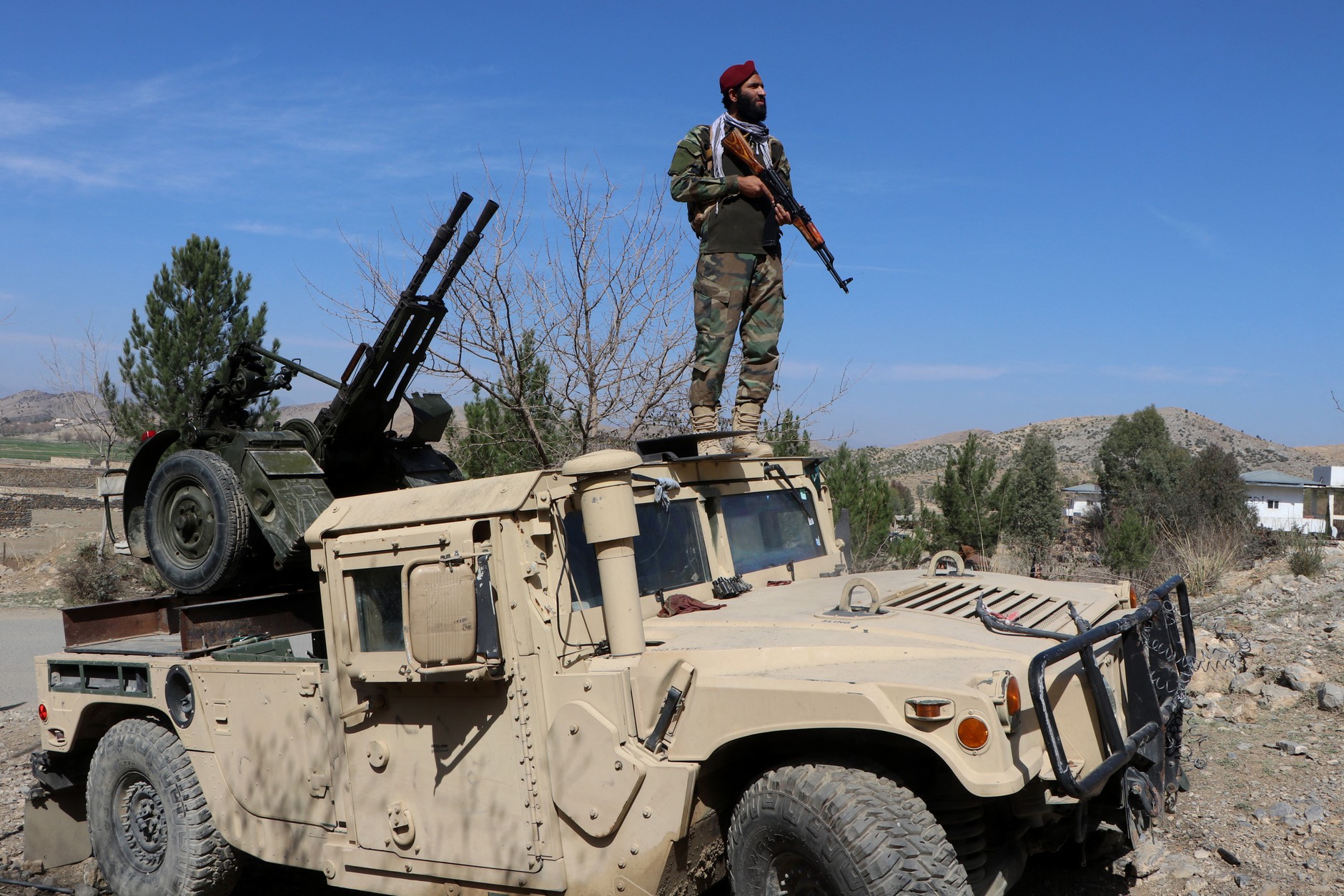
Taliban personnel in Khost Province, Afghanistan, March 2, 2026.AFP/AFP
When the question of Pakistan's admission to the UN was being decided, Afghanistan was the only country to vote against it. To express its attitude towards its new neighbors, the Afghan authorities even hung the flag of Pashtunistan next to their national flag on government buildings in Kabul – a state that separatist rebels from the region of the same name were trying to create at the same time.
Afghanistan sponsored them, hoping to undermine Pakistan's territorial integrity. There were regular clashes along the Durand Line – only not between the armies of the states themselves, but between proxy groups that acted in the interests of their patrons.
Limit frictions
The situation escalated in the summer of 1949 when a Pakistan Air Force plane bombed a rebel camp in Afghanistan in retaliation for a series of attacks on Pakistani border posts. 23 people died.
Initially, Pakistani authorities reacted positively to the return of the Taliban to power in Afghanistan in 2021. For example, Imran Khan, who headed the Pakistani government at the time, said that the Afghans had “shed their the shackles of slavery“.
However, the idyll in relations between the neighbors did not last long. They influenced it frequent terrorist attacks on Pakistani territory. The country's authorities blamed Tehrik-i-Taliban Pakistan. This organization is not formally affiliated with the Afghan Taliban, but cooperates closely with it and benefits from their support.
Tehrik-i-Taliban Pakistan leaders consider the Pakistani government to be pro-Western and are trying to establish sharia in the country, unrestricted by the constitution. Their actions in recent years have sparked another crisis between the neighbors — perhaps even more serious than in the last century.
Another escalation
Over the past few years, Pakistan has regularly accused Afghanistan of supporting militants operating on Pakistani territory. Kabul denies these accusations. However, data from “The New York Times” refute the Afghans' explanations. The newspaper's journalists found that Afghan leaders confirmed this in their conversations with each other presence of Pakistani Taliban troops on its territory.
The Pakistan Institute for Peace Research estimated that in 2025 alone, the Taliban in Pakistan carried out approximately 300 attacks in the country, killing over 440 people. According to UN Security Council data, Afghan authorities systematically provided the friendly organization with resources to conduct operations in border regions, including drones and firearms.
In an attempt to stop the Taliban, Pakistan repeatedly shelled Afghan cities in 2024. The Afghan Taliban called such airstrikes a violation of sovereignty and accused its neighbors of killing civilians.
In October 2025, Pakistan carried out a series of bombings in several Afghan cities. Their main target was the leader of the Pakistani Taliban, Nur Wali Mehsud. However, it could not be eliminated.
In response, Afghanistan launched attacks on border posts of Pakistani troops. The conflict lasted 10 days and ended with peace talks mediated by Turkey, Qatar and Saudi Arabia. According to UN data, 37 civilians were killed and 425 wounded during the fighting in Afghanistan.
However, a long-term agreement could not be reached. Isolated clashes along the border and mutual accusations continued, escalating into a large-scale war in February 2026.