Jason Jay Smart is a political consultant who has lived and worked in Ukraine, Moldova, Kyrgyzstan, Kazakhstan, Russia and Latin America. In 2010, he was banned for life by the Kremlin for supporting the Russian democratic opposition.
Tessa Jackson is an independent commentator covering strategy, ethics and contemporary conflicts. Examines the evolving nature of gray zone warfare, information operations, and the broader strategic and social implications of Russia's invasion of Ukraine.
In the wake of the US-Israeli attacks on Iran, some fear that a sharp increase in global oil prices could bring additional profits to Moscow. As Ukrainian President Volodymyr Zelensky noted, turning geopolitical instability into a strategic advantage would be a typical move by Moscow. But the reality is that neither oil profits nor even a stable economy are in Russia's sights.
Unlike many oil-producing countries that could benefit from supply disruptions from the Middle East, Russia is increasingly relying on oil from the Urals sold on the black market and transported through so-called a shadow fleet that is under increasing pressure from sanctions imposed by Europe, the United States and even India.
To sell its oil, Russia is offering deep discounts to a rapidly shrinking pool of buyers.
Since it is not part of the regular oil trade, the significantly lower price offered by Russia is (further) reduced in transactions with a shady network of brokers, insurers and customers who are already terrified of increasing law enforcement actions against the Russian economy.
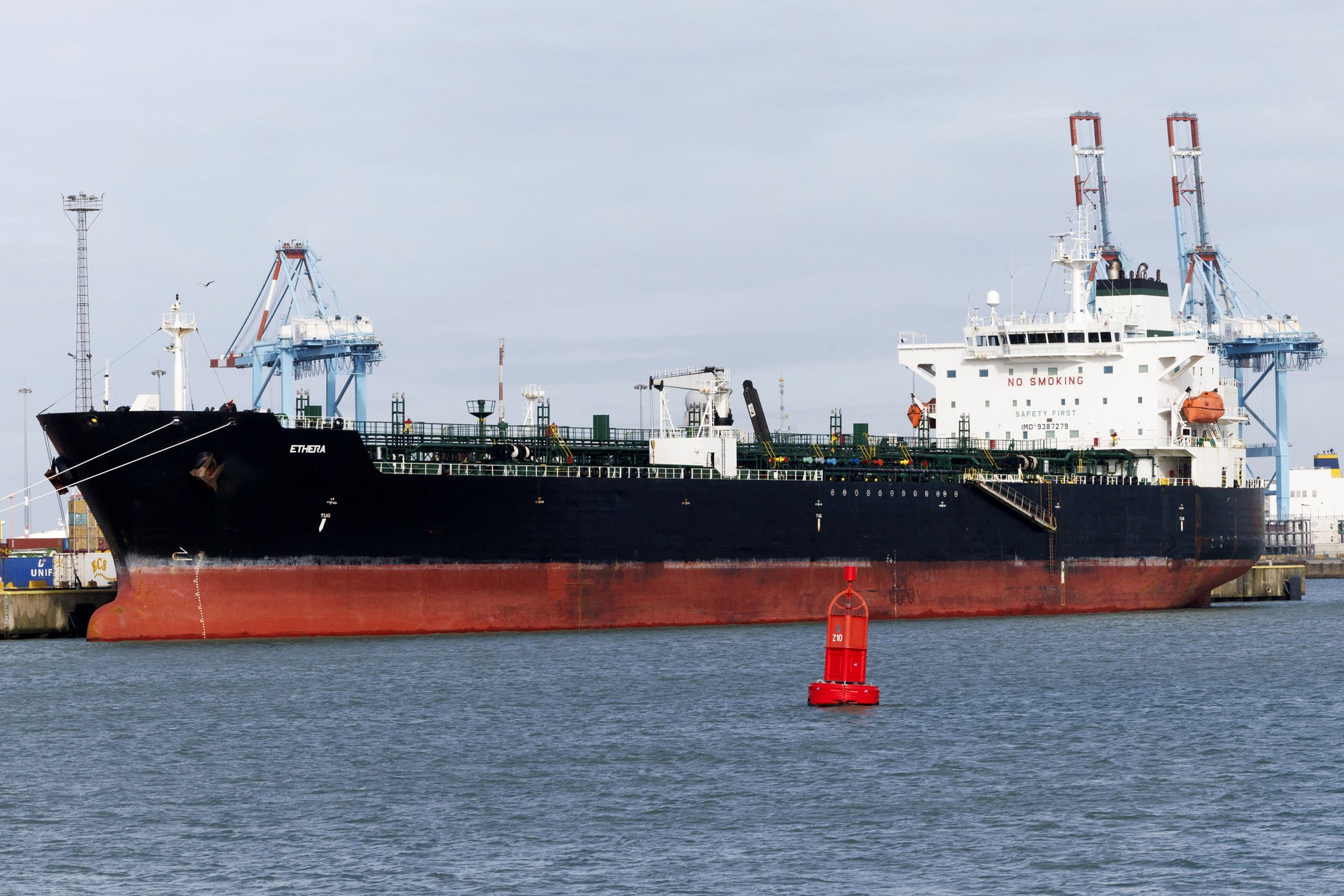
This week, Brussels sent shockwaves through the oil trading community by imposing a bail of EUR 10 million (PLN 42,689,000) on the detained tanker Ethera and prompting some shipowners to wonder whether the risk of a fine greater than the value of their vessels is worth it.
The Ethera tanker in the port of Zeebrugge in northern Belgium after it was stopped and seized by Belgian special forces on March 1, 2026Nicolas Maeterlinck/BELGA MAG/AFP / AFP
Meanwhile, Russia, avoiding sanctions, accused Ukraine of drone attacks on its ships transporting oil. Sanctions, like drones, increase transportation and insurance costs, lowering Moscow's profits and reducing black gold revenues, which account for about 22%. state budget. The lack of oil revenues is already deeply affecting Russia.
Russia can continue to sell oil, but trading it on the black market is not the same as maintaining an energy-based economy.
The latest German intelligence report indicates that Russia has reduced the true scale of its 2025 budget deficit by hiding over $30 billion. (PLN 110 296 million) shortageswhich means that the actual budget gap at the end of the year was closer to USD 103 billion 300 million. (PLN 379 billion 787 million). For comparison, Russia's entire military budget for 2025 was only $160 billion. (PLN 588 billion 248 million). As the industry in Russia continues to decline, it is unlikely that additional funding will be obtained in the near future.
Serious labor shortages in Russiareflected in an unemployment rate of 2.1 percent. last year, highlight the lack of remaining economic slack and will result in wages rising faster than productivity. Companies struggling with rising costs will pass them on to consumers, keeping inflation high. The Kremlin de facto confirmed this, pointing out that there is currently a shortage of approximately 2 million 300 thousand. employees, and by 2030 this number may increase to over 3 million.
To address the labor shortage, Russia has already imported 70,000. workers from India, compared to 5,000 work visas issued in New Delhi in 2021.
Russia's labor shortage will only worsen in the coming decades with the course of the demographic crisis in this country. According to Western and Ukrainian estimates, the invasion of Ukraine caused over 1 million 200 thousand deaths. victims among Russians, and about 800 thousand. Russian citizens fled abroad. Combined with a long-term demographic decline, the population of Russia decreased from 148 million to 100 thousand. in 1995 and according to UN forecasts it will reach approximately 121 million 300 thousand. by 2050
In response to persistently high inflation The Central Bank of Russia (CBR) kept interest rates at 16 percent, inhibiting investment and tightening credit conditions. As a result, investments decreased by 3.1%. year-on-year in the third quarter of 2025
The side effects of the liquidity crisis are starting to appear, with reports of periodic shortages of cash in ATMs.
The article continues below the video
Officially, the CBR predicts a structural liquidity deficit of up to 3 trillion rubles (PLN 164,341 million) in 2026. However, the actual amount may be much higher, as analysts close to the Kremlin warn that if the number of unfavorable loans continues to grow, the banking sector may face a systemic crisis at the end of 2026.
In response, the Kremlin cashed in about 43 percent. gold reserves of the National Wealth Fund, selling approximately $930 million in October 2025. (PLN 3,419 million), and in November 2025 another USD 961 million. (PLN 3,533 million) to China. Selling more gold Maybe give some time, but at the same time it is a signal that the hedge is weakening as options run out.
Despite this deal, Moscow appears to be discovering that its so-called “eternal friendship” with Beijing carries a significant advantage for China, which demands high oil discounts and shows no urgent need to finalize the Power of Siberia 2 pipeline project.
The Kremlin's oil strategy is therefore not a path to economic growth, but a delaying strategy.
While talking about an impending economic boom caused by oil sales, Moscow seems to conveniently forget that the country's deteriorating economic situation is related not only to the price of a barrel, but also to terrible leadership that has brought the nation to the brink of collapse.
Oil may fuel Russia's war machine, but it won't save a system that is slowly exhausting it.
I’m Ashley Davis as an editor, I’m committed to upholding the highest standards of integrity and accuracy in every piece we publish. My work is driven by curiosity, a passion for truth, and a belief that journalism plays a crucial role in shaping public discourse. I strive to tell stories that not only inform but also inspire action and conversation.