March 8 Message to Granddaughter: She's 86, was a rower in Patzaichin's generation, and has grown to have a digital community around fashion

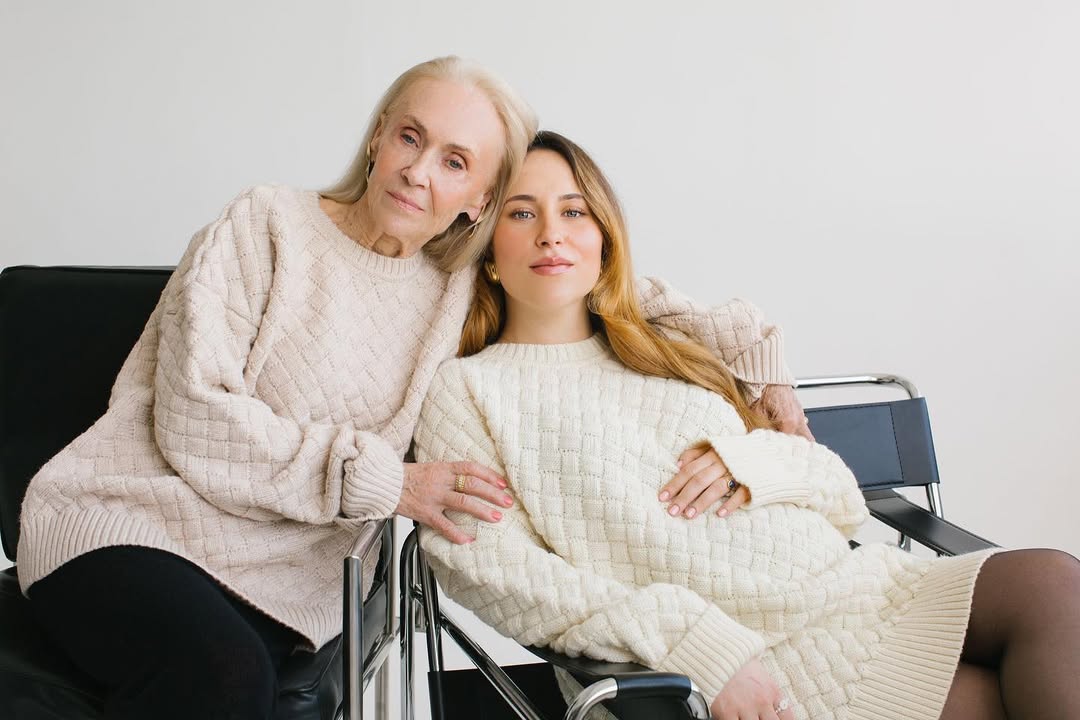
On March 8, HotNews spoke with a special woman. Ema-Victoria Drăgan was a performance rower, from Ivan Patzaichin's generation, sports teacher, school principal. She is a mother, grandmother and great-grandmother, but what she never imagined, at least not until she was 80, was that she would end up a fashion model. In a world of restrictive and unrealistic image standards, her example shows that beauty has no age.
- “I hope to be an example for my daughter, granddaughter and great-granddaughter,” says Ema-Victoria Drăgan.
- Journalist Raluca Ion wrote about Ema-Victoria Drăgan in the first edition of the “Partea Bună” newsletter from HotNews. If you want to receive, every Friday morning, stories like this about the bright side of life, you can subscribe here.
Ema-Victoria Drăgan was born in Timisoara, in 1940, during the Second World War. She is half German. In the family, she is called Omi, grandmother in German. And also by Omi, Omi Dragan, his followers on social media know it.
“Who is Omi?”
A few years ago, Omi Drăgan went to Greece, for her niece's wedding. Natural and elegant, she immediately attracted the attention of those around her, although she felt a little awkward with so many unknown people around. It was awkward especially since his husband, who had recently undergone surgery, had stayed at home.
Some of her niece's friends asked her who she was. “- It's Omi,” the niece answered. “- Who is Omi?”, they continued in confusion. “- Omi is my grandmother,” she explained.
Pictures from Cosmopolitan
A month later, Ema-Victoria Drăgan did her first fashion shoot, at the age of over 80. “The pictures appeared in Cosmopolitan magazine. Apparently it was successful, I was seen and since then I entered this circle, this fashion madness,” she sums up.
If he felt at ease at the photo session, when it came to appearing on the catwalk, the emotions began. “But I said, 'I'm going! I started down this road, I'm going! And it wasn't bad.'
Fashion and travel to faraway places
Since then, Ema-Victoria Drăgan appears in the pages of fashion magazines and is a model for well-known brands, such as Ami Amalia.
Even though she says fashion is just a hobby for her, she has become a source of inspiration for women of all ages.
Another hobby of hers is travel: she goes, with organized groups of tourists, to remote places, even though her husband cannot accompany her due to health problems.
“He's happy to see that I'm happy and that I'm happy after my travels,” she says, adding that she doesn't feel lonely during vacations.
“You always make friends in a group of 30 tourists with whom you stay for ten days. Then we keep in touch with each other, send each other a view: I'm there, I'm beyond.”
“Until I got into this fashion craze, I didn't wear makeup”
Omi says she has always had an active and orderly life and good genes, inherited from her father, who lived to be over 90 years old. She always liked to dress elegantly, but not make-up.
“Until I entered this fashion craze, I didn't put on make-up, and now I only put on make-up there, on the spot, when they do my make-up. I don't have any make-up at home. I don't have a lipstick, I have to go to my daughter, let her give me one too if I want to put it on my lips”, says Ema-Victoria Drăgan.
National champion and master of sports
The woman played sports as a child “I really liked sports at school, I first had as a physical education teacher a swimmer, then an athlete. And I said: I want to be like them too! I started swimming first, then, being on the banks of the Beghei, I saw boats and started rowing.
I progressed, I became national junior champion, they took me in the big groups and that's how they recruited me to the Steaua club. Until I got pregnant, I became national champion six times, I participated in world championships, European championships, I am the master of sports”, says Omi Drăgan.
Her husband, Aurel Drăgan, was a volleyball player, and after they ended their careers as performance athletes, she became a sports teacher and he became a coach.
“There were queues for milk in the morning, for meat, there was no food”
Ema Victoria Drăgan says that although she liked sports, she never liked the way she had to dress during training and competitions.
“When I did sports, I stayed all day in t-shirts, tank tops, and that all summer. After I finished sports, I had a rage to dress nicely. At that time, in the 60s-70s, you may have also seen in the movies, there were no fashion houses. There were queues for milk in the morning, for meat, there was no food. And I bought materials and cut myself what I had learned from my grandmother, from Timișoara”, says Omi.
She attended the Faculty of Physical Education and Sports, and at the exams her colleagues were waiting to see what other outfits Ema made. “And they all marveled.”
How you can dress elegantly from modest stores
When they meet her, Omi is wearing a white suit, and the headdress perfectly highlights her facial features. Since we're talking about fashion, I ask her what brand the outfit is.
He laughs and tells me that he bought his pants and jacket separately, from some stores where you wouldn't expect to find much. He found his pants first. “It was a small shop, around Piața Domenii. I went in, they had some nice things from Italy, I think I paid 120 lei for the pants,” he says.
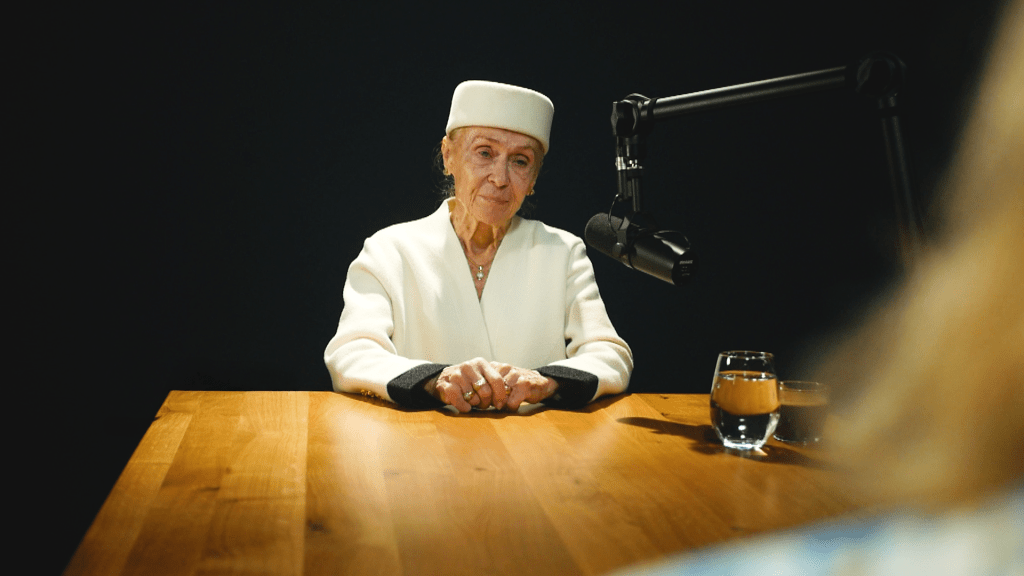
Elsewhere she found the jacket, also for about a hundred lei, and took it without being sure that the shade would fit. It fit perfectly. Although she is a model for expensive brands, Ema-Victoria Dragan speaks to women whenever she has the opportunity about affordable elegance.
“I said to do this job and as long as my health helps me, to be able to show the ladies at various gatherings how to dress up, I'm not good at make-up, I'm good at combing, I do my hair myself. It's very simple”, says Omi.
Inheritance from grandmother
During the interwar period, Emei Drăgan's grandmother had a tailoring workshop in Timișoara, which shrank during the war and disappeared during the communist period. Without having met her, I look, eight decades later, at the Instagram page on which his granddaughter, also a great-grandmother, appears in elegant outfits. And I realize that's something the communists didn't manage to take with the sewing machines. Something has gone on and is still going on.
Today, Ema-Victoria Drăgan says that she is most proud of her daughter, granddaughters and great-granddaughter. “I hope to be an example for them.”
At 86, she feels lucky for the life she had. Exercise daily; he walks and sweeps his yard. “It's all about not giving up. Of course, there are diseases that don't leave you. But if you still have the opportunity to socialize, go to a neighbor, do it,” she says.
He remembered a couple sitting at the end of line 331 in Bucharest. They would get on the bus, go to Piața Romană and return back home. “It was a tour where they saw the whole city,” says Ema-Victoria Drăgan.