After the outbreak of war in the Middle East, is the world prepared for possible shortages of fossil fuels? According to the International Energy Agency, in 2026, oil supply was supposed to exceed demand, but the attack on Iran opens up opposite scenarios. The demand for natural gas is also growing, and the Ras Laffan complex in Qatar, destroyed by the Iranian attack, was the largest global LNG production installation. What do raw materials stocks look like in key countries and regions?
The rest of the article is below the video:
Read also: Donald Trump encourages ships to sail through Hormuz. He allocated $20 billion for this purpose.
Gas and oil stocks. European Union
Let's start with the European Union. In response to market unrest, on March 4, the European Commission issued a message stating that the security of raw material supplies is not at risk, oil stocks remain high and gas stocks are stable. The Commission is also to constantly monitor the situation and will take appropriate steps if necessary.
However, a frosty winter with high heating needs took its toll on the Old Continent. According to data from Gas Infrastructure Europe, at the beginning of March, European gas storage facilities were 29.8% full. with a five-year fill average of 44.7 percent. They contained 340 TWh of raw material, i.e. approximately just over 32 billion cubic meters. natural gas.
Regarding oil stocks, the latest full data reported by Eurostat is from May 2025. At that time, the EU had 43.499 million tons of crude oil stored, i.e. approximately 319 million barrels. The total amount of reserves of crude oil and petroleum products amounted to less than 106.8 million tonnes, which included, in addition to the crude oil itself, also, among others: approximately 10.4 million tons of gasoline, 5.2 million tons of aviation fuel and almost 39 million tons of diesel oil.
Gas and oil stocks. Poland
In Poland, the filling level of gas storage facilities remains higher than the EU average. Their operator, Gas Storage Poland, informs that on March 5, the installations were 49% full. with a five-year average of 55.8 percent. There were 17,926.6 GWh of gas in storage, or approximately 1.7 billion cubic meters.
Read also: Opinions are divided. “Every other country wants to be a gas hub”
As for oil, we only have the same Eurostat data as for the entire EU. PERN SA, a public company managing oil infrastructure, informed our editorial office that it does not provide the current stock level because the situation is so dynamic. In May 2025, we had 4.844 million tons of crude oil – approximately 35.5 million barrels. Total stocks of crude oil and petroleum products amounted to 8.357 million tons, which placed us in fifth place in the EU after Germany, France, Spain and Italy. This also included PLN 783,000. tons of gasoline, 47 thousand tons of aviation fuel and over 2.6 million tons of diesel oil.
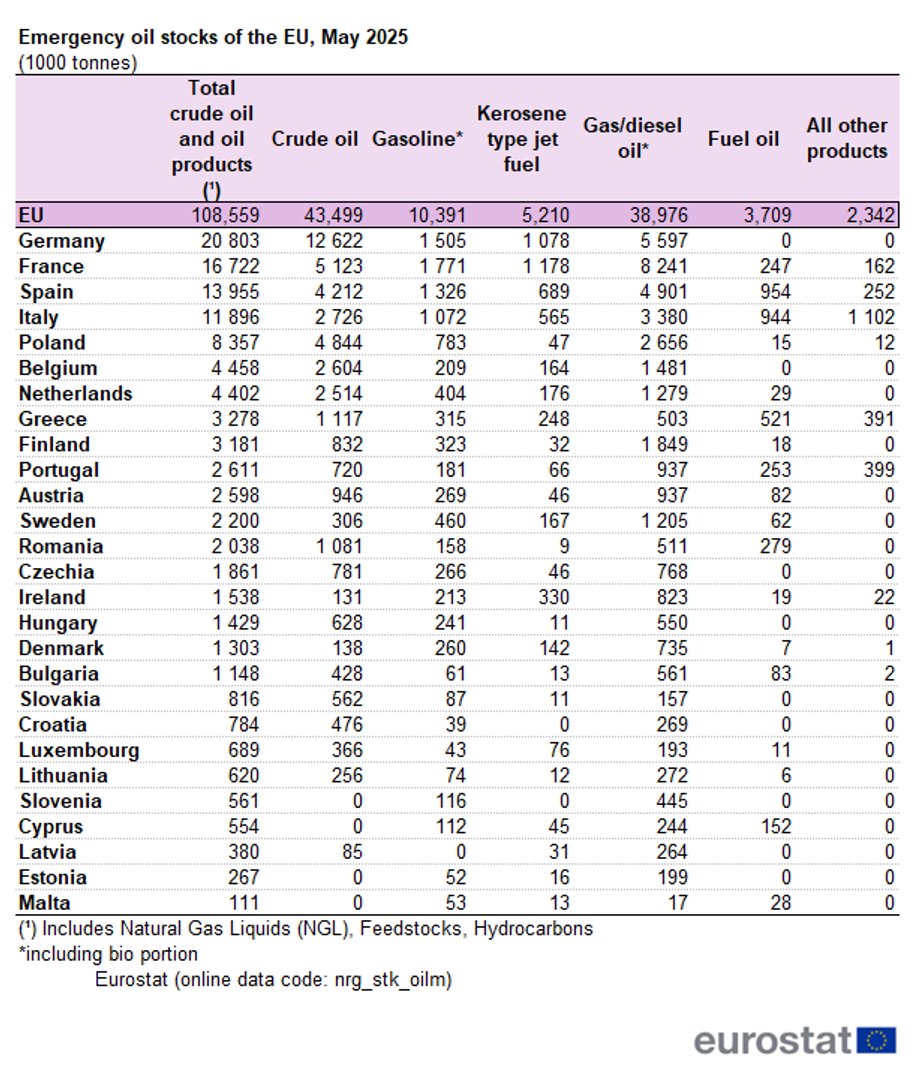
Eurostat data on stocks of crude oil and petroleum products in the EU, May 2025
|
Eurostat / X/Eurostat
Gas and oil stocks. USA
In the USA, official energy statistics are provided by the Energy Information Administration (EIA). Reports on the state of gas storage are published weekly. The latest one is from March 5 and shows the stock as of February 27 in underground warehouses in 48 land states (so excluding Hawaii and Alaska). They contained approximately 52.8 billion cubic meters. gas. The IEA reports that it was approximately 3.74 billion cubic meters. less than last week. The agency's data also shows that on February 27, the United States had 854.7 million barrels of oil.
Gas and oil stocks. China
The closing of the Strait of Hormuz particularly affects Asian economies, which are the main recipients of raw materials transported by this sea route. China, the world's largest importer of liquefied natural gas, LNG, imports 1/3 of this raw material from the Middle East. According to the China Daily website, at the end of February, LNG stocks in the Middle Kingdom amounted to approximately 6.8 million tons; approx. 200 thousand tons more than in the same period of the previous year. This is approximately 9.1 billion cubic meters. natural gas, and supplies are expected to last 3-4 weeks. China is also developing its oil reserves, and although their exact value is unknown, according to estimates quoted by Reuters, they amount to approx. 900 million barrels, which corresponds to less than three months of imports.
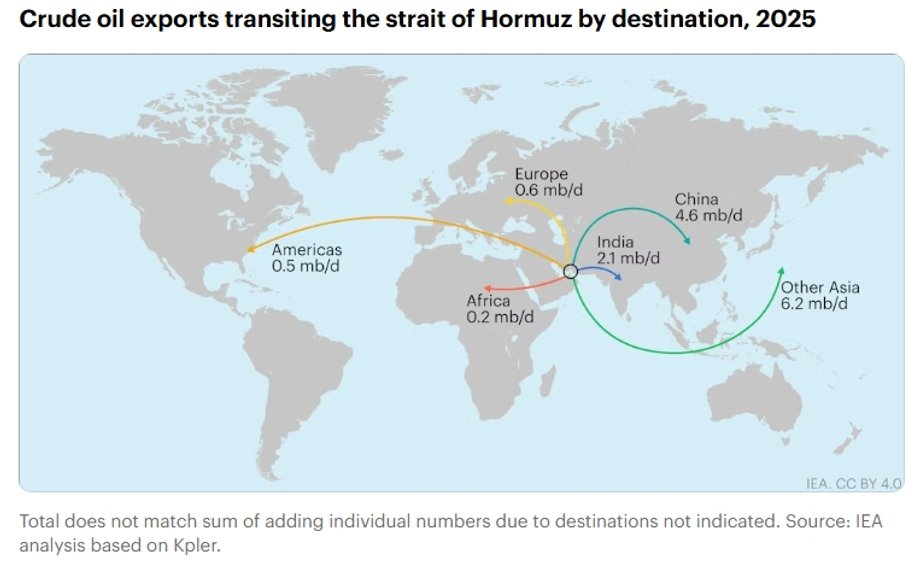
Oil exports through the Strait of Hormuz
|
International Energy Agency/IEA
Gas and oil stocks. South Korea
South Korea is also dependent on fossil fuels from the Middle East. 70 percent comes from there. oil consumed in Korea and 15-20 percent LNG. According to a government report quoted in the Seoul Economic Dail, liquefied gas stocks “well exceed” the nine-day requirement, but there is no exact figure. Combined public and private stocks would cover just over 30 days of use.
According to Reuters, in December 2025, government oil stocks in South Korea were to reach 100 million barrels, to which an additional 95 million barrels in private reserves should be added. On March 2, the Korean government reported that the total stockpile corresponds to 208 days of consumption.
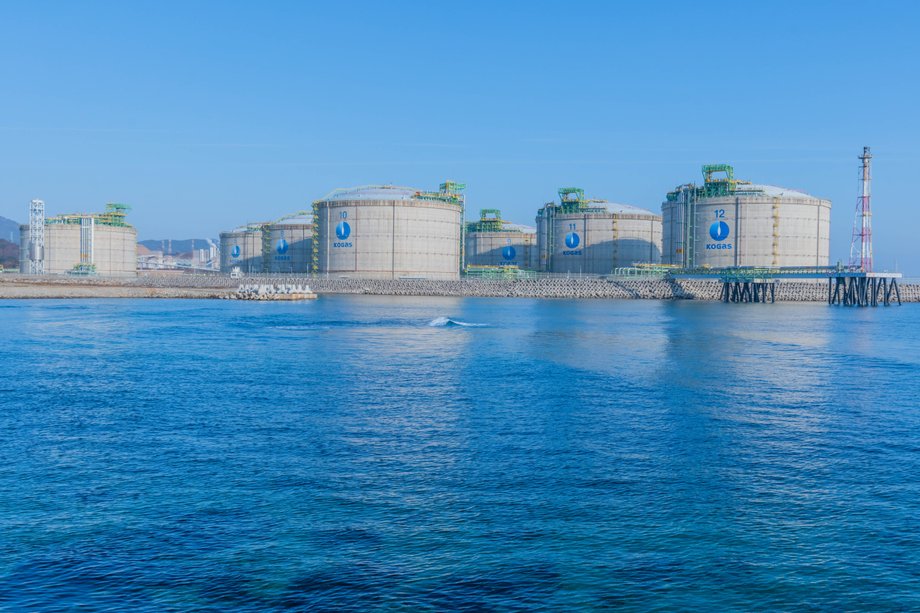
Gas and oil storage facilities in South Korea
|
aminkorea / Shutterstock
Gas and oil stocks. Japan
What is the situation in Japan, the second largest importer of LNG in the world? Government data indicate 2.19 million tons of raw material at the end of February, which would correspond approximately 2.96 billion cubic meters. gas. In this respect, there is less dependence on imports from the Middle East; in 2025, Qatar, Oman and the United Arab Emirates accounted for 11%. LNG imported to Japan, and the largest supplier with a share of 40%. was Australia.
The situation is different with oil, which the Japanese get 95% from the Middle East, and about 70%. from it it flows through the Strait of Hormuz. In December 2025, according to Argus Media, Japan's total oil reserves were 470 million barrels of oil and petroleum productswhich corresponded to 214 days of consumption.
“All options are on the table”
Since the oil crisis in the 1970s, the International Energy Agency has recommended that its member states (32 countries, apart from European countries, including the USA, Japan and South Korea) have strategic oil reserves. Corresponding to at least 90 days of import. The agency is also speaking out now. As Bloomberg reported on March 6, the authority does not see the need to release emergency stocks yet, although its director Fatih Birol added that “all options are on the table.”