Russia seems to have conquered Pokrovsk, after two years of fighting. What the fall of the city means, according to ISW analysts


Russian forces appear to have captured the Ukrainian city of Pokrovsk in the Donetsk region after months of heavy fighting, according to a recent assessment by analysts at the Institute for the Study of War (ISW).
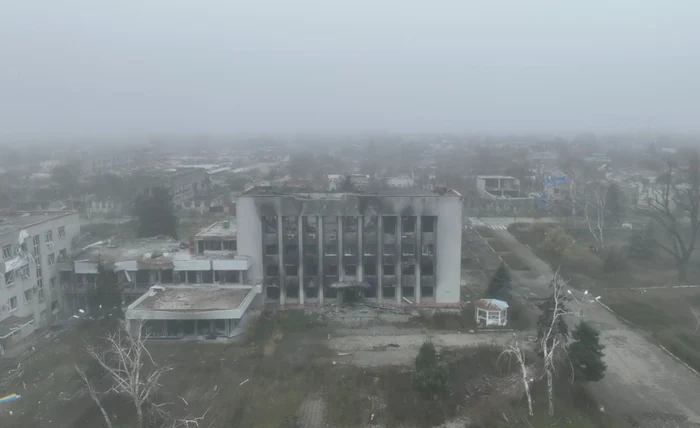
PHOTO EPA-EFE
Despite the strategic importance of the city and the considerable resources allocated to its conquest, analysts appreciate that this development has not yet translated into wider operational progress for Russian troops.
Pokrovsk, which had a population of around 60,000 before the war, has been one of the most contested frontline areas in eastern Ukraine in recent months. Russian forces reportedly mobilized significant troops and equipment, using sustained artillery bombardment and repeated ground attacks to drive out the Ukrainian defenders.
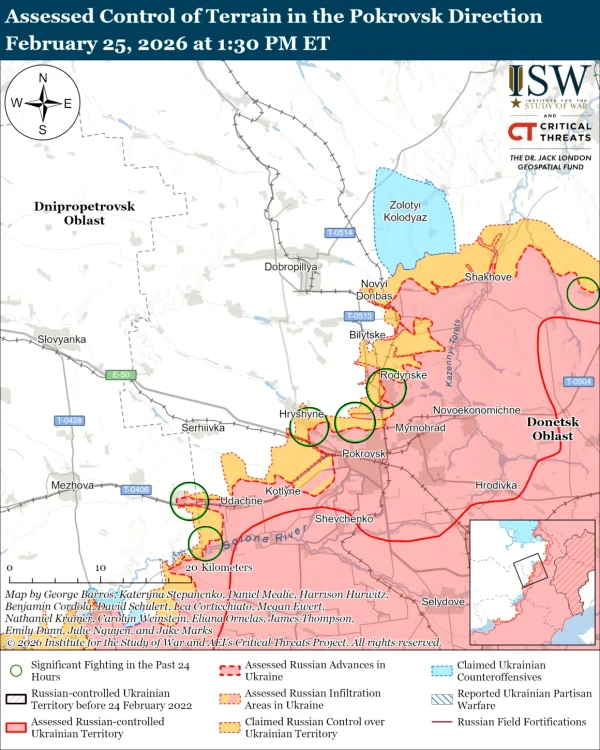
According to ISW, Ukrainian forces have not been seen operating inside the city since January 2026, suggesting that Russian troops have consolidated their control over the city in recent weeks. The review marks an important milestone in a protracted battle for the city that began nearly two years ago.
A long and expensive campaign
The advance on Pokrovsk began in February 2024, shortly after Russian forces captured the town of Avdiivka. Since March 2024, Russian troops have launched repeated frontal attacks in an attempt to advance. However, progress has been slow and expensive.
Most of the city of Pokrovsk was not captured until December 2025, almost 22 months after the start of the offensive. Fighting continued in the neighboring town of Mîrnohrad for another month, featuring the characteristic style of attrition.
Russian officials presented the capture of Pokrovsk as a key step in the broader goal of taking control of the entire Donetsk region. The city functioned as an important logistical and transportation hub for Ukrainian forces, making it a major strategic target in the campaign to conquer the entire region.
Limited operational impact
Despite the city's symbolic and logistical importance, ISW shows that Russian forces have failed to capitalize on the advantage gained to achieve further significant operational progress.
The capture of the city does not appear to have opened major routes for new offensive operations, analysts said. Nearby towns, such as Hrisîne, remain under Ukrainian control. In addition, Russia's slow and costly advance did not create immediate conditions for an assault on Ukraine's fortified defensive lines in northern Donetsk region, known as the “Fortified Belt.”
This is a network of fortified defensive positions designed to prevent the advance of Russian forces deeper into the region. Analysts believe that the current situation does not indicate an imminent conquest of the rest of the Donetsk region by Russia.
Tactical gains versus strategic outcomes
Although the fall of Pokrovsk represents an important tactical achievement for Russia, experts estimate that this fact should not be interpreted as a decisive turning point in the war in eastern Ukraine.
As fighting continues in several sectors of the front, the long-term impact of the loss of Pokrovsk will likely depend on the ability of Russian forces to turn these gains into a sustained advance, an outcome that analysts say has not materialized so far.