The construction market is approaching new all-time highs. Some materials have even increased in price by 40%


The construction market in Romania starts 2026 at a very high level of activity, close to historical highs, supported mainly by public investments, but also by a constant interest from private developers. The volume of construction works increased by almost 8% between January and November 2025, compared to the previous year, reaching very close to the record of 2023, experts say.
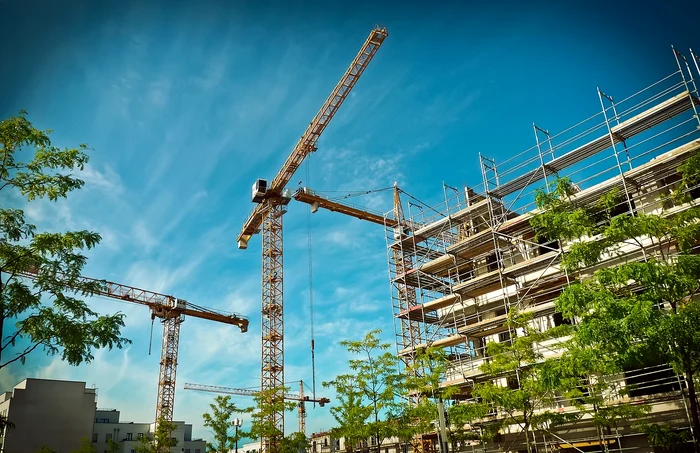
The construction market in Romania starts 2026 at a very high level of activity. Pixabay photo
This development, experts say, shows that the construction sector is still operating at a high level of activity and is resisting, at least for now, the pressures and uncertainties that have intensified in recent years. moreover, the annual report of Colliers points out that the construction sector had a weight of almost 9% of the gross domestic product in 2025, the highest value in the European Union and significantly above the average of 5% of the member states.
By segment, the market growth is mainly supported by engineering works, where publicly funded projects such as infrastructure and major hospitals are mostly found, which reached record levels in 2025. Non-residential construction grew by more than 11% last year compared to 2024, approaching peak levels in 2023. The residential sector also saw solid growth, from over 12%, even if it remains below the recent historical peak, but remains consistently above pre-pandemic levels. Overall, the construction activity reached in 2025 almost double the level before the pandemic, confirming the accelerated pace of works in recent years.
“The data show very clearly that the construction market in Romania operates at a very high speed, close to historical highs, and this pace is mainly supported by large-scale public projects. However, it is important to understand that we are talking about volumes of work, that is, about the intensity of the activity and the number of working hours, not about the financial value of the investments, which makes the results all the more spectacular. We would interpret this information in the following key: the pace and scale of change is at a significant level, and if we can maintain this direction, the country will look very different in 10 years“, explains Alexandru Atanasiu, Colliers Partner.
Some materials have increased in price enormously, even by 40%
Even if the current level of activity remains high, the short- and medium-term outlook is marked by additional pressures, Colliers' expert analysis shows. Starting in 2026, a new carbon tax applied to construction materials imported from outside the European Union came into force. Early estimates indicate a potential impact on costs in the range of 10% – 15%, but the actual extent will become clearer over the course of the year. Given Romania's high dependence on imports of steel, aluminum and other metals, it is unlikely that these additional costs will be fully absorbed by construction companies. In practice, a significant part will be transferred further in the production chain, which will put pressure on the final prices of the projects. As funding remains selective and costs are already at high levels, such an increase may reduce the appetite for new investment, particularly in the private sector.
These pressures are accentuated by the global geopolitical context, which has made the supply of materials more difficult and expensive. In 2025, indices tracking the prices of certain construction materials reached record levels in both Europe and the United States. The price of copper, for example, an essential material for the construction sector, has risen by more than 40% in 2025, reaching all-time highs, and other base metals have also seen significant gains.
The number of employees in the sector increased very little last year
In the local labor market, construction reached a record labor force level, with 462,000 employees in July 2025, up 1% from the previous year. Consultants emphasize that the slight decrease observed in the coming months does not change the general trend and can also be explained by seasonal factors.
At the same time, even if the pressures on wages are visible in a still tense labor market, the level of construction wages in Romania remains below that of other countries in Central and Eastern Europe. This gives companies some room to manoeuvre, in a context where costs are already rising. Thus, Colliers consultants draw attention to the fact that the construction sector in Romania continues to register operating margins above the European Union average, which provides a certain degree of amortization of cost pressures, even if the environment remains a difficult one.
“In recent years, constructions have come to weigh more and more in Romania's economy. In the first three quarters of 2025, the sector represented 8.7% of GDP, the highest level in the European Union and significantly above the average of 5% of the member states. This share shows how much the economy is based on construction, but it also highlights a certain vulnerability, considering that more than half of the activity is related to engineering works financed by European funds. Although this is not the basic scenario, possible delays or blockages in accessing European funds could have a visible impact on the sector, with effects that would be felt more widely in the economy“, said Alexandru Atanasiu.
For 2026, the consultants expect a more balanced evolution of the construction market, in a context where cost pressures will remain high. The activity would continue to be supported by public investment, provided a stable political climate is maintained. At the same time, private investors are already adjusting their plans and project timelines, preparing for a possible mid-term market recovery.