The big viaducts on which the fate of the Transilvania Motorway depends. How many kilometers have a real chance of being inaugurated in 2026

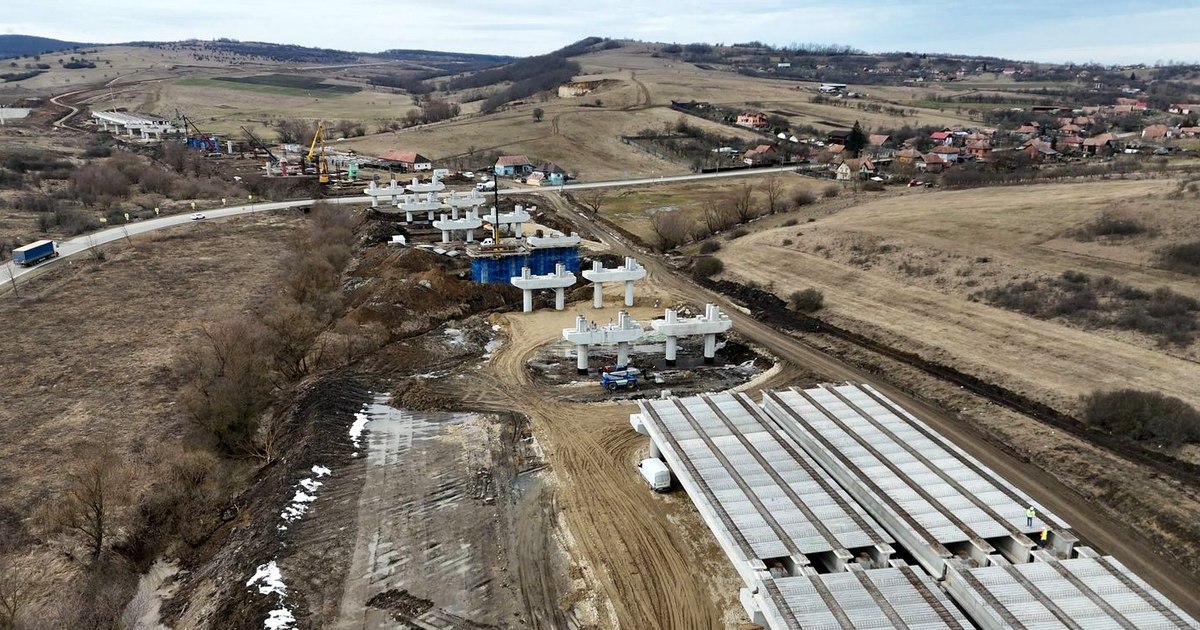
The inauguration of at least 40 kilometers of the Transilvania Highway depends on the pace of work on the Topa Mică and Nădășelu viaducts, complex works that the officials of the Ministry of Transport look at with optimism, despite the difficulties on the site. Two more batches are also expected.
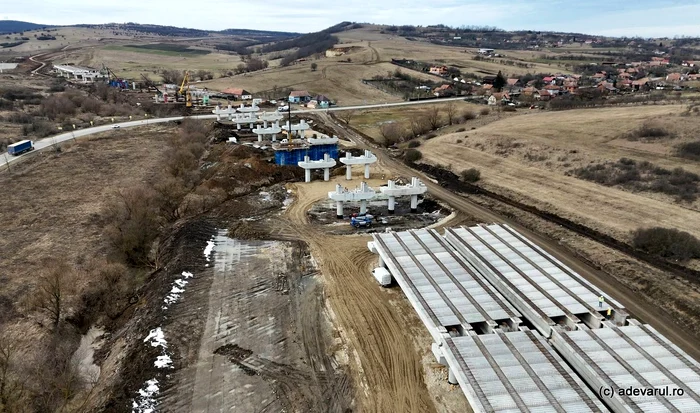
The Topa Mică viaduct has taken shape. Photo: Daniel Guță THE TRUTH
The works were resumed on the Transilvania Motorway (A3) construction sites, between Cluj-Napoca and Oradea, and in 2026 the authorities estimate the completion of almost 70 kilometers of the motorway. Some officials are even more optimistic about the number of kilometers inaugurated in 2026.
“This year we will open traffic on almost 100 new kilometers of the A3 – a highly anticipated moment, which will mean shorter travel times, increased safety and a faster connection from Cluj to Zalău, Oradea and further to Europe”, announced Horațiu Cosma, secretary of state at the Ministry of Transport and Infrastructure, after a visit to the construction site.
According to him, the builders are working steadily on the construction sites in Cluj, Sălaj and Bihor.
“Activities are mainly focused on bridges, viaducts, ditches or ditches and the installation of protective metal parapet. With the complete drying of the land, in March work will resume in force on all other components of the construction sites, especially on embankments and asphalt.” added the state secretary, after visiting the construction site in Nădășelu.
Viaducts, critical points of the A3 Motorway
Despite the mobilization, two critical points could delay the completion of the 42 kilometers between Nădășelu and Poarta Sălajului. The 3.2 kilometer segment of viaducts built at Nădășelu and Topa Mică requires complex works, in an area where landslides caused the original route of the highway to be diverted.
“Important phenomena of instability occurred through landslides, with the displacement of the massif of land and accelerated developments, the phenomena of instability having an evolutionary character. Because of this situation, a new technical project was developed”, informs the Ministry of Transport in 2021.
The Topa Mică viaduct, with a length of about two kilometers, and the Nădășelu viaduct (about 1.2 kilometers) are being built on the Nădășelu – Porta Sălajului segment of the Transilvania Motorway (A3 Cluj – Oradea).
Work on the two viaducts began in the spring of 2025 and is due to be completed in 2026. Their construction is imposed by the clayey and unstable soil, which does not allow the creation of a classic embankment and requires complex engineering solutions, with deeply drilled piles and massive concrete structures.
In Nădășelu, the builders are working on the superstructure elements of the future over one kilometer viaduct, which, on the new route, will pass over the village cemetery. Huge pillars were implanted in the hills of the town, below the former route affected by landslides. Reinforcements and formwork are installed to pour the concrete slab, and cranes coordinate the handling of heavy elements on the site. Also, work continues on the embankments and other structures.
At Topa Mică, the works continue on the viaducts over the valley and on the passage over the national road DN1F Cluj-Napoca – Zalău, where the deck assembly phase has been reached. Extensive earthworks and excavations are required in an area affected by landslides and at risk of flooding.
The works on the two viaducts are financed from European funds attracted through the National Recovery and Resilience Plan (PNRR) and have a completion date of 2026.
Also in 2026, the road junction from Românași, which recently entered the construction site, will also have to be completed. The contract for the construction of the road junction, with a value of 71.3 million lei, financed by PNRR, has an execution term of seven months.
The Românași interchange, built by UMB, will ensure the connection with Transilvania Highway (Zimbor – Poarta Sălajulu subsection), DN1F and DJ108A, until the Poarta Sălajului – Zalău section is completed, estimated for 2031.
42 kilometers, near the end
The segments Nădășelu – Mihăiești (17 kilometers), Mihăiesti – Zimbor (13 kilometers) and Zimbor – Poarta Sălajului (12 kilometers) are on the construction site from 2021. 16 bridges and 18 viaducts were designed along the entire route between Nădășelu and Poarta Sălajului, which cross the hilly area of Cluj and Sălaj counties.
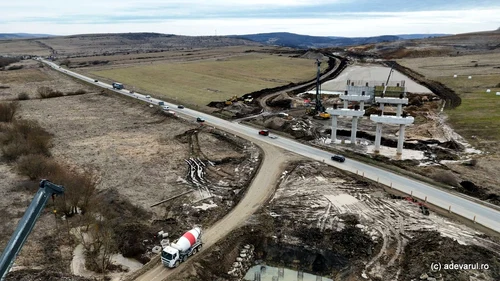
Image 1/10:
Transilvania Highway Cluj Napoca Oradea under construction Nădășelu and Topa Mică Viaducts Photo Daniel Guță THE TRUTH (27) JPG
The Nădășelu – Zimbor section has a total length of 24.59 kilometers and is made by the Spedition UMB – Tehnostrade – Electromontaj association. The design and execution contract was signed on December 28, 2020, and the works began on January 25, 2021. The updated value of the contract is 1.495 billion lei without VAT, after successive adjustments through additional documents.
Currently, the physical stage of the investment is 92 percent, and the completion deadline established by the agreement of the parties is October 7, 2026, with the opening of traffic estimated during 2026, according to the data published by the National Road Infrastructure Administration Company on the Cestrin platform.
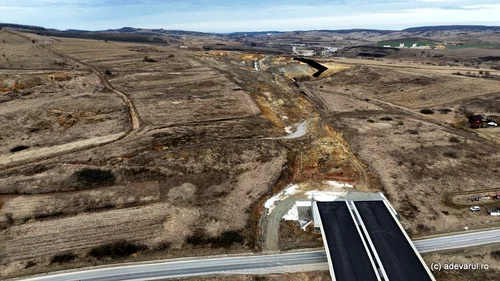
Image 1/16:
Transilvania Highway Cluj Napoca Oradea under construction Nădășelu and Topa Mică Viaducts Photo Daniel Guță THE TRUTH (17) JPG
Although it is in an advanced stage of construction, the highway between Nădășelu and Poarta Sălajului will not be able to be opened until the viaducts from Nădășelu and Topa Mică and the Românași junction are completed.
Two other batches, viewed with optimism
Also in 2026, the Suplacu de Barcău – Chiribiș section, 26 kilometers long, in Bihor county, could also be opened. This segment of the Transilvania Highway includes one of the longest highway viaducts in Europe, at Suplacu de Barcău, with a length of 1.8 kilometers.
Subsection 3C1 Suplacu de Barcău – Chiribiș is executed by SC Construcții Erbașu SRL. The contract was signed on December 28, 2023, the design began on March 15, 2024, and the execution of the works started on January 20, 2025. The value of the investment is 884.12 million lei without VAT. Currently, the physical status of the contract is 51 percent. The initial contractual term was August 2026, but completion is estimated in January 2027, according to the execution schedule, with the opening of circulation expected during 2026, according to the situation presented on the Cestrin platform.
Some optimistic estimates, invoked even by officials from the Ministry of Transport, take into account the anticipated completion of the almost 29-kilometer segment between Chiribiș and Biharia, whose contractual opening date is 2027.
Subsection 3C2 Chiribiș – Biharia is assigned to the association Precon Transilvania SRL – Citadina 98 SA. The design and execution contract, worth 785.22 million lei without VAT, was signed on April 3, 2024 and provides for a total duration of 24 months (six months of design and 18 months of execution). Currently, the physical stage is below one percent, and the completion and opening of traffic is estimated for May 2027, according to the data published on the Cestrin platform.
Autostrada Transilvania, started in 2004
Currently, almost 130 of the 160 kilometers of the Transilvania Highway (A3) Cluj-Napoca – Oradea – Vama Borș have remained unfinished, and on some sectors of the route the works could be completed in 2031 at the earliest.
Work on the first sections of the Transilvania Motorway (A3), designed to connect Brașov with Vama Borș and northwest Romania, began in 2004, following a contract awarded by the Romanian state in the early 2000s to the Bechtel company. The initial plans were to build a highway of over 400 kilometers, which would cross the cities of Brașov, Făgăraș, Sighisoara, Târgu Mureș, Turda, Cluj-Napoca, Zalău and Oradea. The A3 highway was completed by the Bucharest – Brașov section.
Meanwhile, the Brașov – Târgu Mureș segment was removed from the initial highway plans, being replaced by the Sebeș – Turda Highway (A10).
On December 1, 2009, the first 42 kilometers of the highway were opened to traffic, between Turda and Cluj-Napoca, up to the area of Gilău, and in the following years the sections between Târgu Mureș and Cluj-Napoca were completed. Currently, drivers can drive uninterrupted between Târgu Mureș and Cluj-Napoca (Nădășelu), over a distance of approximately 113 kilometers.
On the Cluj-Napoca (Gilău) – Oradea (Vama Borș) route, with a length of 167 kilometers, work on some sections began as early as 2004, and in recent years three sections from Cluj and Bihor counties, totaling approximately 30 kilometers, were opened to traffic: Gilău – Nădășelu (9.5 kilometers), Nușfalău – Suplacu de Barcău (13.6 kilometers) and Biharia – Borscht (5.4 kilometers).
The high-speed road in northwestern Romania will be fully completed in 2031 at the earliest, with the completion of the two segments in Sălaj, with a total length of approximately 40 kilometers, which include the Meseș tunnel, with a length of almost three kilometers. These are Poarta Sălajului – Zalău (15.1 kilometers) and Zalău – Nușfalău (25.8 kilometers).