The price of gas will not increase Romanians' bills, but it will make the products manufactured in Romania more expensive


The price of gas will not increase Romanians' bills after April 1, when the ceiling will be waived, but all products manufactured in Romania that use gas will become more expensive, according to the experts consulted by “Adevărul”.
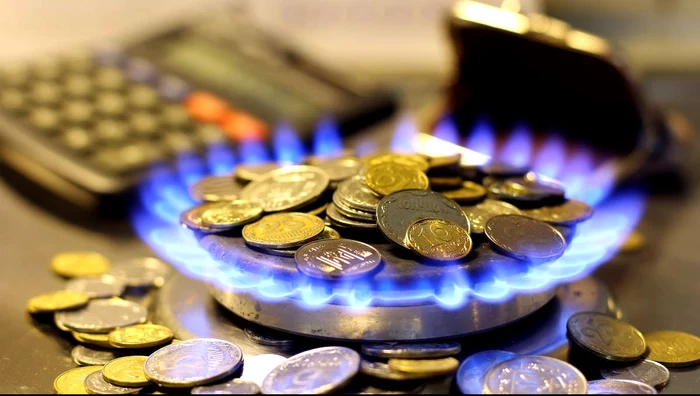
The price of gas will not increase Romanians' bills, but it will make the products manufactured in Romania more expensive
The Ministry of Energy has published a draft normative act that establishes temporary measures applicable to domestic customers of natural gas and producers of thermal energy for the population between April 1, 2026 and March 31, 2027, after the expiration of the current capping scheme (March 31, 2026). The project establishes clear formulas for calculating the price of natural gas, which will not affect domestic consumers and producers of thermal energy, but will increase the bills of industries that use natural gas in the production process.
Chisăliță: Industrial consumers can pay 25% more for gas
“Today there was nothing else to do. The price of natural gas would have been 30% more expensive than it is today, because without regulation, everyone would have rushed to buy now and the price would have gone up a lot. This draft law creates advantages for domestic consumers. They will have almost the same prices as in 2024 – 2025. As for non-household consumers, large industrial consumers, they will have bills about 15% higher than in 2025 and about 25% more than those paid by the population for normal consumption”said the energy expert Dumitru Chisăliță for “Adevărul”.
Silviu Gresoi: A fixed sales price was introduced for gas producers
For his part, analyst Silviu Gresoi says that, according to the draft GEO, after April 1, 2026, a transitional mechanism will be introduced to establish the price of gas for household customers, valid until March 31, 2027.The final price is no longer administratively capped, but will be calculated according to a clear formula: weighted average purchase cost (CMP) of gas plus fixed supply component of 15 lei/MWh plus regulated transmission and distribution tariffs plus taxes”.
The expert specified that the document explicitly stipulates that domestic producers will have the obligation to deliver gas for the household segment and for the production of thermal energy for the population at a regulated price of 110 lei/MWh, between April 1, 2026 and March 31, 2027, with priority for stockpiling and covering consumption in the cold season.
“In addition, heat energy suppliers and producers must establish minimum stocks in warehouses at a level of at least 90% of the national storage capacity before the winter of 2026-2027. Non-compliance with the obligations in the scheme is sanctioned with fines between 1% and 5% of the annual turnover”said Silviu Gresoi for “Adevărul”.
Food will go up at least 5% due to gas prices alone
Despite the intention to do good to Romanians, the measure could do more harm, because the gas bill for domestic consumers will decrease, but the prices of all products manufactured with the help of natural gas will increase.
“The Government's intention to regulate the price of gas for the population creates a well-known economic mechanism: the costs that will no longer be paid by domestic consumers will inevitably be transferred to the industry. As shown by the analyzes carried out by the Smart Energy Association (Impact of “administrated price” / Analysis of the share of energy costs in food), this type of intervention does not eliminate costs, but redistributes them, with direct effects on the final prices of consumer goods”said energy expert Dumitru Chisăliță, president of AEI.
Its estimates indicate a possible increase in the price of gas for industry up to 15% compared to the level of 2025. In an economy where the food sector is highly dependent on energy, such an evolution cannot remain without consequences. The additional costs will inevitably be found in the price of food, with an estimated average impact of approximately 5% from this component alone.
Natural gas and electricity are reflected in food prices through three essential channels: industrial processing (ovens, steam, heating), transport and storage (cold chains, logistics), and agricultural inputs (fertilizers, greenhouse heating, grain drying). When one of these channels is affected, the effect multiplies on the entire production chain”, points out the energy expert.
In this context, an AEI estimate shows that food inflation in Romania in 2026, in a scenario with 15% more expensive industrial gases, could reach approx. 7.5–9.0%. In other words, there is a chance that 2026 will bring even higher food inflation than 2025.
The difference in food inflation in Romania, compared to the European Union, would thus become even more pronounced, from a ratio of 2.39 times above the EU average in 2025, Romania could reach 3.1–3.3 times above the European average in 2026. We are not only talking about a price problem, but about a problem of economic competitiveness, social equity and policy coherence.
“If food is one of the most sensitive components of living standards, then food inflation can no longer be treated as a secondary indicator. In the absence of decisions that take into account the chain effects of administrative interventions, Romania risks remaining not only the political champion of price increases, but also the clear example of how the hidden costs inevitably end up on the consumer's plate”, says the specialist.