Grigore Leșe was born on February 20, 1954 in the village of Stoiceni in Ţara Lăpuşului, Maramureş county. Also on February 20, the writer Eugen Barbu and the artist Virgil Ianțu were born.
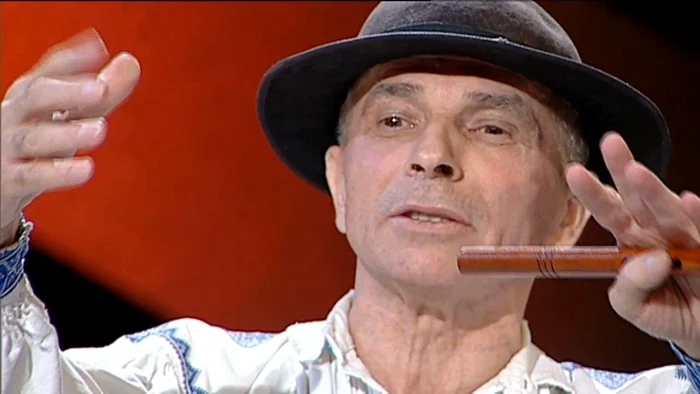
Grigore Leșe, rhapsody PHOTO: The truth
1918: The preliminary peace treaty was signed between Romania and the Central Powers, in the context of the First World War
After the coup d'état of November 7, 1917, in which the Bolsheviks led by Lenin, with German financial support, overthrew the democratic republican government of Kerensky, Russia withdrew from the war. Left without an ally, Romania, whose government was a refugee in Iasi, had to accept the conditions imposed by the Central Powers.
Through this treaty, Romania was obliged to cede Southern Dobrogea (the Quadrilateral) to Bulgaria and cede part of Northern Dobrogea, while the rest of the region was to be under German and Bulgarian control, although it remained formally under Romanian ownership. In addition, Austria-Hungary gained control over the passes of the Carpathian Mountains, and Germany received concession rights over Romanian oil exploitations for 90 years.
Previously, on February 18, 1918, in Focșani, a protocol extending the armistice with the Central Powers had been signed.
1922 – The engagement of Princess Maria of Romania to Prince Alexander took place in Bucharest
Queen Maria of Romania met Alexander of Serbia in Paris, during his efforts to support Romania's cause, while Alexander campaigned for Serbia's interests. Impressed by his seriousness and devotion to his country, the queen since then began to contemplate the possibility of a marriage between her middle daughter and the Serbian prince, despite the fact that he did not come from a prestigious dynasty.
After the end of the war, the Royal House of Romania consolidated several matrimonial alliances: in 1921 with Greece and in 1922 with the Kingdom of Serbs, Croats and Slovenes. Thus, on Christmas Day 1921, at the Peleș Castle, the engagement between Alexander, who had meanwhile become king of Yugoslavia, and Princess Mărioara was formalized. The religious ceremony took place on February 20, 1922, at 5 p.m., at the Cotroceni Palace, followed the next day by a gala dinner.
Maria married King Alexander I of Yugoslavia on June 8, 1922. On this occasion, the first match in the history of Romania's national football team took place in Belgrade, which ended with Romania winning 2-1 against Yugoslavia.
1924: Eugen Barbu, writer, screenwriter and publicist, was born
He was born in Bucharest and became one of the most important literary figures of the 20th century.
After completing primary, secondary and high school studies between 1941 and 1943, Eugen Barbu enrolled at the Faculty of Law. He subsequently gave up this faculty to attend the School of Gendarmerie Officers in the period 1943-1945. In 1945, he began attending the Faculty of Letters and Philosophy, but withdrew after three years.
His debut in journalism took place with a leaflet in the newspaper “Fapta” in 1941. Throughout his career, Eugen Barbu proved to be a talented journalist, covering a wide range of subjects, from sports chronicles to political or polemical articles, from reports to travel notes and literary chronicles.
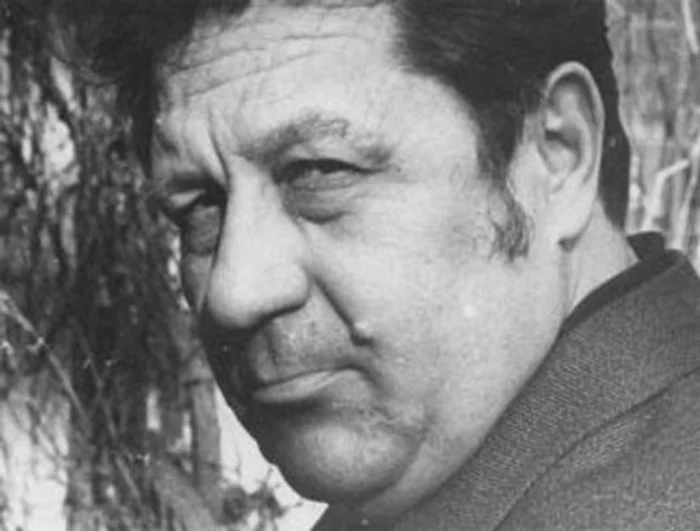
Eugen Barbu, writer PHOTO: Archives
In the literary field, Eugen Barbu was a prolific writer, tackling various genres and styles. From his debut as a short story writer with the work “Gloaba” in 1955, he earned his reputation as a novelist, with works such as “The Pit”, “The Northern Road”, “The Making of the World”, “The Prince”, “Incognito” and many others.
In addition to his literary career, Eugen Barbu was also a screenwriter, publicist, and editor-in-chief of several magazines, including “Luceafărul”, “Săptămâna”, and “Săptămâna culturală a Capitalei”. He was a member of the Romanian Writers' Union and received numerous awards and distinctions for his contribution to literature.
Eugen Barbu was also involved in political life, becoming a founding member of the Greater Romania Party in May 1991. He was elected deputy of Bucharest in the 1992-1996 legislature. He died on September 7, 1993, leaving behind a rich literary and cultural legacy.
1954: The rhapsody Grigore Leșe was born
Grigore Leșe was born on February 20, 1954 in the village of Stoiceni in Lăpuşului County, Maramureş County. After graduating from the High School of Music and Fine Arts in Baia Mare, he studied the bassoon at the “Gheorghe Dima” Academy of Music in Cluj-Napoca. In 2003, he obtained the title of Doctor of Music with the qualification Summa cum laudae.
Currently, he is an associate professor at the Faculty of Letters of the University of Bucharest.
Before December 1989, Grigore Leşe received important awards at various popular music festivals in Romania: Pe deal at Teleormănel (1982), Doinei Festival (1984), Maria Tănase (1988).
On December 10, 2004, he was awarded the National Order of Merit in the rank of Knight, “for his special contributions to the artistic and cultural activity in our country, for the promotion of Romanian civilization and history”. In 2006, he received the TVR 50 Trophy, from the Romanian Television. In 2007, he was awarded the Grand Prize of the Association of Television Professionals from Romania (APTR) for the cycle of shows “La Porţile Ceriului”, and in 2009, he received the Prize for cultural journalism, from Radio Romania for the show La porțile ceriului.
In 2011, he was awarded the title of Doctor Honoris Causa of the Western University “Vasile Goldiş” in Arad.
Throughout this period, he produces the shows “Drumurile lui Leşe” on Radio Romania Actualitàtî and “The world and traditional music” on Radio Romania Cultural. He is also the author of hundreds of shows and documentaries on ethnoanthropology for TVR Cultural.
Throughout his career, the illustrious artist released more than 100 popular songs and held almost 1000 concerts in the country and abroad.
He recorded the following albums: Pastoral Song (1996); Catania Songs (2000); Hours of Life (2004); Waiting for Christmas (2004); Grigore Leşe, Collection music. The National Journal (2005); Hori from Ţara Lăpusului; Back to the argument (Dialogue with Horia-Roman Patapievici); La chant de Lăpuş (2009), CD edited by Radio France, through Casa de Discuri OCORA, Paris; Grigore Leşe and the Aromanians from Gogealac/Constanţa (2011); Of love, of war, of death, alone (2011) etc.
1962 – The Mercury–Atlas 6 spacecraft was launched, carrying astronaut John Glenn, who made the first American flight into orbit
Launched on February 20, 1962, the Mercury-Atlas 6 (MA-6) mission was the first American manned orbital flight. Piloted by astronaut John Glenn and conducted under NASA's Project Mercury, it was the fifth manned spaceflight, having been preceded by the Soviet Vostok 1 and 2 orbital flights, as well as the American Mercury-Redstone 3 and 4 suborbital missions.
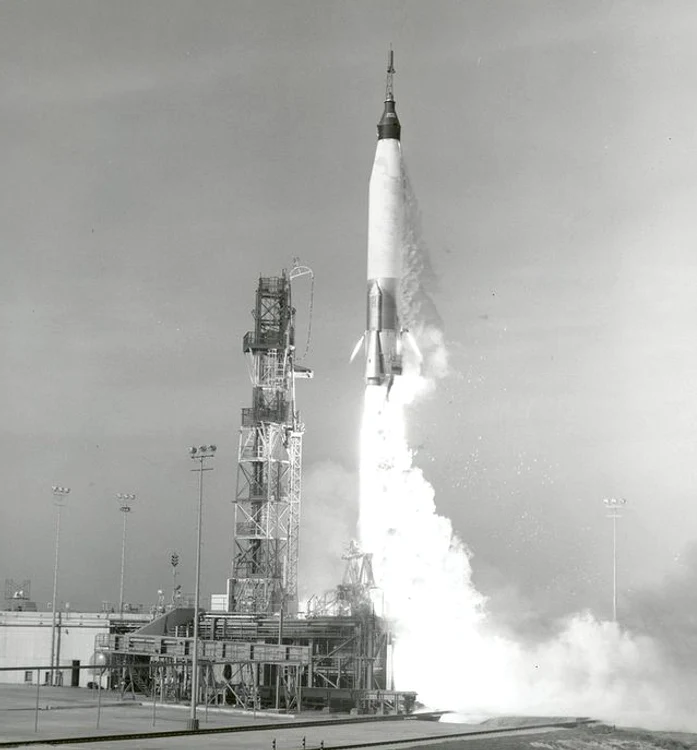
Mercury–Atlas 6 PHOTO: space.com
The space capsule, named Friendship 7, was launched using an Atlas LV-3B rocket from Launch Complex 14 in Cape Canaveral, Florida. After completing three orbits around Earth, the ship re-entered the atmosphere and plunged into the North Atlantic Ocean, where it was safely recovered by the crew of the USS Noa. The total duration of the mission was 4 hours, 55 minutes and 23 seconds.
The launch was postponed several times due to bad weather conditions, initially scheduled for February 14, then rescheduled for February 18. Finally, on February 20, conditions allowed for the successful completion of the historic mission.
1971: Virgil Ianțu was born
With the real name Virgil Gătăianțu, the acclaimed singer and TV presenter was born on February 20, 1971, in Timisoara. “Do you want to be a billionaire?”, “Children say crazy things” and “Do you think you're smarter?”, shows presented by Virgil Ianțu, are among the most popular Romanian TV productions.

Virgil Ianțu PHOTO: TVR
“I love the silence in Romania. If we look at other countries, we will see that peace and security are not from us, and here I am referring to the existing conflicts at the international level and the fear of terrorism. On the other hand, I had a big disappointment when I noticed that those who should have been active to change something didn't, preferring to stay at homeă”, Virgil Ianțu said in an interview in 2018.
2010: The film “When I Whistle, I Whistle”, awarded with the “Silver Bear”
The feature film “When I want to whistle, whistle”, directed by Florin Şerban, received the “Grand Jury Prize”, after also obtaining the “Alfred Bauer” distinction, offered for new perspectives in cinematographic art, at the Berlin Film Festival gala.
The award was handed to them by actress Renee Zellweger.