
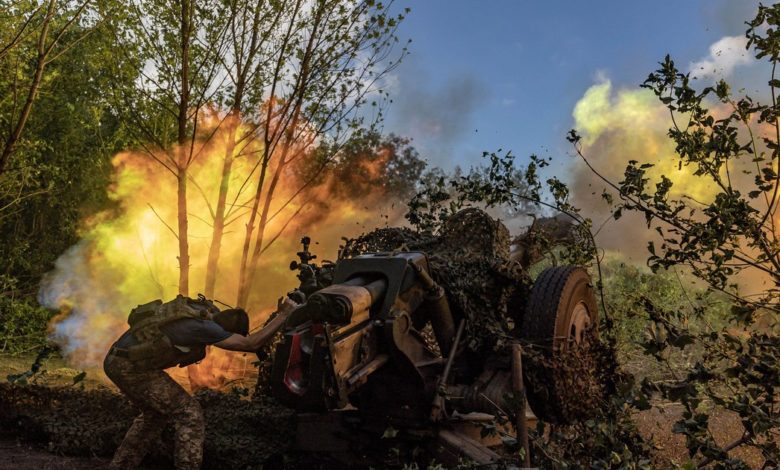
The war between Russia and Ukraine could take on an increasingly regional character in 2026, expanding beyond the front line and moving a significant part of the confrontation to the air and sea. This is the assessment of military analyst Michael Kofman, from the Carnegie Endowment for International Peace, in an analysis published by Foreign Affairs magazine.
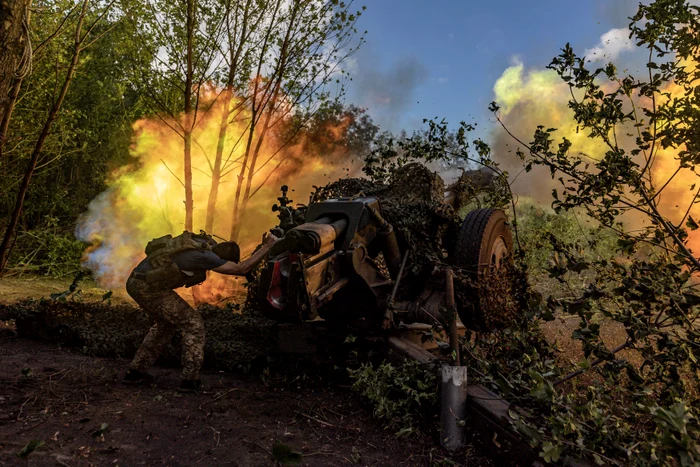
The war in Ukraine enters its fifth year/PHOTO: Profimedia
According to him, although ground fighting could remain at a relative stalemate, mutual attacks on critical infrastructure, ships and airspace could intensify. Russia could continue to test the limits near NATO airspace, while Ukraine would expand its ability to strike Russian naval and energy targets, including in the Black Sea.
A conflict that goes beyond the front line
Kofman notes that the dynamics of the war gradually changed. Kiev has demonstrated that it can strike Russian oil tankers and other maritime targets, while Moscow has conducted hybrid actions or influence operations on the territory of NATO member states. According to the analyst, these developments indicate a “regionalization” of the conflict.
At the same time, Ukraine faces difficulties related to the technological gap and fluctuations in external support. However, Kofman points out that sometimes seemingly minor changes can produce significant effects. He cites, for example, the impact of restricting Russian forces' access to Starlink terminals, which affected their operational capabilities.
“These campaigns will likely expand as relative stalemate persists on the battlefield. But there is always the possibility that gradual transitions can suddenly become decisive,” the analyst notes.
2026 – a year of attrition or opportunity?
The analysis reviews the evolution of the conflict from 2022 to the beginning of 2026. The year 2025 is described as a period of diplomatic recalibration for Kiev, in the context of the relationship with the new American administration led by Donald Trump, and of a greater involvement of European states.
In parallel, Moscow would have tried to send signals regarding the availability for negotiations, but continued the attacks on the infrastructure and the pressure on the front.
For 2026, Kofman suggests that Ukraine may try to turn the war of attrition into a year of economic pressure on Russia. Strengthening long-range strike capabilities and intensifying attacks on Russian energy infrastructure could aim to weaken Moscow's finances.
What should Ukraine do?
The analyst identifies several priorities for Kyiv in the fifth year of war:
– stabilization of the front line;
-reducing vulnerability to attacks on critical infrastructure;
-wider use of domestically produced drones and missiles to increase costs imposed on Russia.
A key element is reducing the asymmetry in the range of shots. Currently, Russia benefits from a superior deep-strike capability. Correcting this imbalance would allow Ukraine to overcome the attrition phase and achieve more consistent operational results.
Moscow's perspectives
Russian President Vladimir Putin does not want territorial gains so much as the complete destruction of Ukraine, Kofman admitted. At the same time, the Russians are acting against the backdrop of Washington's desire to achieve peace by the summer of 2026. At the same time, attacks on Ukraine's rear are intensifying in the hope that the country will capitulate. Both of the Kremlin's “bets” failed, and at the same time, Russians' economic problems will worsen in the new year.
“The key question will be which will be more sustainable: Russia's offensive or Ukraine's defense. Last year's battles suggest that, in the fifth year of the war, Moscow's military prospects have not improved significantly, while economic tensions are rising,” Kofman concluded.


